

I have been looking for more ocean themed patterns lately since aquatic animals have such distinct shapes that show up nicely in Perler beads.
The ideas in this list focus on sea creatures like dolphins and fish that stay easy to recognize even in small designs.
Some of them are simple enough to set up quickly on a pegboard without needing too many colors.
These patterns give you a few different options if you want to try something new with your beads at home.
Clownfish Perler Bead Pattern
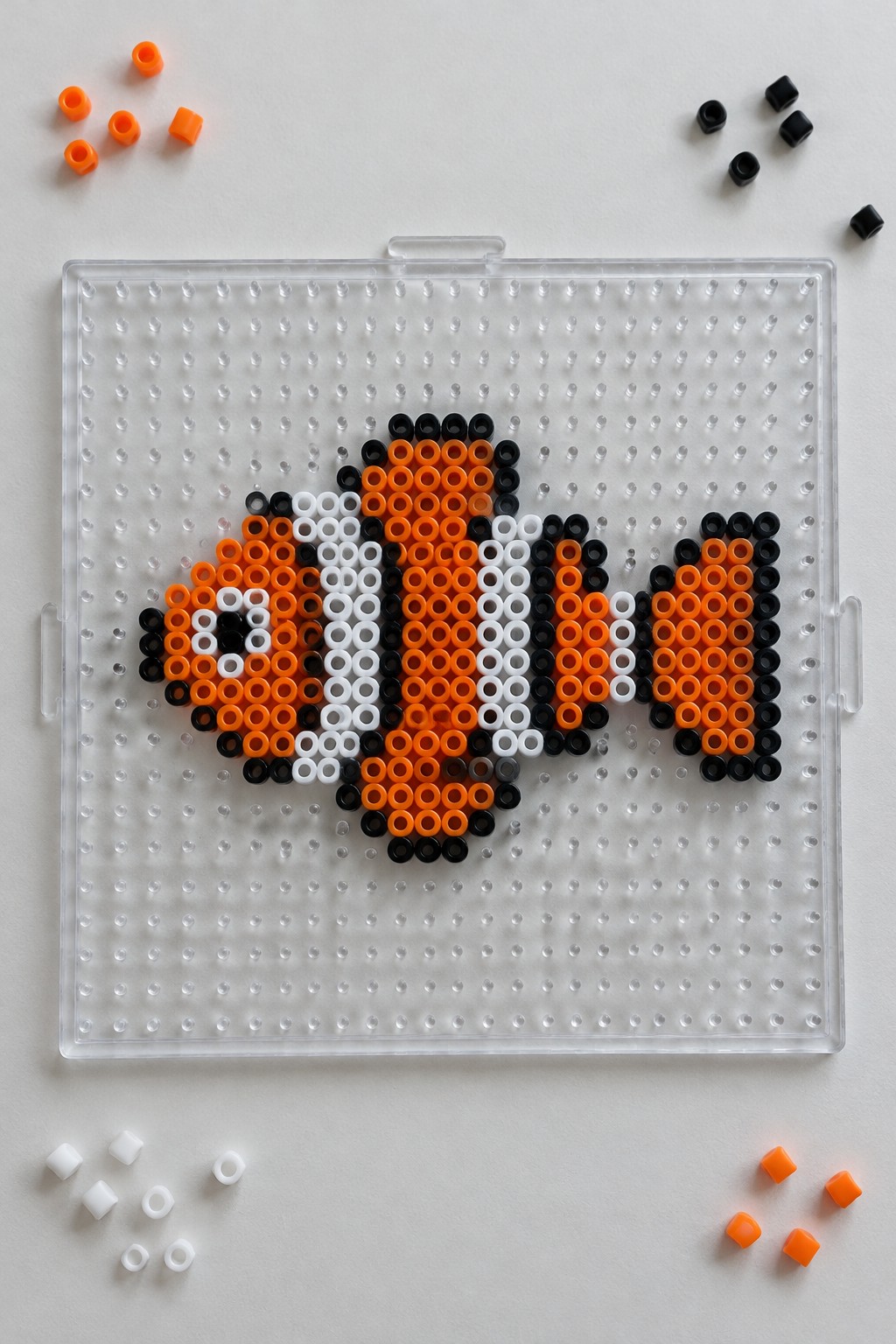
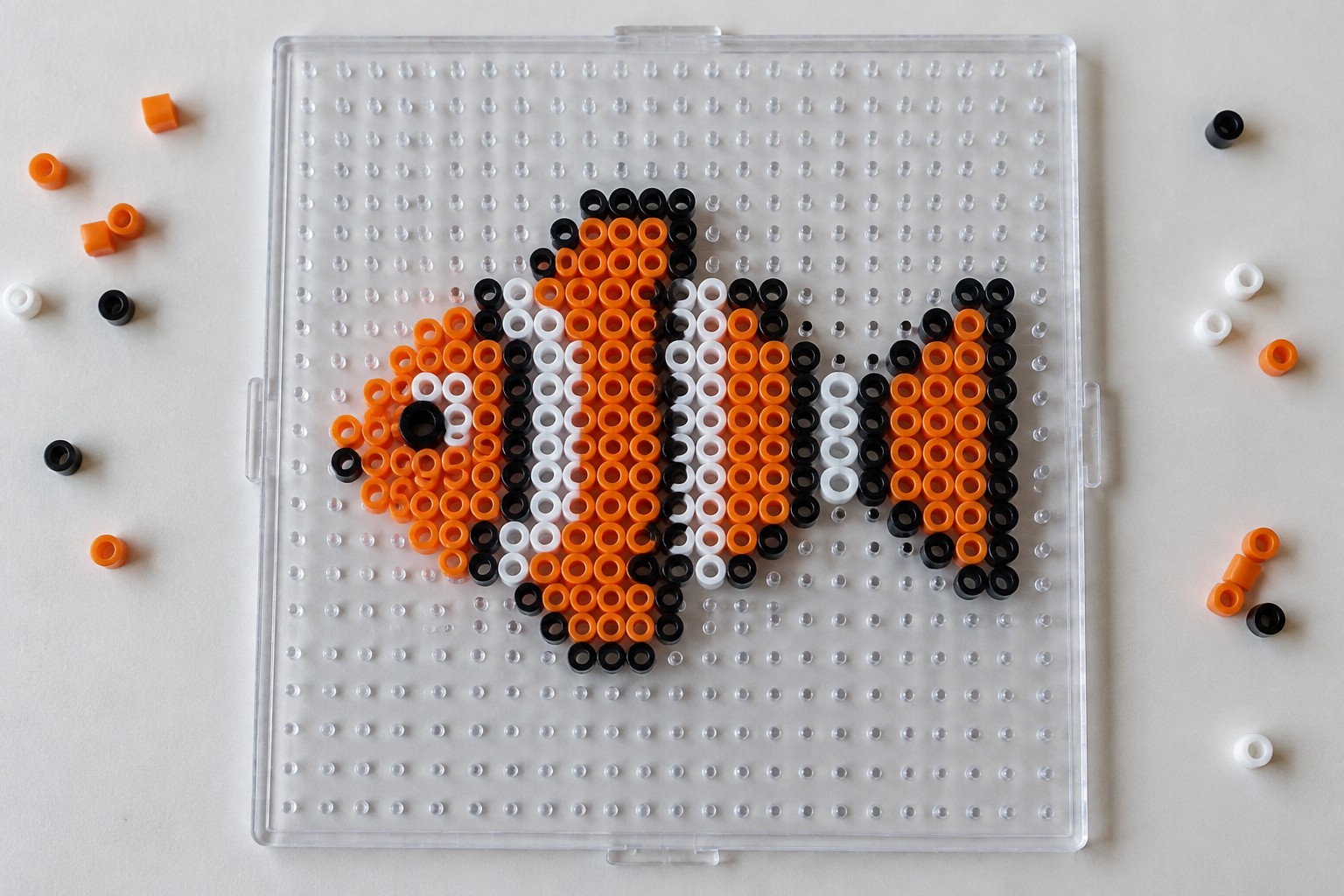
A clownfish design built from orange, white, and black fuse beads forms the main project here. The pattern relies on bold color blocking to create the three distinct body stripes along with the fins and tail. Individual beads are placed to produce clean stepped edges that define the fish silhouette against the pegboard grid. The limited palette and clear outlines make the aquatic animal easy to recognize even at this small scale.
The straightforward color sections allow quick recreation or scaling adjustments for different project sizes. Changing the orange to other bright hues could turn the same outline into different tropical fish varieties. A finished piece this size works well as a magnet or bag charm for ocean-themed decor. The strong contrast between the black borders and bright body colors keeps the shape distinct and readable.
Blue Whale with Spout
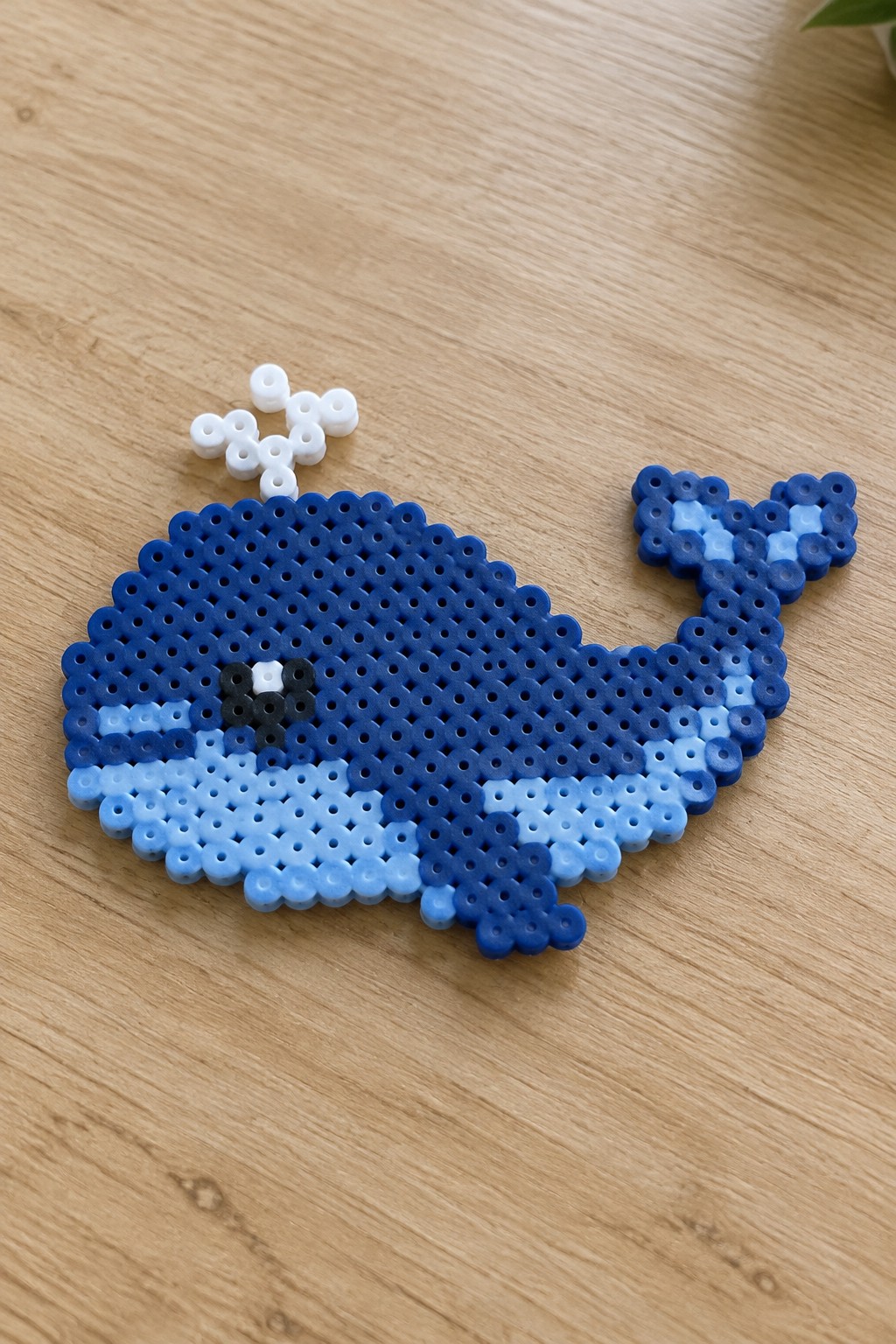
This Perler bead pattern forms a side-view whale using multiple shades of blue arranged in clear color blocks, with the darkest blue along the upper body and tail, medium tones filling the middle, and lighter blue beads shaping the belly and lower edge. A small cluster of black and white beads creates a simple eye, while a separate white bead shape sits above the head to represent the spout. The stepped bead placement along the outline gives the whale a recognizable silhouette even though the design stays flat on the pegboard.
The range of blues makes the body shape easy to read at a glance and shows how limited colors can still add depth to an aquatic animal pattern. The same basic outline could be adapted into a dolphin or porpoise by shortening the tail and adjusting the snout area. A finished piece this size would suit use as a magnet or small display accent in an ocean-themed collection.
Dolphin Keychain
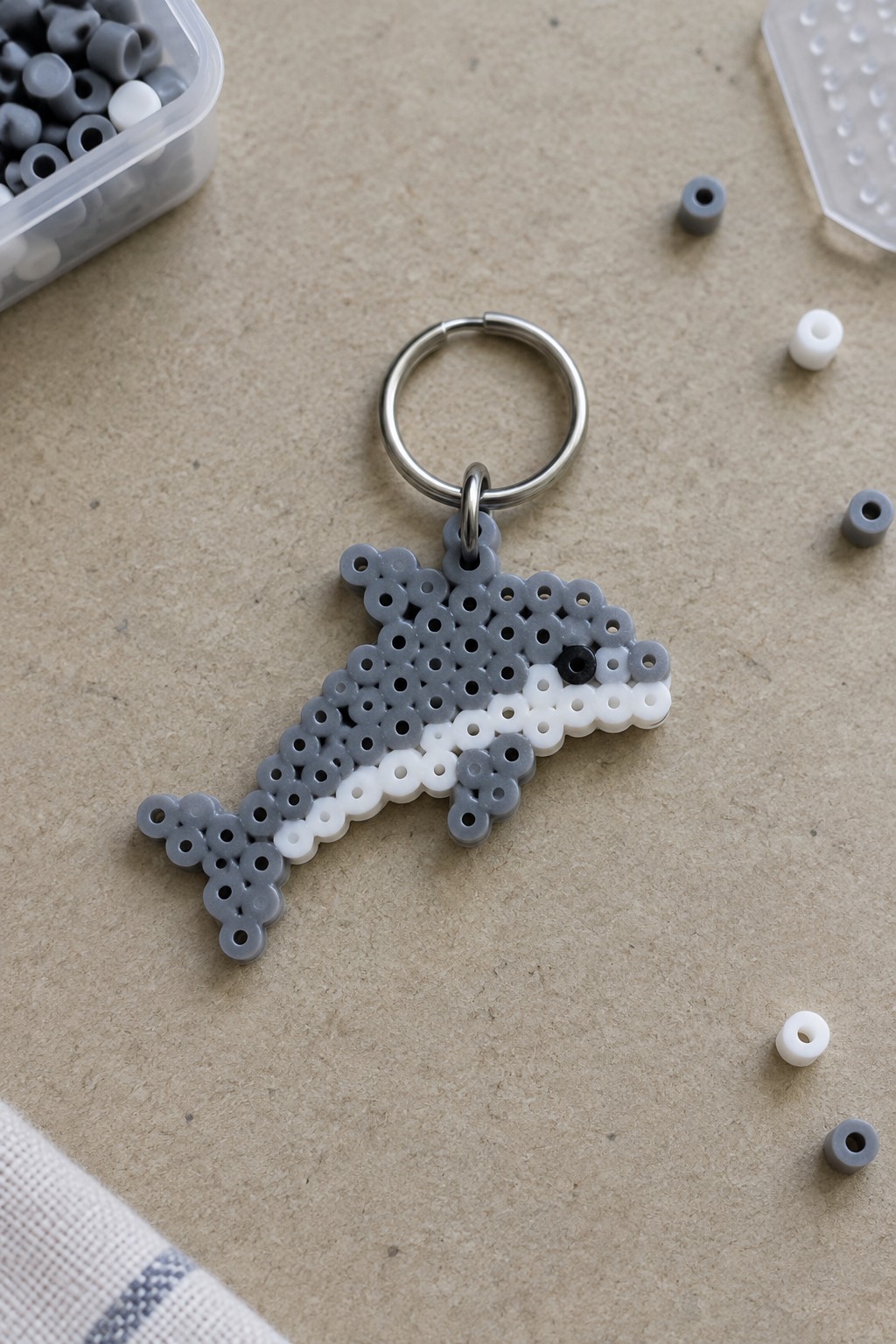
This Perler bead keychain uses a simple dolphin silhouette built from gray beads for the upper body and dorsal area, white beads along the belly, and a single black bead for the eye. The arrangement relies on stepped edges and color blocking to define the curved back, tail flukes, and snout without needing many shades. A metal keyring attaches directly through a bead at the top, turning the flat design into a functional item that can clip onto bags or keys.
The limited palette keeps the shape easy to recognize even at small scale, and the same outline could be recreated with different grays or blues for other ocean animals like a porpoise or small whale. Changing the eye color or adding a few accent beads along the back would create quick variations for a matching set of marine keychains. The compact size makes it practical to carry or gift without taking up much space.
Pastel Jellyfish Perler Bead Designs
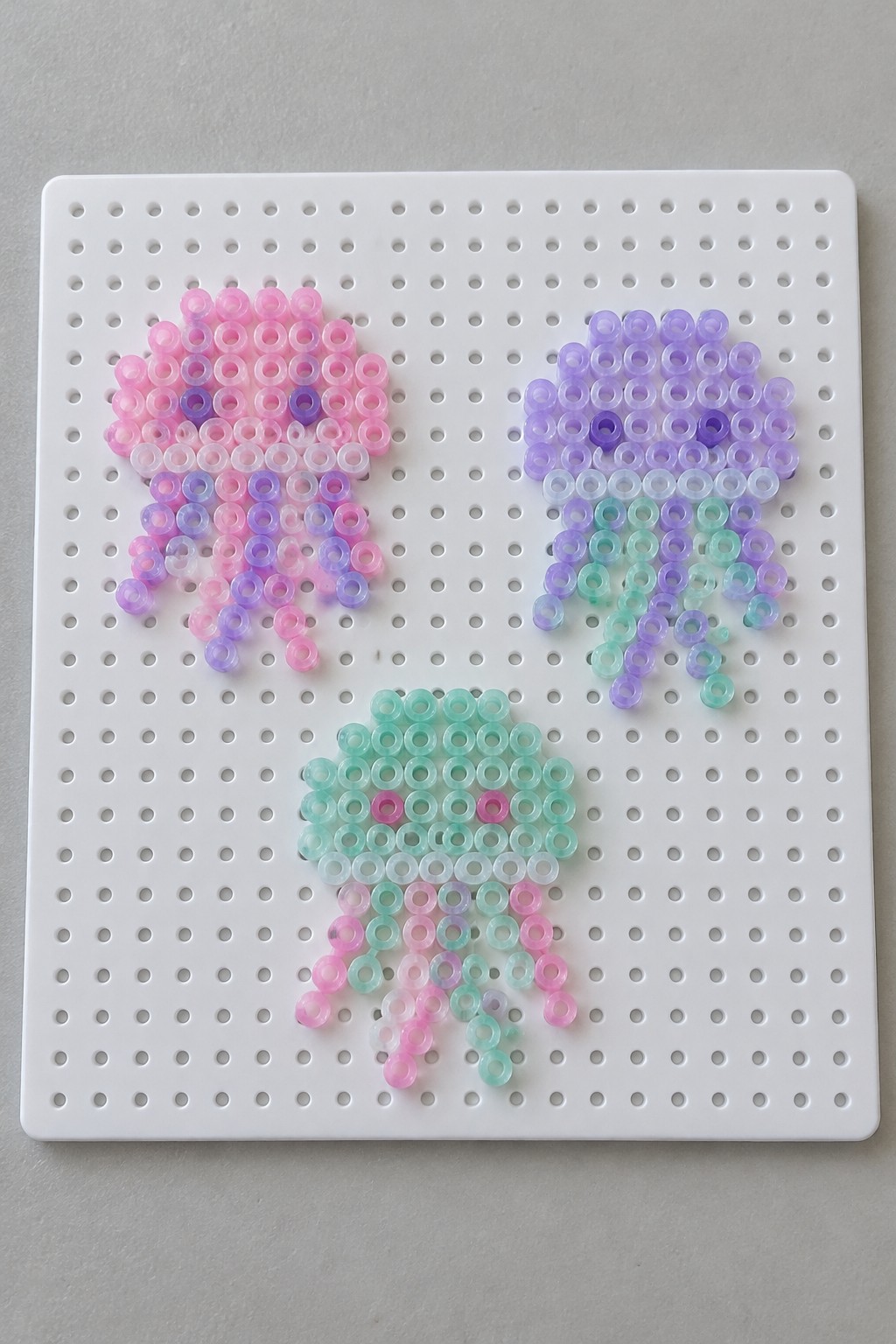
These jellyfish patterns are built on a pegboard using individual fuse beads to form rounded bell bodies with horizontal color bands and several dangling tentacle strands below. Each design uses a short gradient of related shades, such as pink into purple or teal into mint, along with two small dark beads placed as eyes near the top of the body. The stepped bead placement creates the familiar jellyfish outline through simple rows that widen at the middle and narrow into separate lower strands.
The coordinated color families across the three versions make it simple to produce a matching set by swapping one palette for another while keeping the same bead layout. You could adapt the basic silhouette into other ocean animals by shortening the tentacles or rounding the top edge further. Finished pieces from these patterns would work as magnets or small display accents since the compact size keeps the bead count manageable.
Pink Octopus with Rainbow Tentacles
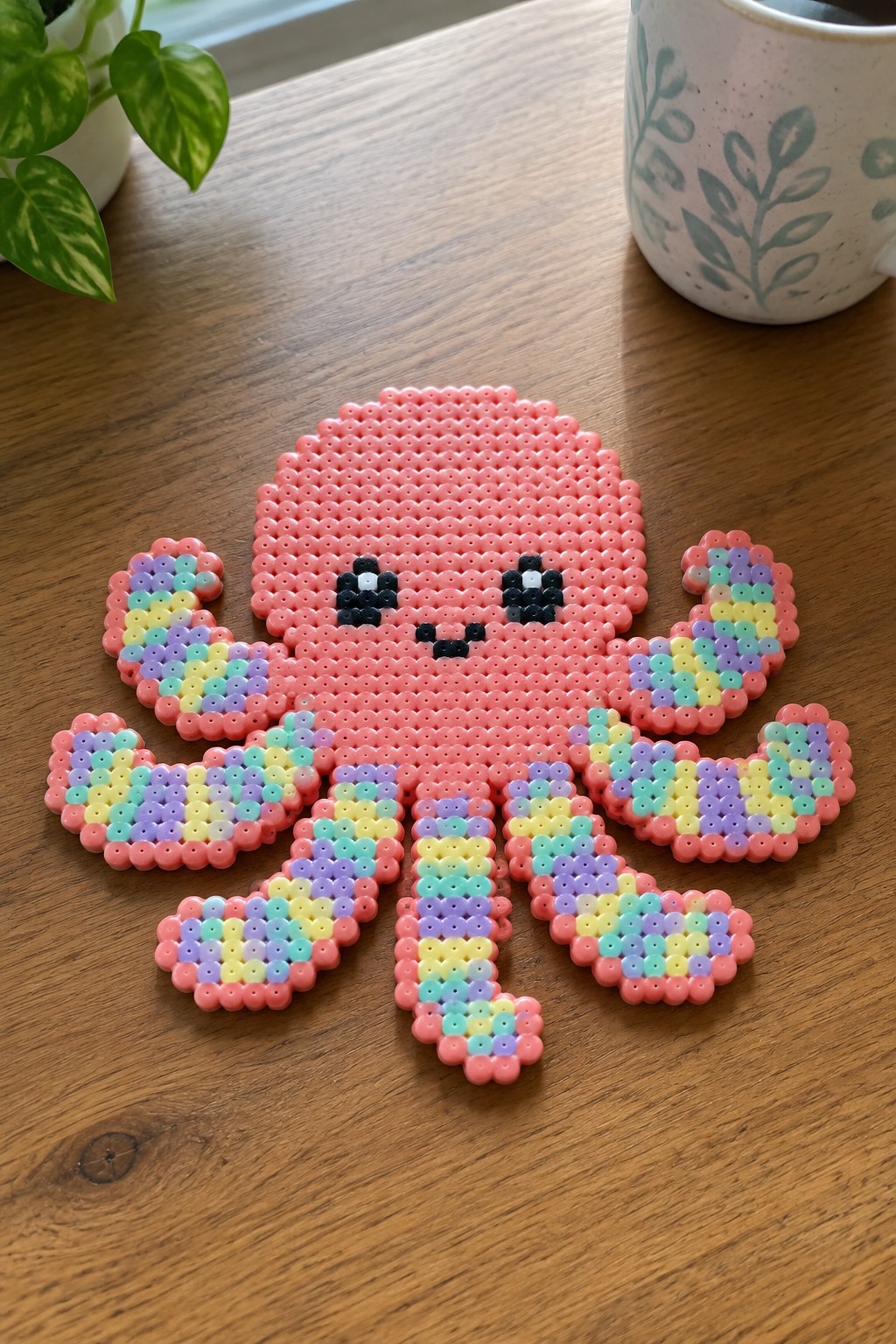
A flat Perler bead octopus features a solid pink head and mantle with eight extended tentacles that use repeating blocks of pastel rainbow colors. The design relies on simple black eyes with white highlights and a small mouth to create a clear face while the stepped edges of the tentacles form the recognizable octopus outline through standard bead placement. Color blocking on the tentacles against the single pink body makes the shape easy to read even at a small scale.
The rainbow sections on the tentacles provide a strong visual contrast that helps the overall form stand out without adding extra detail beads. You could adapt the same layout using ocean blues and greens for a more natural look or shorten the tentacles slightly to create a smaller version suitable for a magnet. The basic silhouette also works as a starting point for other aquatic animals like a squid by adjusting the tentacle count and shape.
Sea Turtle Perler Bead Design
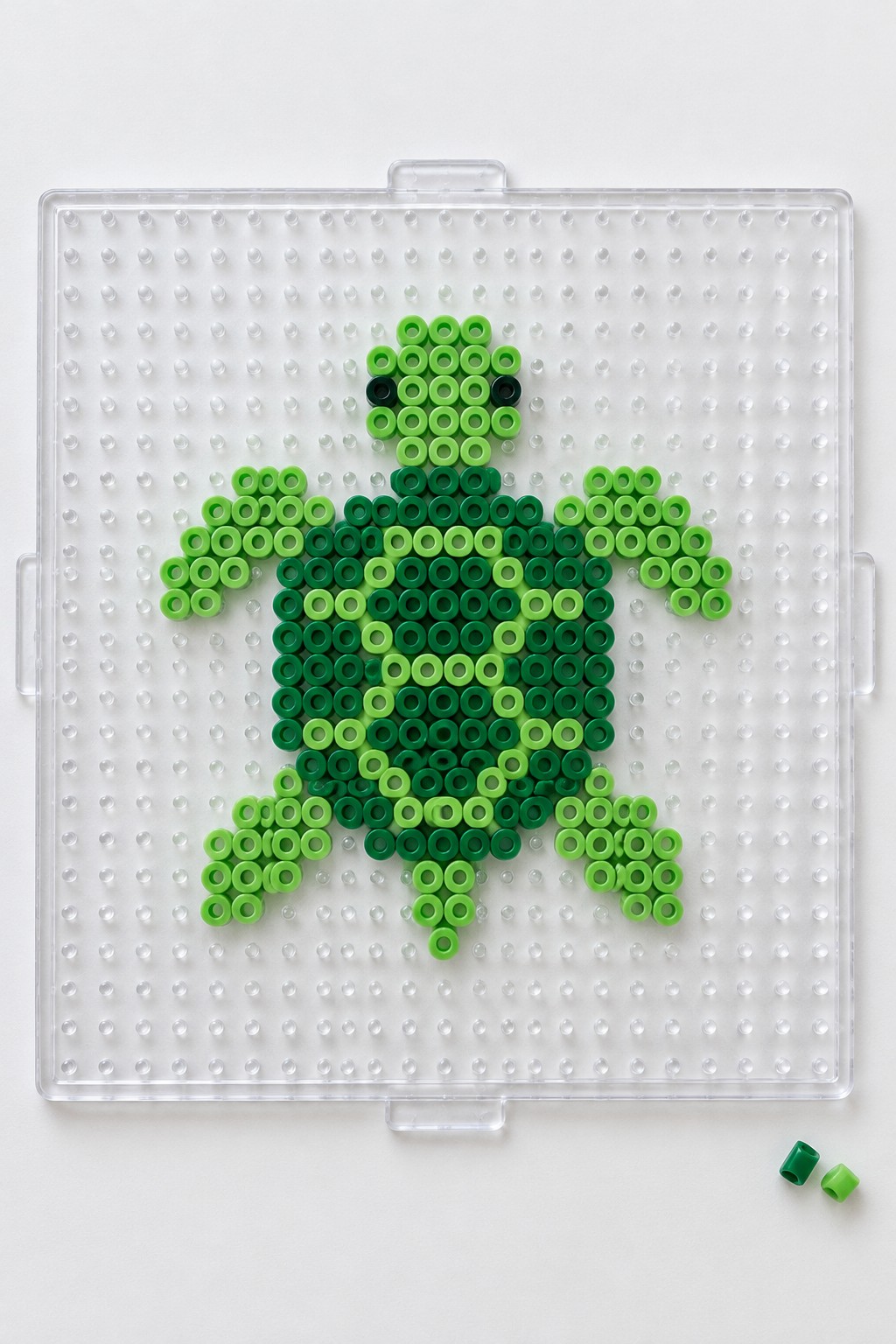
A sea turtle Perler bead project uses multiple shades of green arranged in a flat grid pattern to form the body, shell, head, and flippers. The design relies on color blocking to separate the darker outer shell sections from lighter inner areas, while two black beads create simple eyes on the head. This approach produces a recognizable aquatic animal silhouette through stepped edges and repeating rows rather than fine details.
The straightforward outline makes it easy to adapt by changing the shell colors to blues or adding a few extra rows for a larger version. You could also create matching pieces with slight variations in flipper position or shell shading to build a small set of ocean animals. A finished piece at this scale works well as a magnet or display accent once fused.
Two-Tone Seahorse Earrings
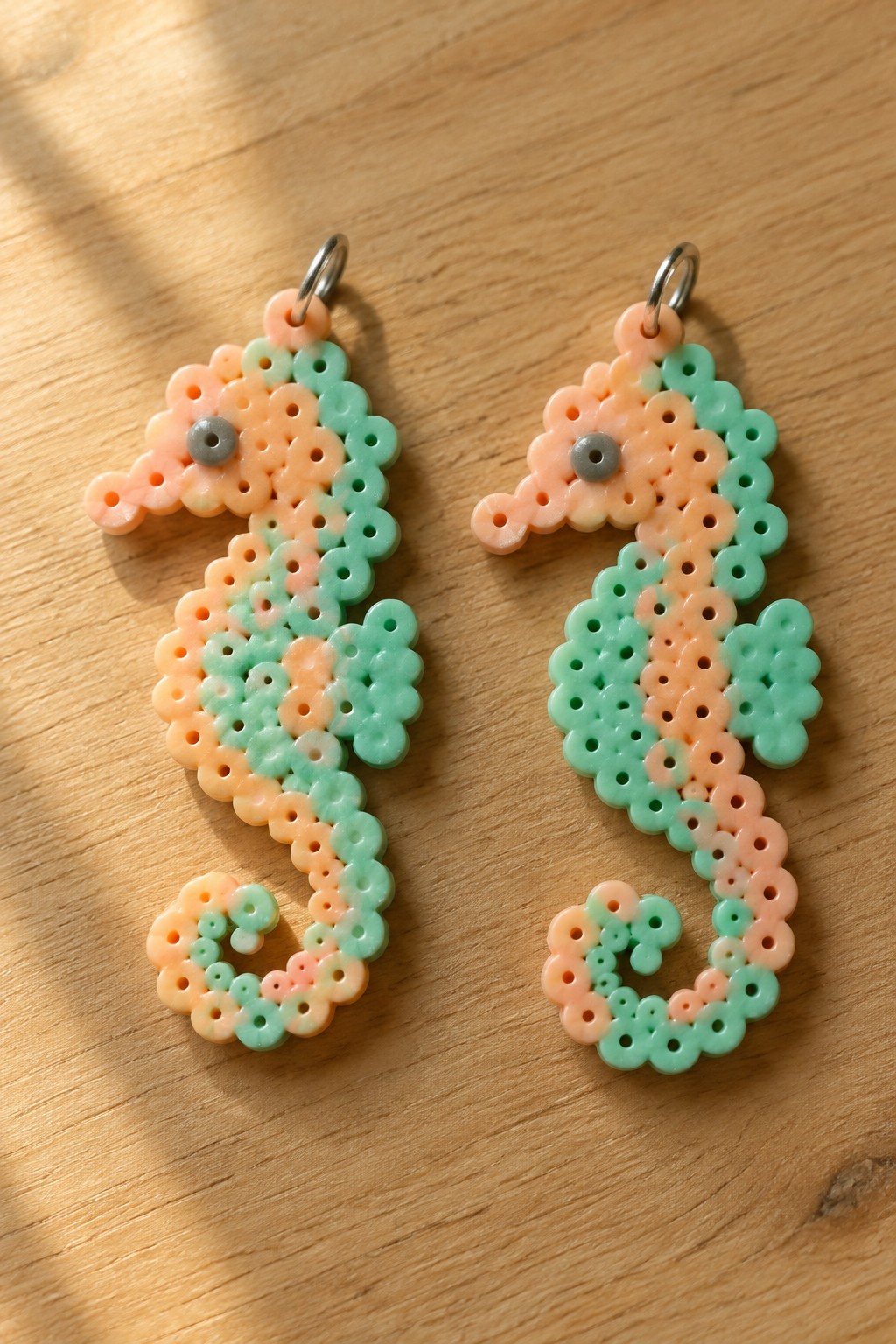
Two seahorse designs are built from peach and mint green fuse beads arranged in alternating horizontal bands that follow the animal’s curved body and spiraled tail. The stepped bead placement creates the distinctive head, dorsal fin, and coiled tail without needing extra outline colors. Each seahorse uses one gray bead for an eye, and a metal jump ring is attached at the top of the finished fused piece.
The two-color blocking keeps the silhouette easy to read even at small scale. You could switch the peach to a deeper coral or the mint to a brighter aqua for different ocean palettes. The compact finished size makes the pattern practical for earrings or bag charms, and slight variations in tail curl or fin shape would let you build a small set of matching aquatic animals.
Sea Turtle Perler Bead Pattern
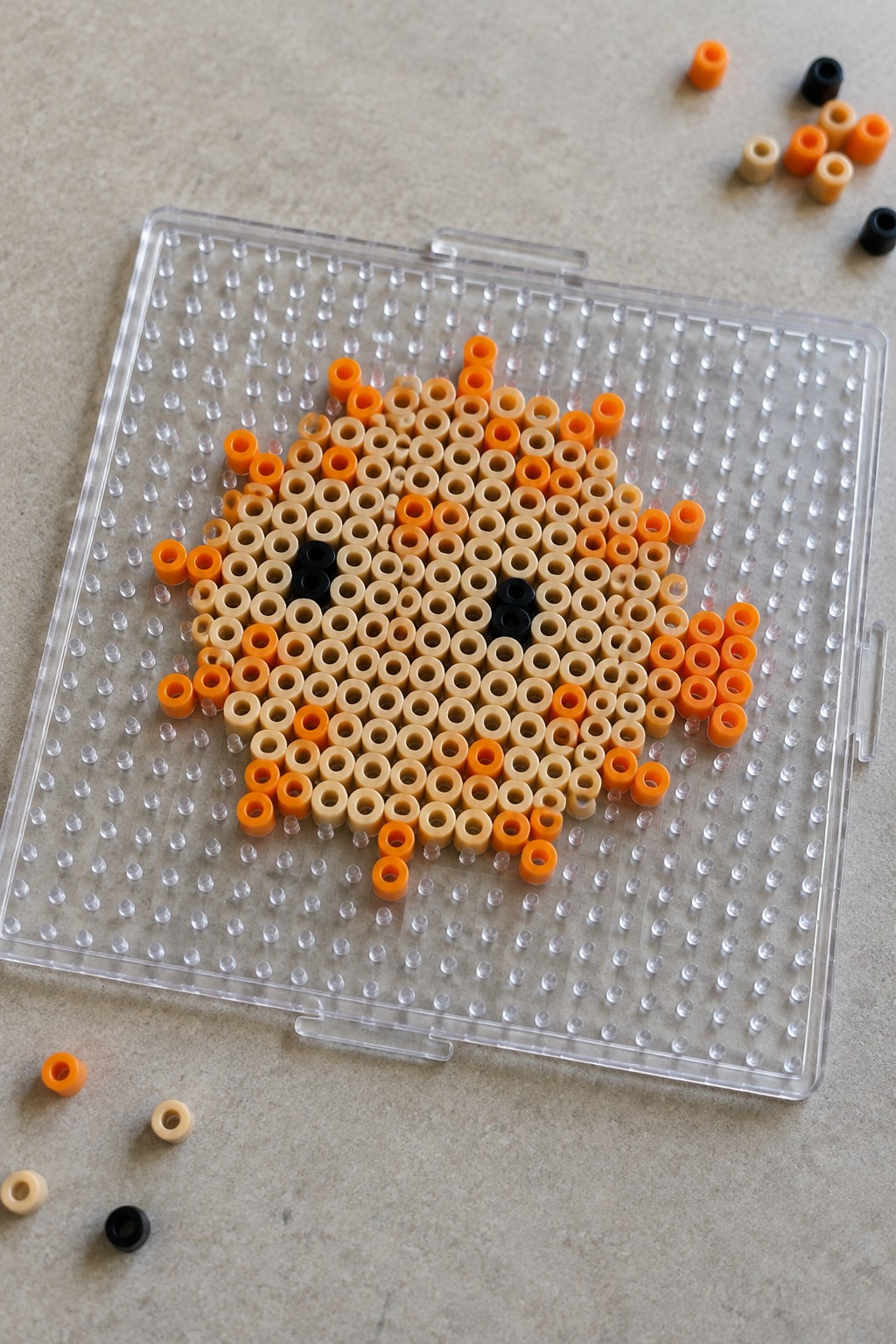
A sea turtle Perler bead pattern arranges tan beads into the body and segmented shell while orange beads form the outer edges, head, and flippers. Black beads placed in two spots create the eyes that define the face against the lighter shell. The stepped silhouette around the shell and limbs comes from the grid-based bead placement that builds the familiar aquatic shape without extra details.
The clear color separation between the tan shell and orange outline makes the turtle easy to read even at small scale. You could change the orange to a deeper green or add more tan shades to vary the shell pattern while keeping the same layout. A finished flat piece like this fits well as a magnet or small display accent for ocean-themed crafts.
Starfish Shapes in Bright Solid Colors
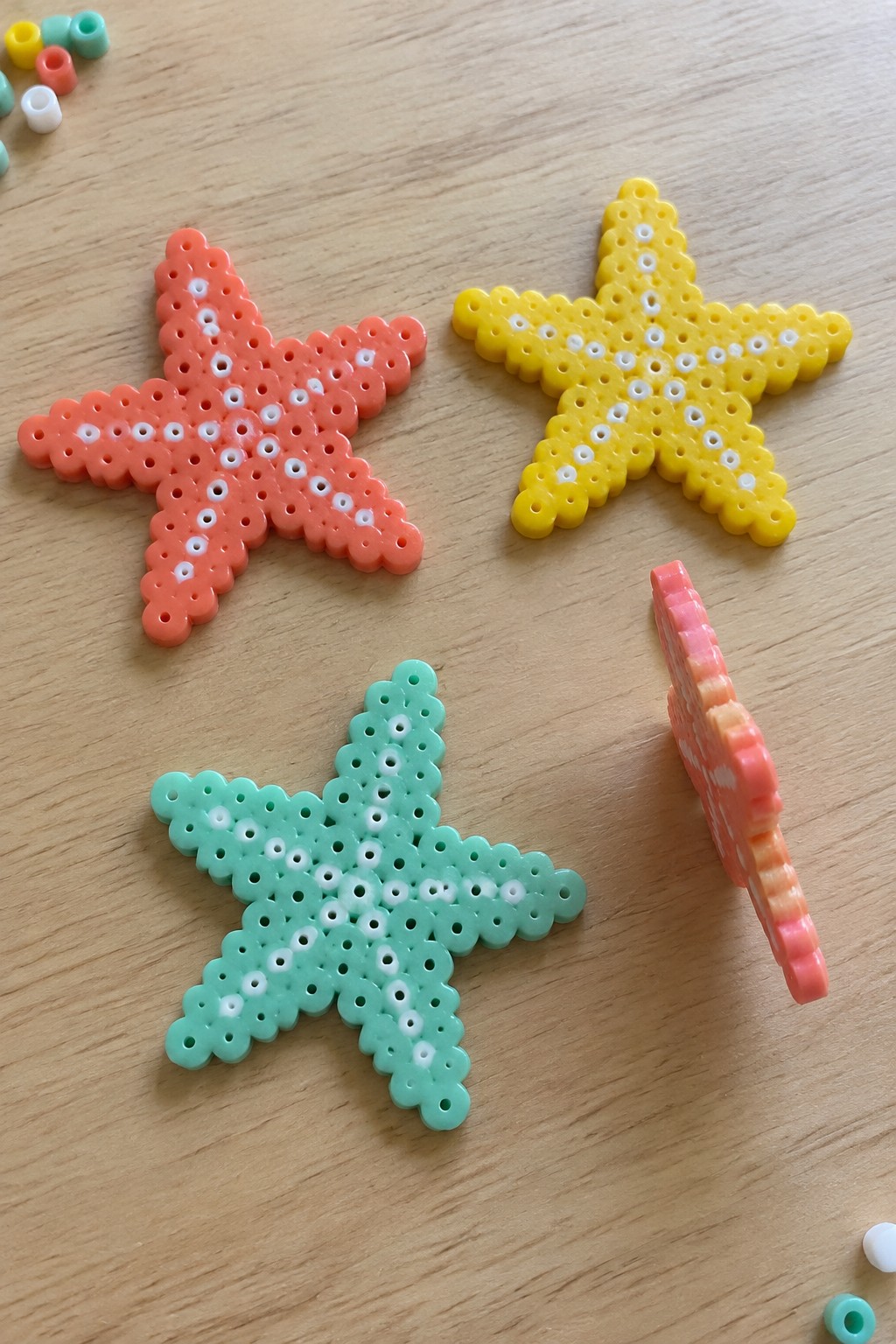
Starfish translate cleanly into Perler bead projects because their five-pointed silhouette stays recognizable even with basic grid placement. These versions use solid coral orange, yellow, and mint green backgrounds, each filled with white beads that create an inner star outline plus scattered dots for visual interest. The stepped outer edges and consistent point length give the shapes clear definition without extra layers or details.
The same outline works across any ocean-appropriate color, so leftover beads can quickly produce matching variations. A finished starfish this size can serve as a magnet, ornament, or bag charm once fused. You can also change just the inner white beads to another shade to create a different look while keeping the overall layout the same.
Manta Ray in Blues and Teals
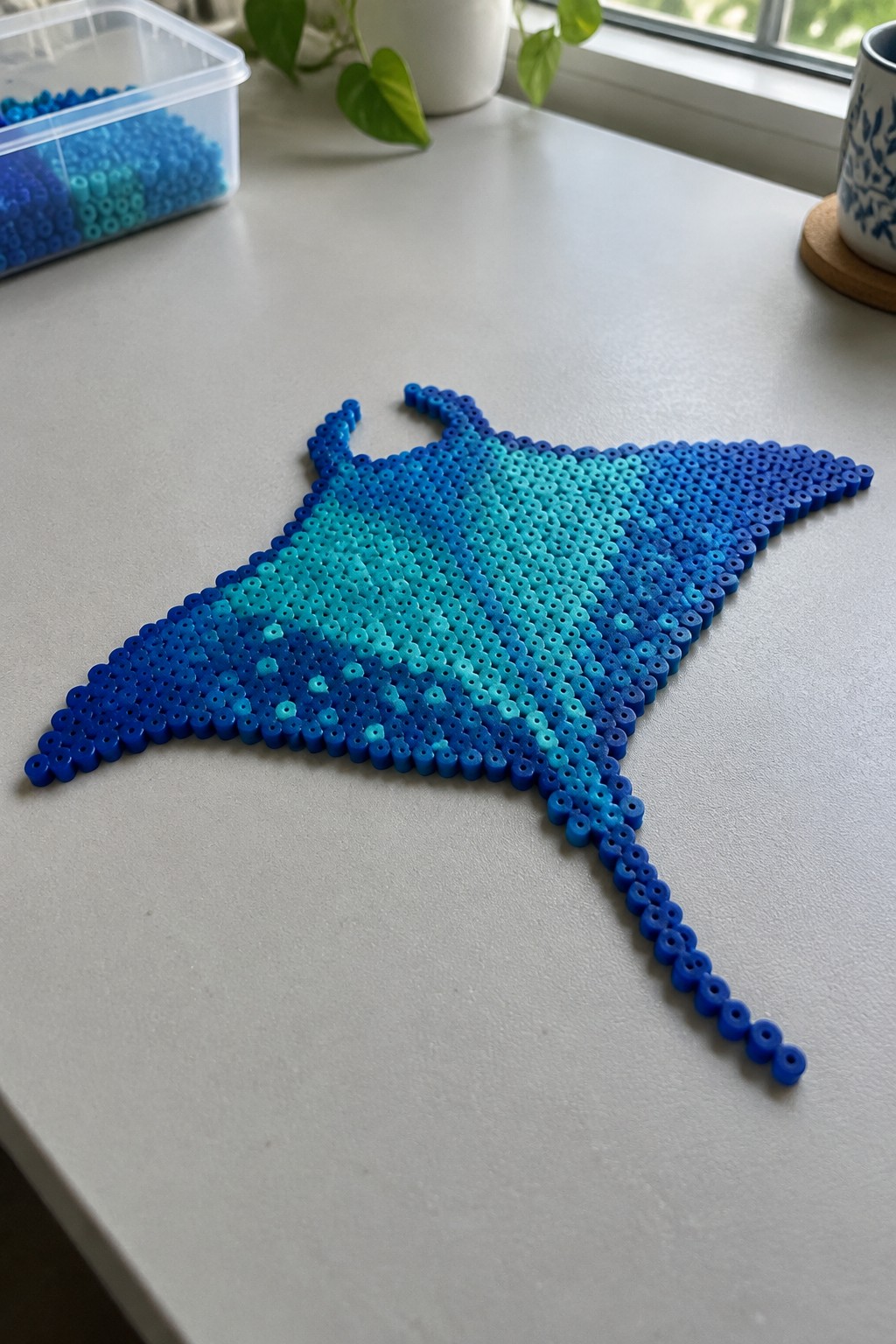
A flat Perler bead pattern forms a manta ray using rows of dark blue, medium blue, and cyan beads to build the wide triangular body and trailing tail. Color blocking creates the shape, with darker beads forming the outer edges and lighter cyan beads filling the central area to suggest the animal’s wing-like fins. The stepped bead placement along the outline gives the silhouette its recognizable form on the pegboard.
The gradient from dark to light blue makes the wings readable even at a distance, which helps the design translate well as an ocean animal project. The same basic outline could be adapted into a stingray or other flat fish by adjusting the tail length and color placement. A fused version of this size would suit use as a magnet or small display piece for an aquatic theme.
Shrimp Perler Bead Pattern
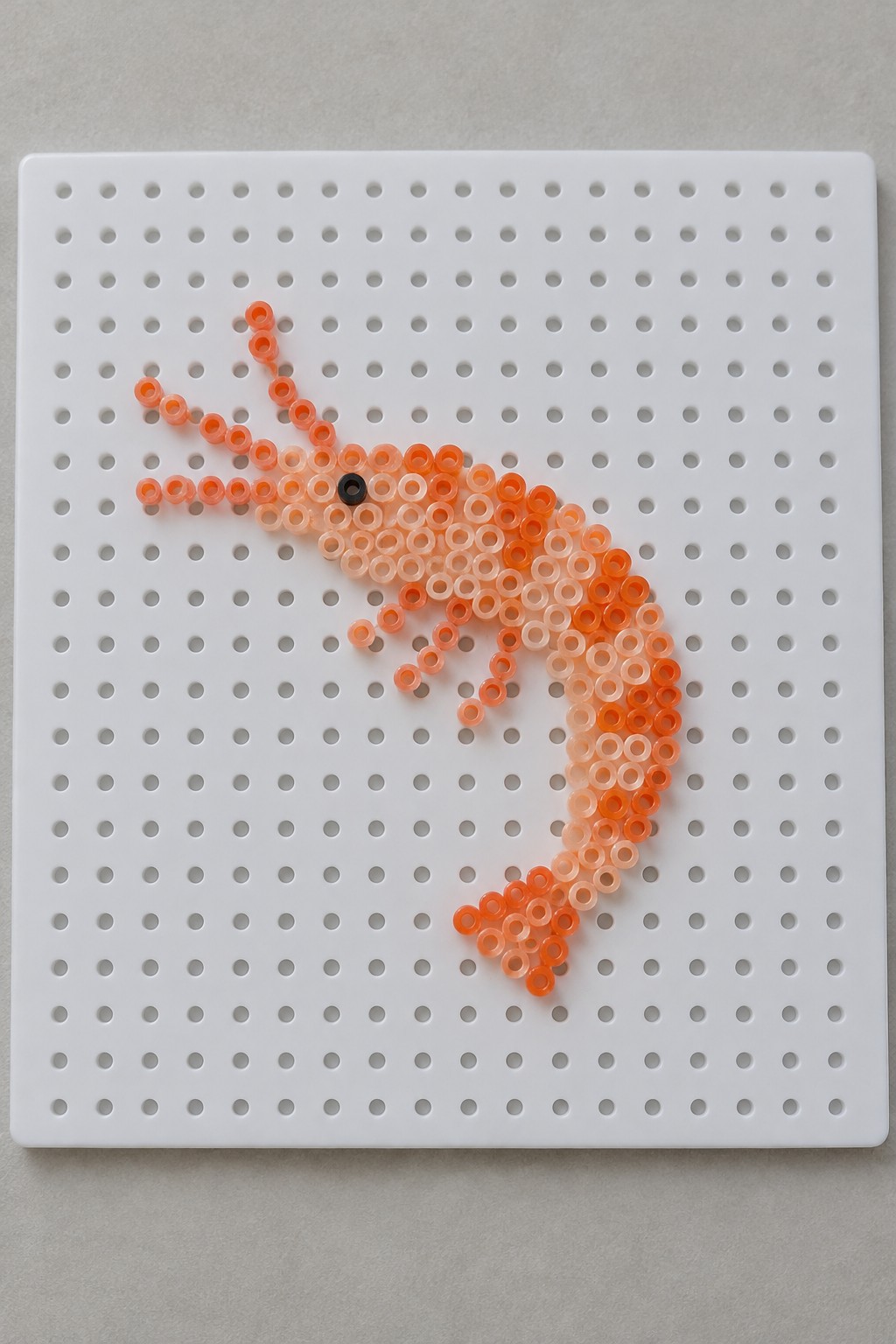
A shrimp design made from Perler beads uses several shades of orange to form the curved body and long antennae. The pattern places darker orange beads along the outer edges while lighter shades fill the interior sections, creating a simple gradient effect. A single black bead marks the eye near the head, and the overall silhouette follows the distinctive bent shape of a swimming shrimp.
The limited palette of orange tones makes this easy to recreate with whatever shades are on hand. You could adapt the same basic layout to other ocean animals like a small fish or squid by adjusting the body curve and adding different details. Finished pieces from this pattern work well as magnets or bag charms because of the compact size.
Dolphin Earrings
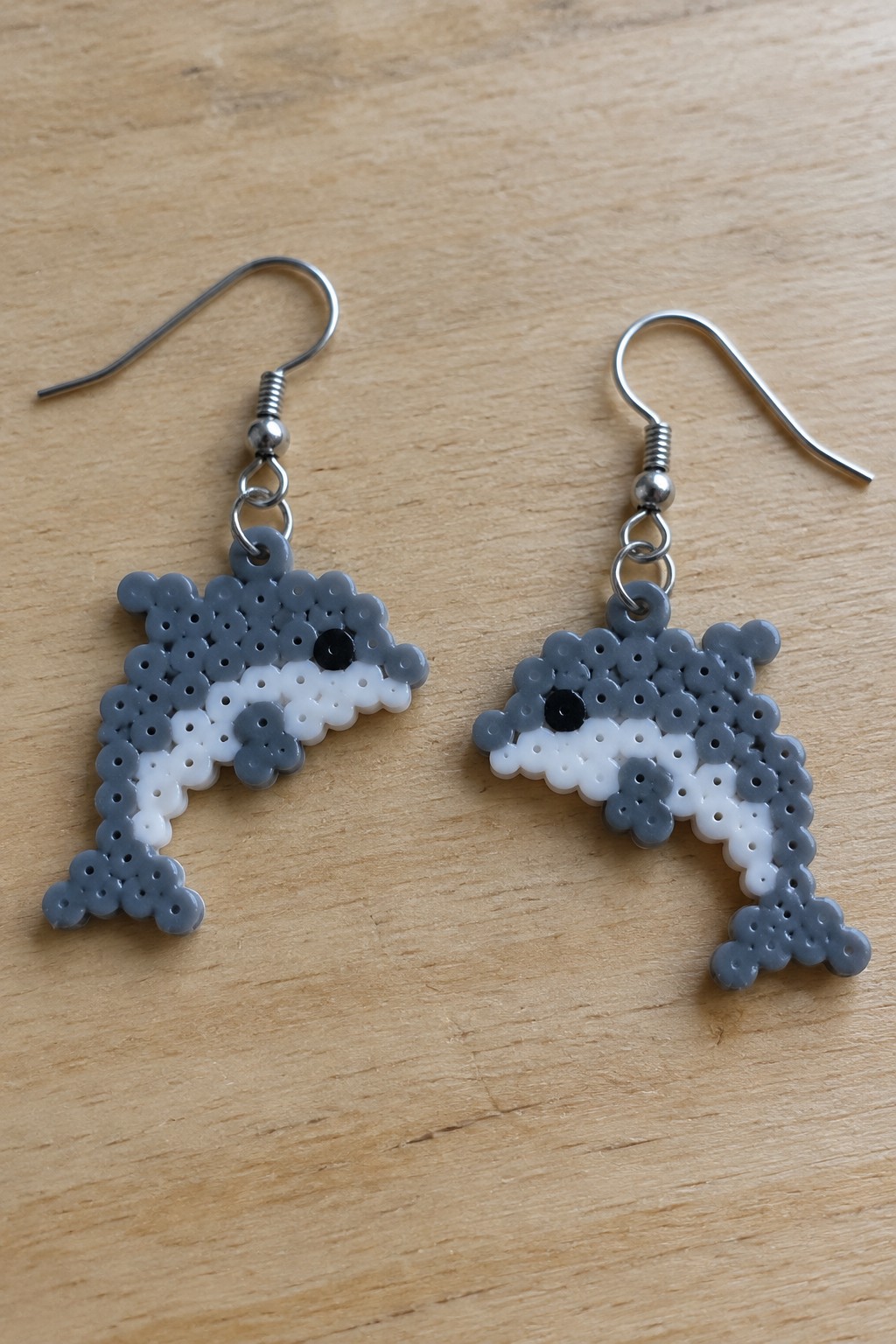
These dolphin earrings are made from fused Perler beads arranged into matching silhouettes. Gray beads form the upper body, dorsal fin, and tail while white beads create the belly stripe and lower fin sections, with single black beads placed as eyes. The stepped bead placement produces a clear pixel-style outline that stays recognizable even at a small size, and metal earring hooks are attached through the top bead holes.
The compact dolphin shape works well for earrings because the silhouette stays distinct without needing many beads. Switching the gray to light blue or teal would produce a different ocean color scheme while using the same layout. A matching set could be made by repeating the pattern with slight variations in fin position or by pairing these with other simple sea animal designs like fish or turtles.
Sea Otter Perler Bead Pattern
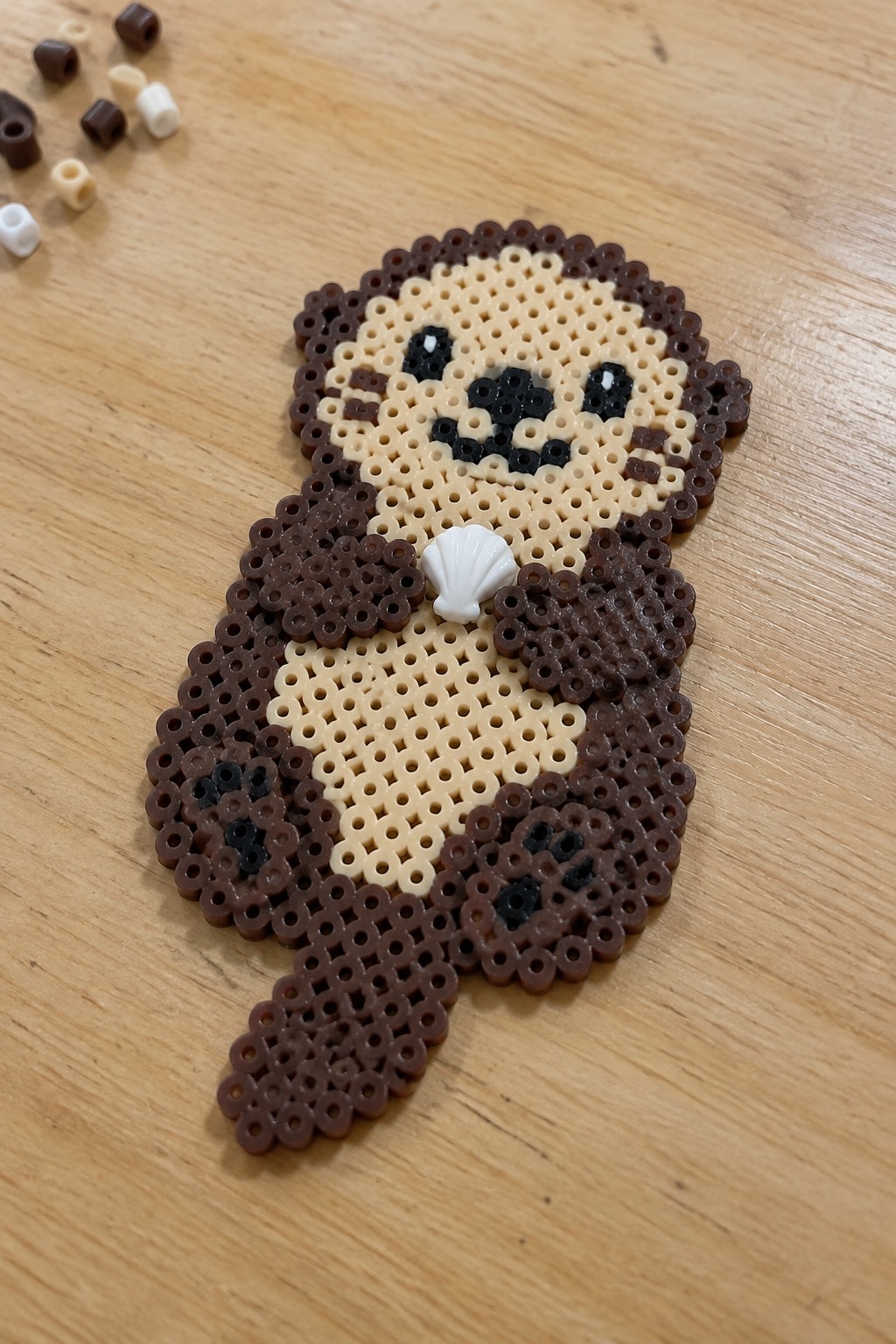
A sea otter Perler bead design uses dark brown beads to form the outer outline and limb details around a beige body fill. Black beads create the nose and eyes with small white highlights, and a single white shell bead rests on the chest area. The stepped bead placement along the arms, legs, and tail produces a clear silhouette that reads well even at small scale.
The otter shape suits an ocean animal collection because the rounded body and simple limb positions adapt easily to other aquatic themes or color swaps. You could recreate the same outline in gray and white tones for a different seal-like look or shrink the pattern by removing the tail section. The contrasting dark border against the lighter body makes the form easy to recognize without needing many extra colors.
Red Crab and Orange Fish Perler Bead Patterns
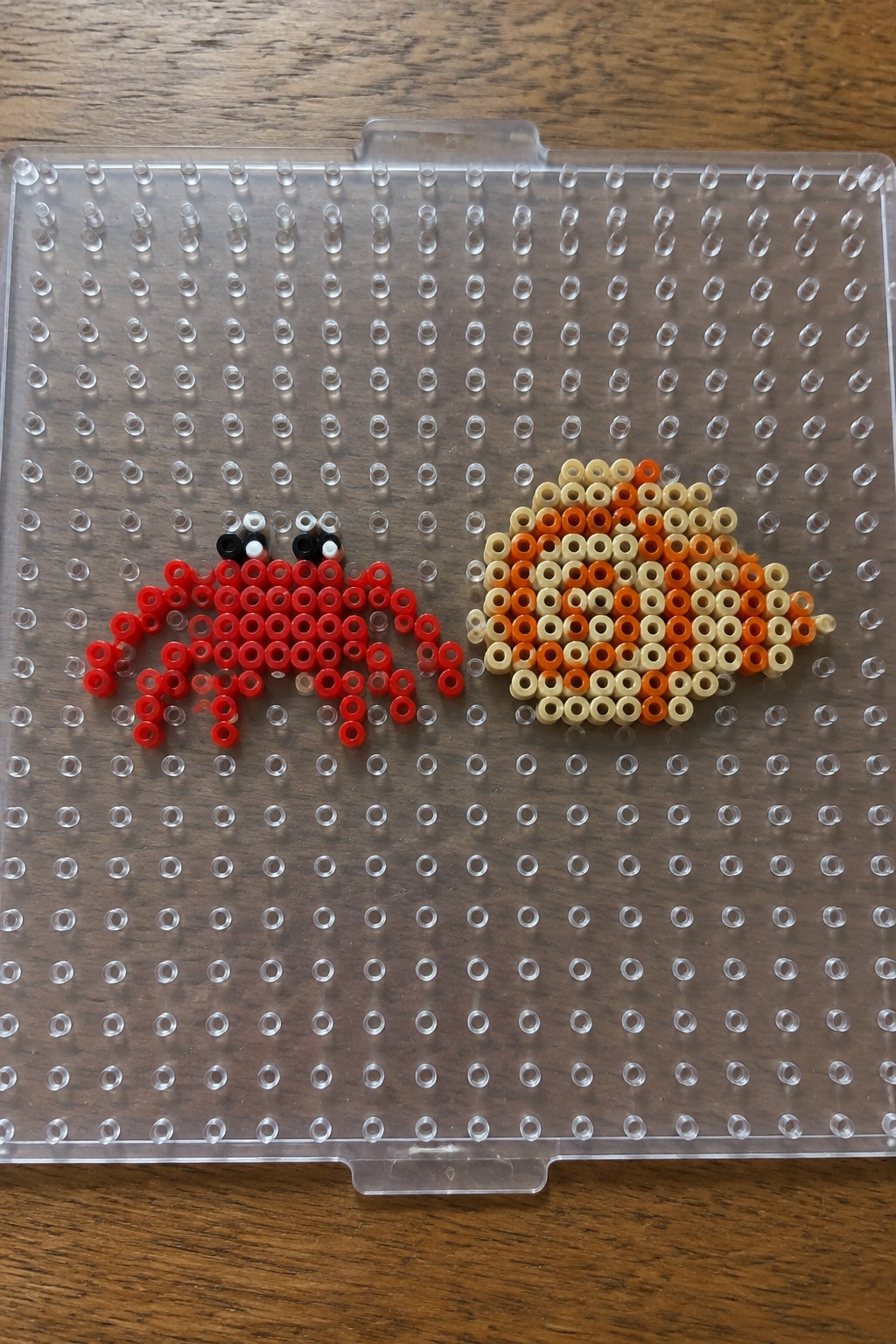
These two Perler bead designs show a solid red crab with black and white eyes next to a fish built from horizontal bands of orange, yellow, and beige beads. The crab uses a compact body with short legs and claws to form a recognizable outline through uniform color, while the fish relies on stepped rows and alternating shades to suggest fins and body shape. Both patterns remain arranged on the pegboard without fusing.
The simple color blocking helps each silhouette stay clear even with few beads. A finished crab could serve as a small magnet or ornament, and the fish layout could easily shift to blues or greens for a different species. Making both in matching color schemes would create a quick coordinated set for ocean-themed projects.
Penguin Ornament
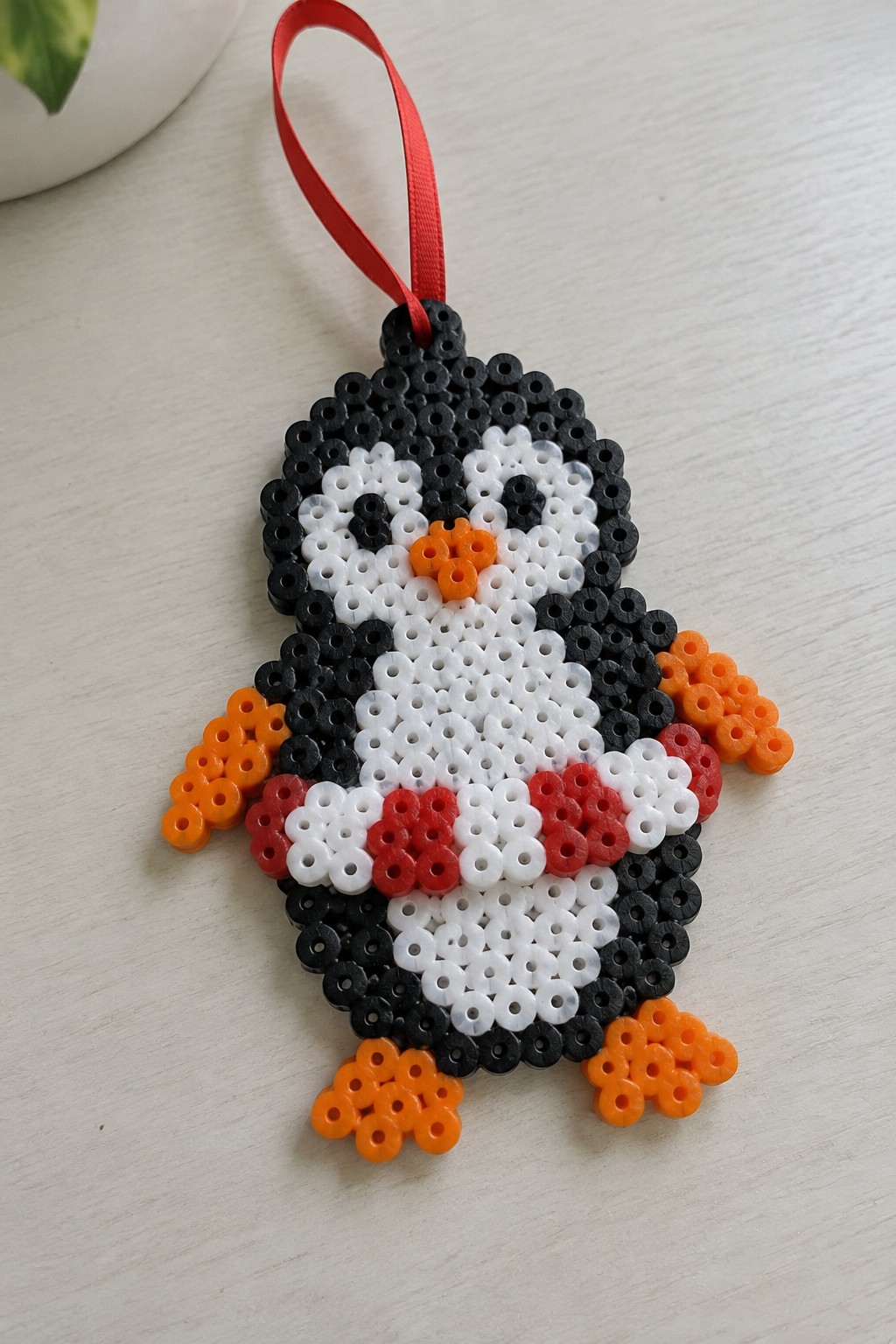
This Perler bead penguin uses black beads to form the head, back, and outer body while white beads fill the face, chest, and lower belly. Orange beads create the beak, flippers, and feet, and small clusters of red beads add accents along the sides of the body. The clear color blocking and stepped outlines produce a recognizable penguin shape that reads well even without fine detail.
The compact scale works well for turning the finished piece into an ornament or bag charm. You could swap the red accents for blue or teal to give it a different seasonal feel or make several versions with varied scarf colors for a matching set. The same basic body layout could also serve as a starting point for other aquatic birds by adjusting the beak and foot shapes.
Tropical Fish Perler Bead Patterns
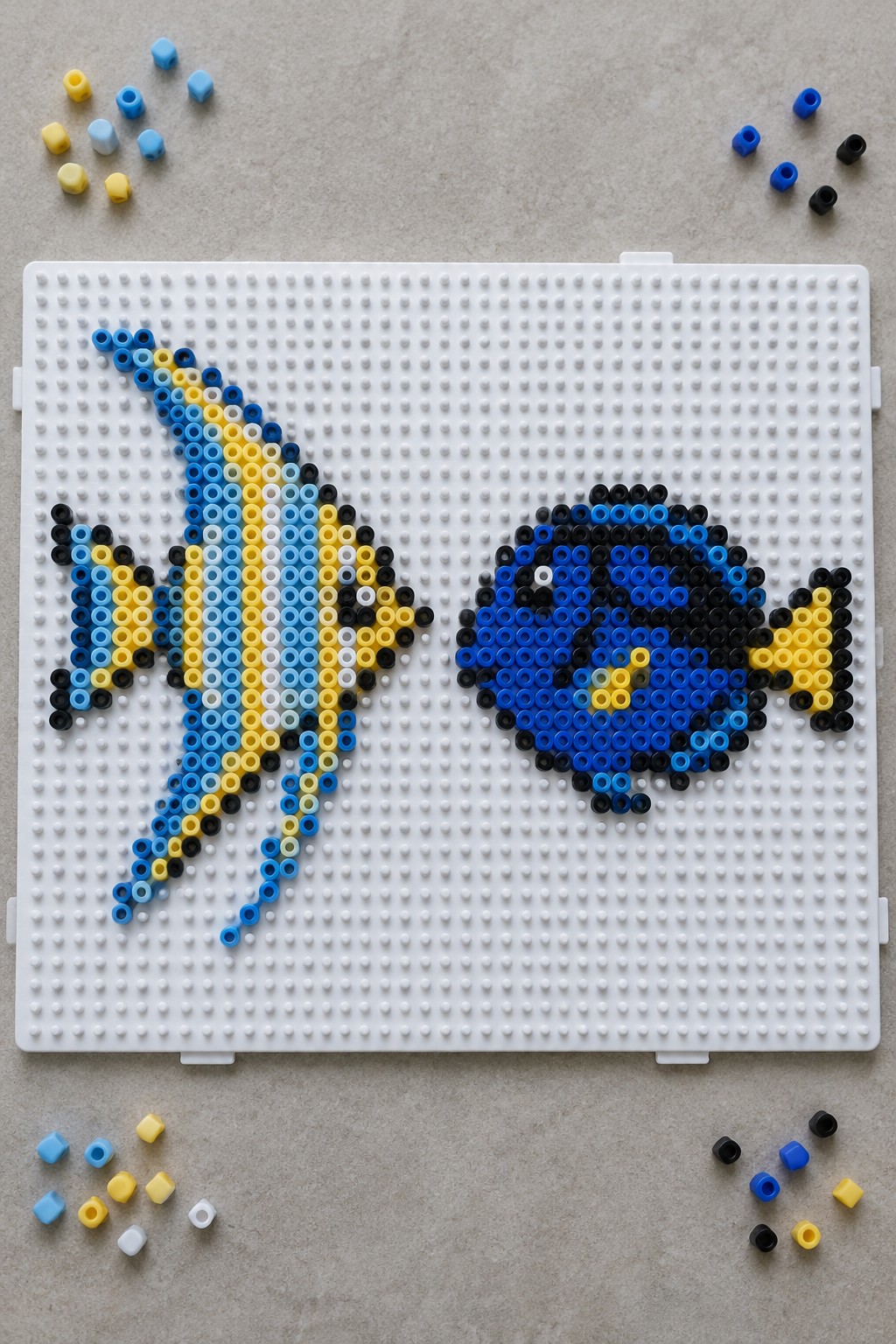
Two fish designs sit on a pegboard built from individual fuse beads in blue, yellow, black, and white. The larger fish uses vertical color bands and black outlines to shape its body and tail, while the smaller fish relies on stacked blue tones with yellow fins and a single white eye to define its form. Black beads create strong borders around both silhouettes, and the stepped edges from the bead grid give each fish a clear pixel-style shape. The arrangement shows how color blocking separates body sections without needing many shades.
The limited palette keeps the patterns easy to follow while still producing distinct ocean animal shapes. You could swap the yellow sections for orange or green to turn the same outlines into different fish species. Finished versions would work well as magnets or small wall accents in an ocean-themed set. The bead layout also shows how a few contrasting colors can make fins and bodies readable even at a modest size.
Blue Whale Perler Bead Pattern
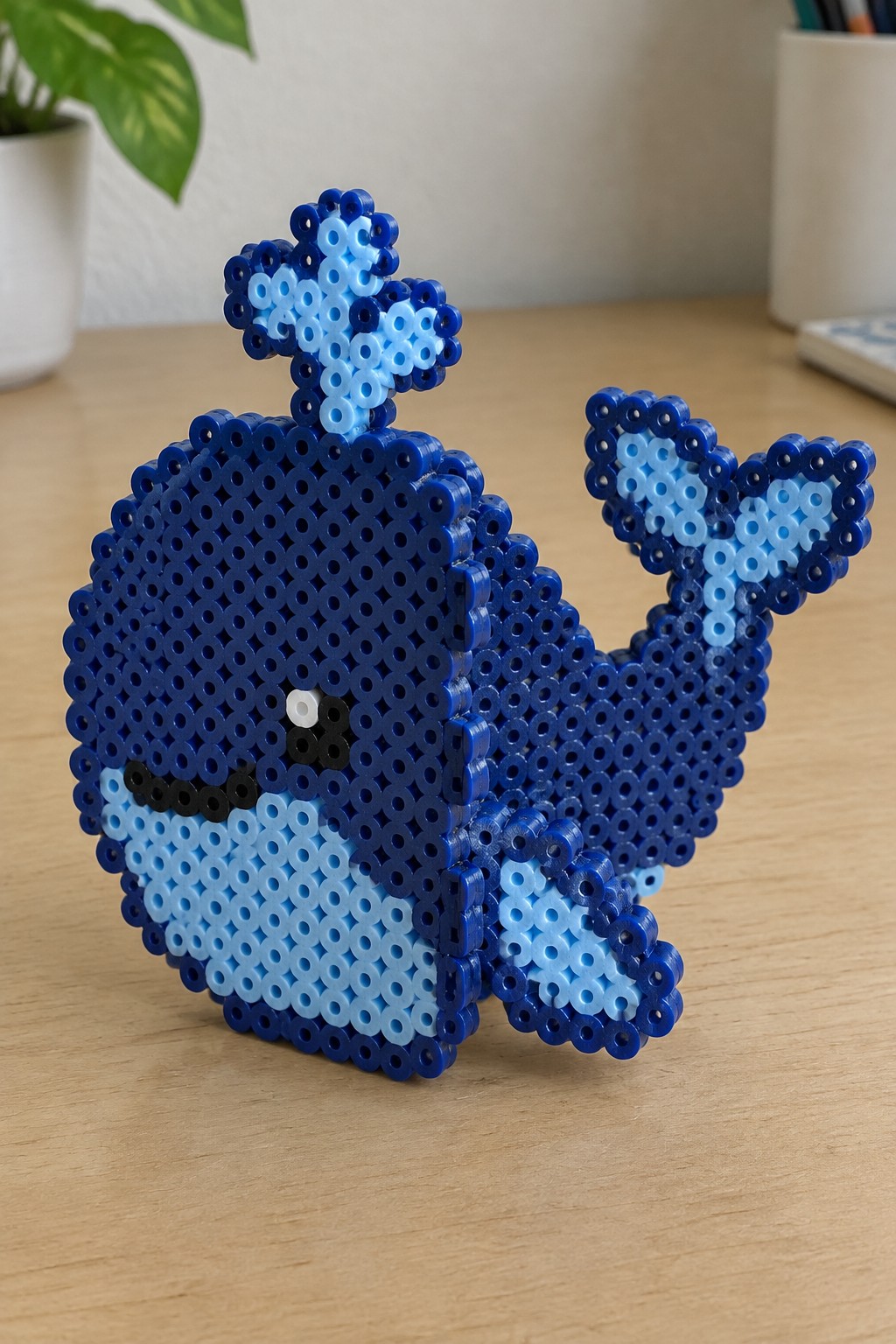
A Perler bead arrangement creates a blue whale using dark blue beads for the main body and tail, with lighter blue beads filling the underbelly, flippers, and spout. Black beads form the mouth line and eye, while a single white bead provides the eye highlight. The stepped silhouette and color blocking separate the body sections clearly, making the whale shape easy to recognize even at a small scale.
The contrasting bead colors make the whale’s body and spout stand out without needing many extra shades. You could adapt the same outline for other ocean animals by changing the tail shape or adding a different fin pattern. A finished version of this size works well as a shelf accent or part of a larger ocean-themed display.
Red Lobster Perler Bead Pattern
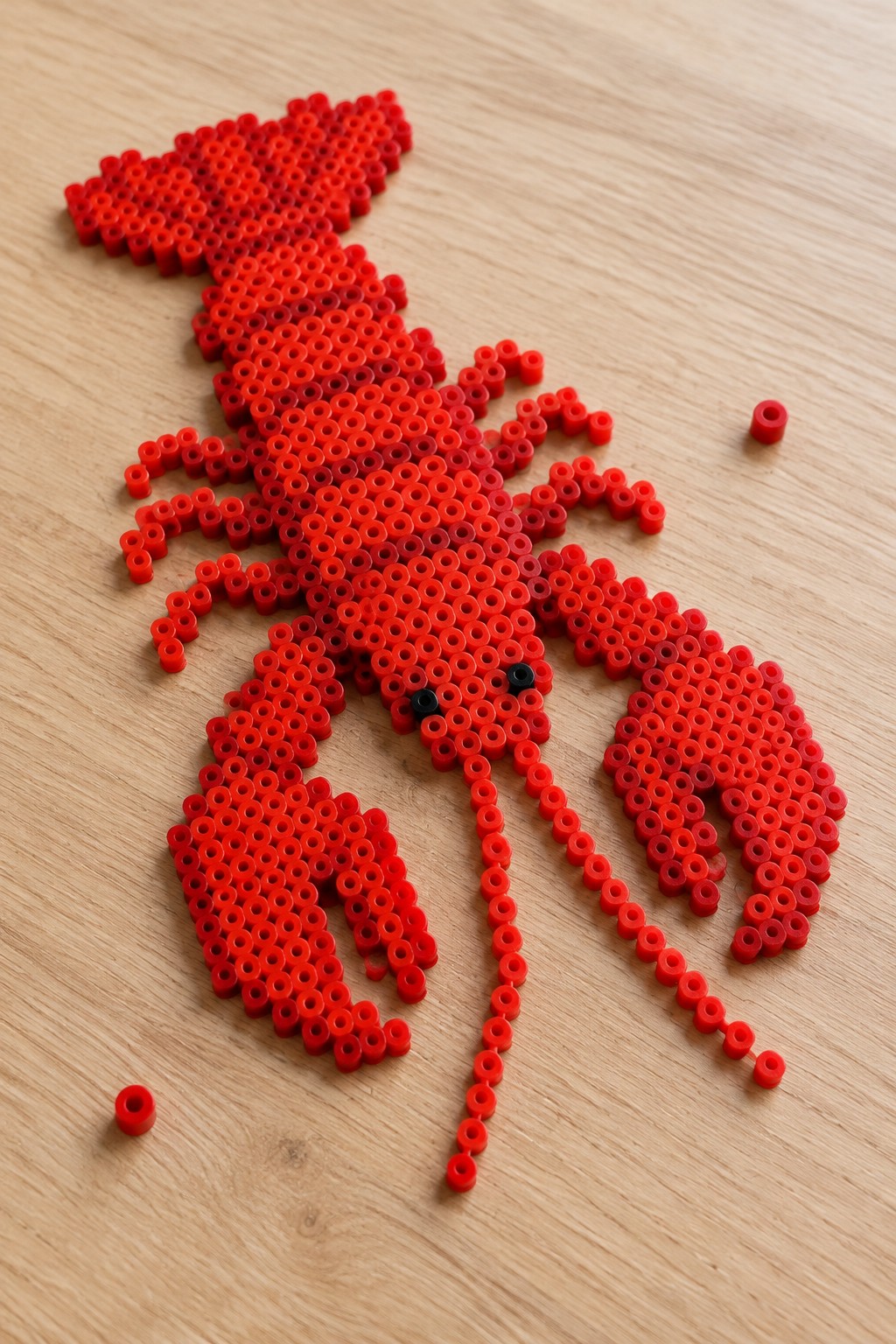
A Perler bead lobster uses several shades of red beads to form the body, large claws, segmented tail, and multiple legs on a pegboard. Darker reds create depth in the center sections while brighter reds outline the edges and smaller details like the antennae. Black beads mark the eyes, giving the design a clear focal point within the stepped pixel layout.
The color shifts between red tones help separate the claws and tail from the main body without extra colors. This silhouette works as a strong base for other ocean animals by swapping in different bead shades or adjusting the claw size. A fused version could serve as a display piece alongside similar sea creature patterns.
Blue Fish Patterns
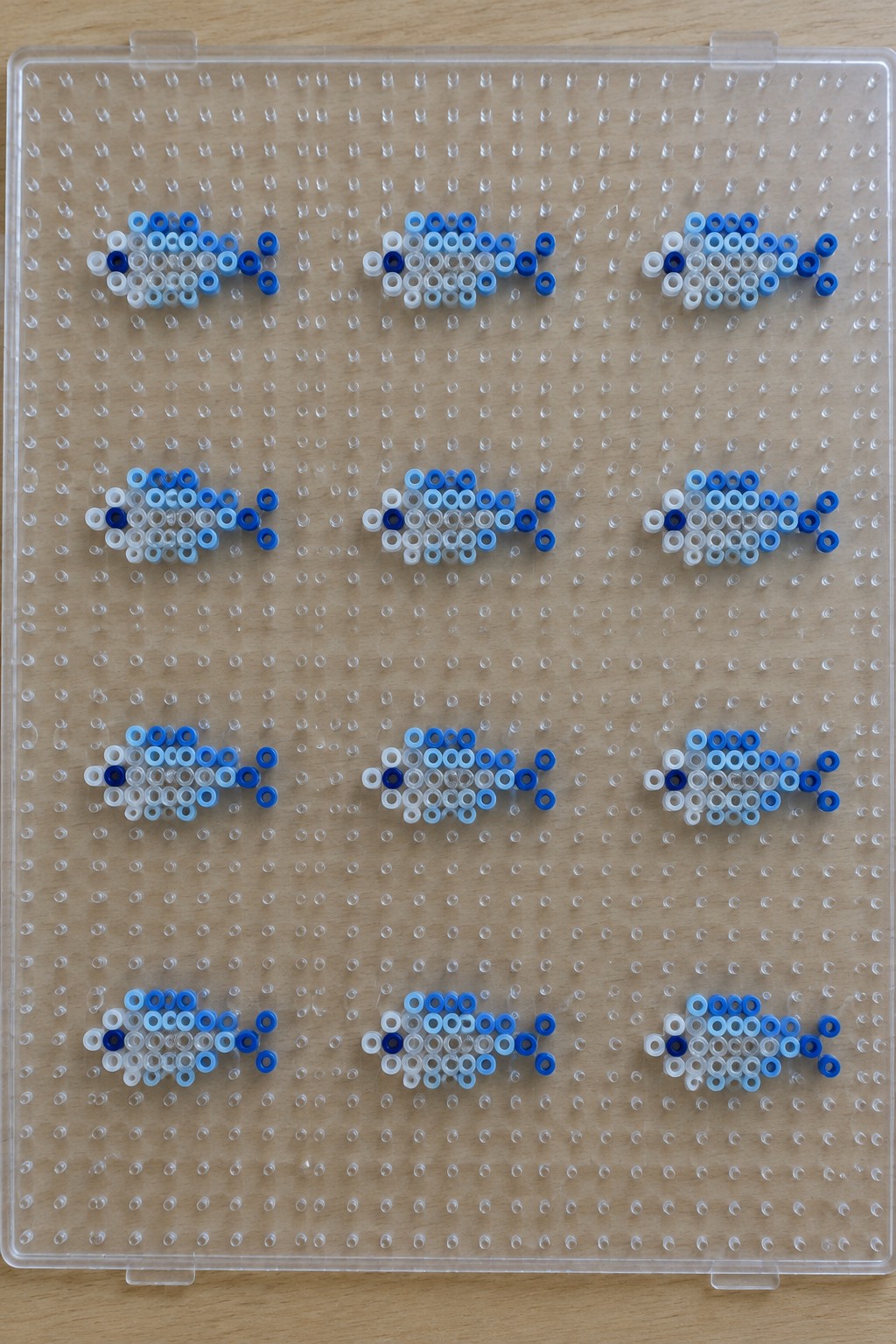
Multiple fish designs sit on the pegboard, each built from white, light blue, and dark blue beads. The bodies use solid color blocking with a single dark bead for the eye and stepped edges that form the fins and tail. Different sizes and slight proportion changes appear across the group, showing how the same basic fish shape can be adjusted while staying within a tight color scheme.
The consistent palette makes these patterns simple to recreate or scale up and down for a matching set. You could swap in other ocean shades like teal or turquoise to create variety without changing the layout. Finished pieces from this group would suit small magnets, bag charms, or accents on an ocean themed display. The clear silhouettes also work as a starting point for adding stripes or spots to make each fish more distinct.
Narwhal Keychain
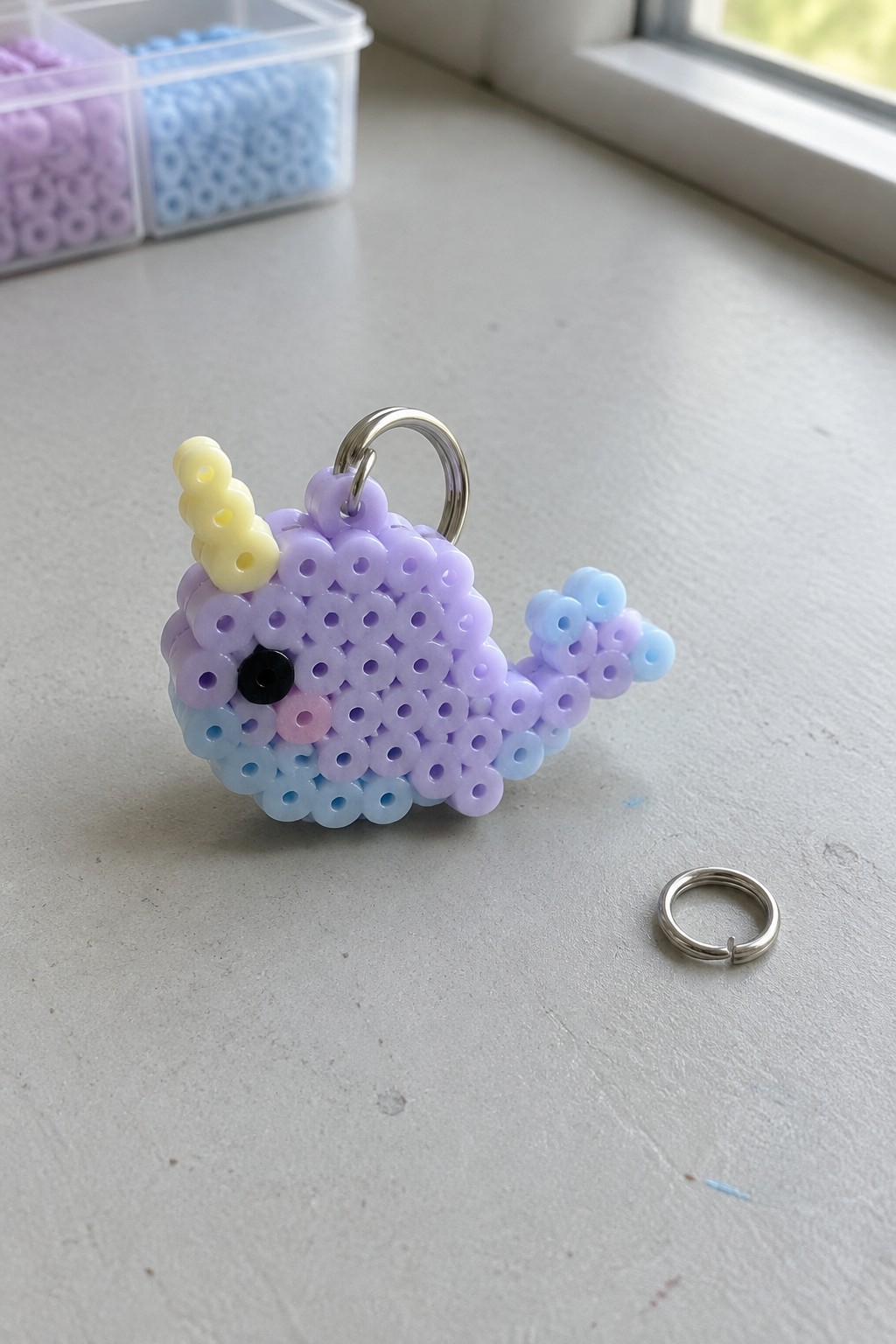
A narwhal keychain captures the animal’s recognizable shape through a compact Perler bead layout. Light purple beads form the main body while a row of lighter blue beads creates the underside. A short stack of yellow beads forms the tusk, and small black and pink beads mark the eye and cheek. The tail tapers with blended blue and purple beads to suggest a simple side profile.
The small overall size works well for a finished keychain once the beads are fused and a metal ring is added. You could recreate the same silhouette in gray and white beads for a different whale look or shorten the tusk to make a basic whale instead. A matching set could use the same color blocking technique for other ocean animals like a dolphin or seal.
Ocean Animal Charms Made with Perler Beads
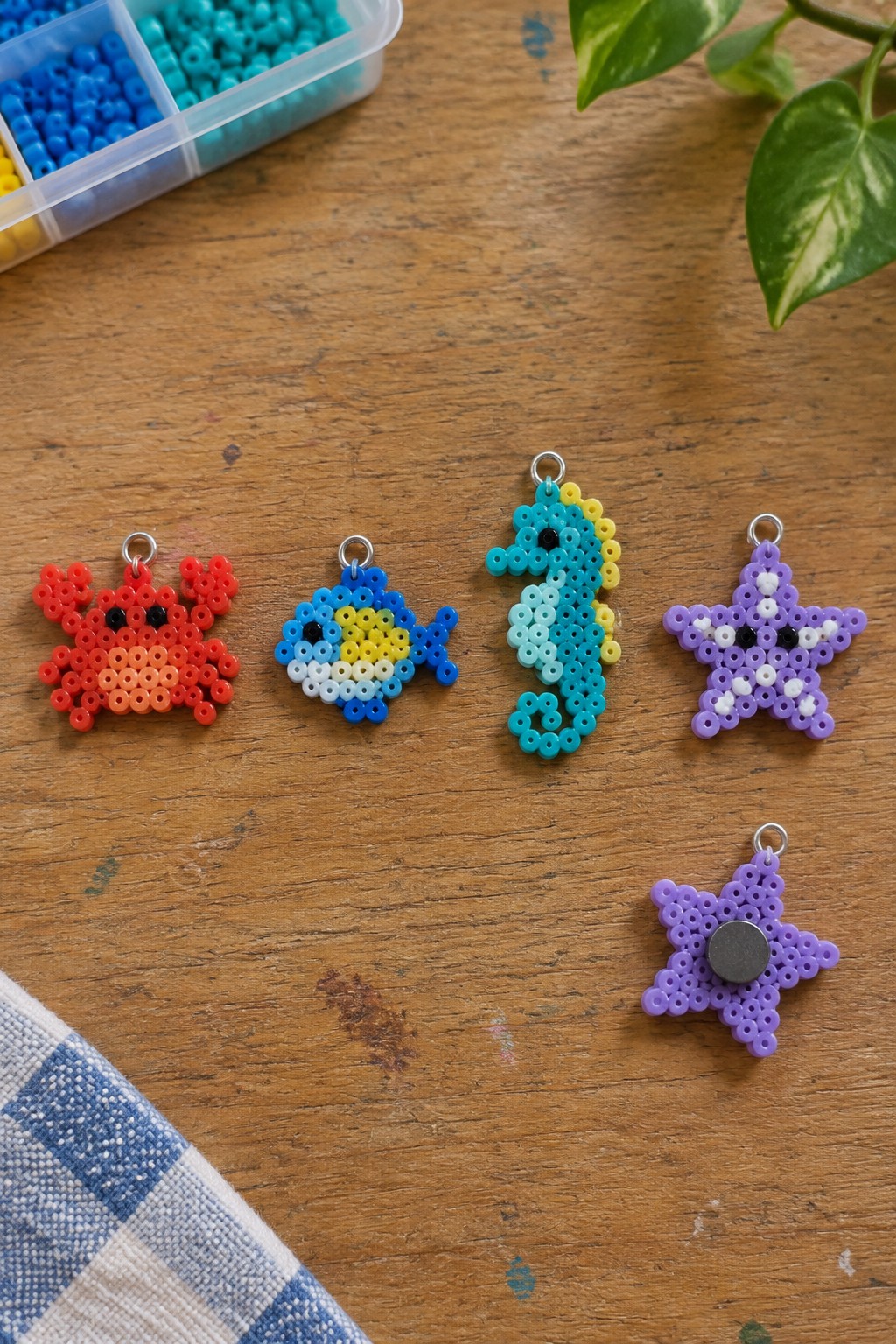
These Perler bead projects create a set of flat ocean animals using distinct color blocks and simple outlines. The crab combines reds and oranges with black eyes, the fish uses blues and yellows for its body and fins, the seahorse builds a curved turquoise shape with yellow accents along the back, and the starfish repeats a purple and white pattern around a central black bead. Metal loops attached at the top turn each finished piece into a charm, while the bead placement creates clear silhouettes through stepped edges and contrasting sections.
The compact size and limited color palettes make these designs easy to recreate or vary for a larger ocean set. You could change the starfish to other sea tones or adjust the seahorse colors to match different aquatic animals while keeping the same proportions. Finished pieces with the loops work well as keychains or bag charms when you want matching ocean-themed accessories.
Frequently Asked Questions
1. What supplies do I need to start making these ocean Perler bead projects? You will need Perler beads in various shades of blue, green, and other ocean colors, along with pegboards, ironing paper, and a household iron. Additional helpful items include tweezers for precise placement, a bead organizer to sort colors, and clear tape if you plan to create larger designs by connecting multiple boards.
2. How do I iron the beads properly to avoid common mistakes? Place the ironing paper over your design and use a medium heat setting while moving the iron in slow circular motions for even melting. Check the back after 10 to 15 seconds and stop once the beads fuse together without flattening completely. Always work on a heat resistant surface and let the piece cool fully before peeling it off the board.
3. Where can I find free patterns for aquatic animals like dolphins or sea turtles? Search online for printable Perler bead templates on craft websites or Pinterest boards dedicated to fuse bead art. Many creators share grid based patterns for sea creatures that you can print and follow directly. You can also sketch simple designs on graph paper to customize the 21 ideas mentioned in the article.
4. What tips help make the colors pop for underwater scenes? Choose a mix of light and dark shades for depth, such as using white or light blue for highlights on fish scales and darker blues for shadows. Layer similar tones next to each other to create texture on animals like octopuses or whales. Test small sections first to see how the melted beads look under different lighting.
5. How do I display or preserve the finished Perler bead ocean crafts? Attach a magnet to the back for fridge displays or string them as keychains using jump rings. For wall art, frame them in shadow boxes to protect from dust. Seal the surface lightly with clear acrylic spray if you want extra durability, especially for pieces that might be handled often.
