

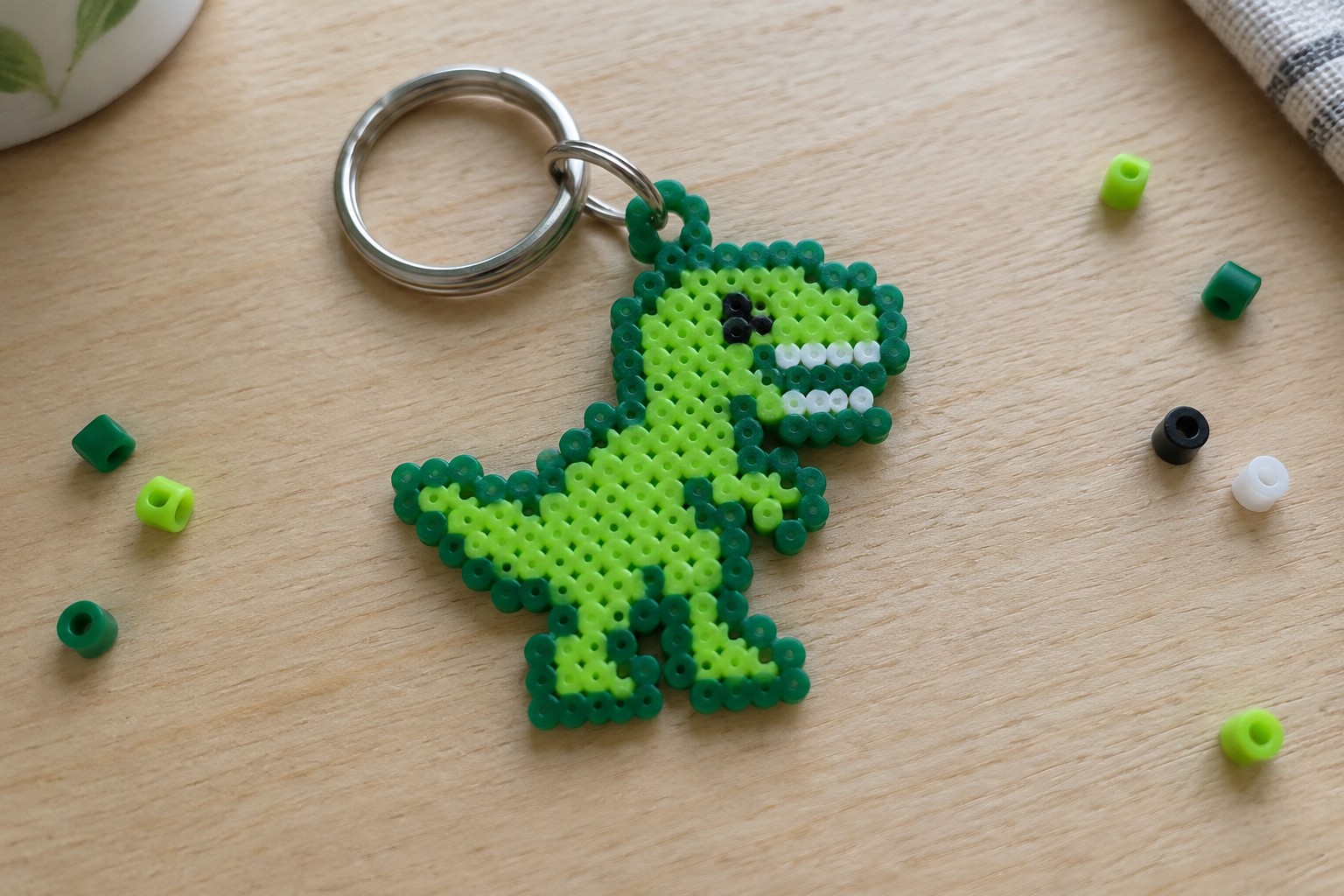
I often look for compact Perler bead ideas that can double as keychains.
Dinosaurs make good subjects for mini pixel designs because their outlines stay clear even when kept small.
This set includes 17 different dinosaur patterns sized for keychain projects.
Each one uses a simple grid that fits on a small pegboard.
They can be fused and clipped onto rings to carry around.
Green Pixel Dinosaur Keychain
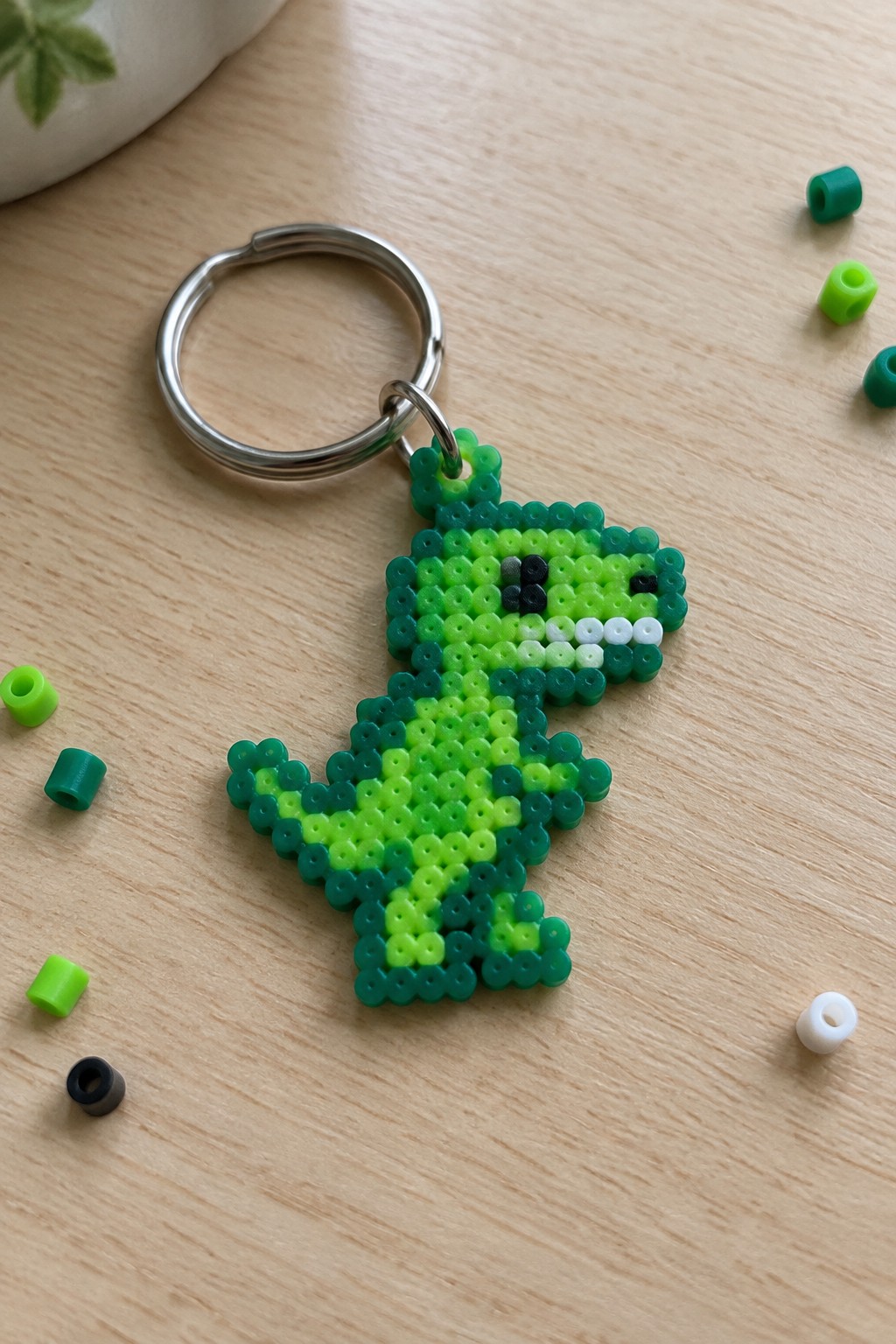
This Perler bead keychain uses a compact dinosaur silhouette built from multiple shades of green beads fused together into a single flat piece. Darker teal beads form the outer edges and lower body while brighter lime and light green beads fill the upper sections to suggest the head, back, and tail. Black beads mark the eye and a short row of white beads creates the teeth along the open mouth, giving the design clear facial details without extra layers.
The stepped silhouette and limited green palette make the dinosaur shape easy to recognize even at small scale, so the same pattern works well as a keychain without needing extra hardware. You could swap the greens for other color sets like blues or oranges to produce matching dinosaur keychains for a set. The fused bead surface stays lightweight and sturdy enough to hang from a standard keyring while keeping the pixel edges visible.
Mini Blue Triceratops Keychain
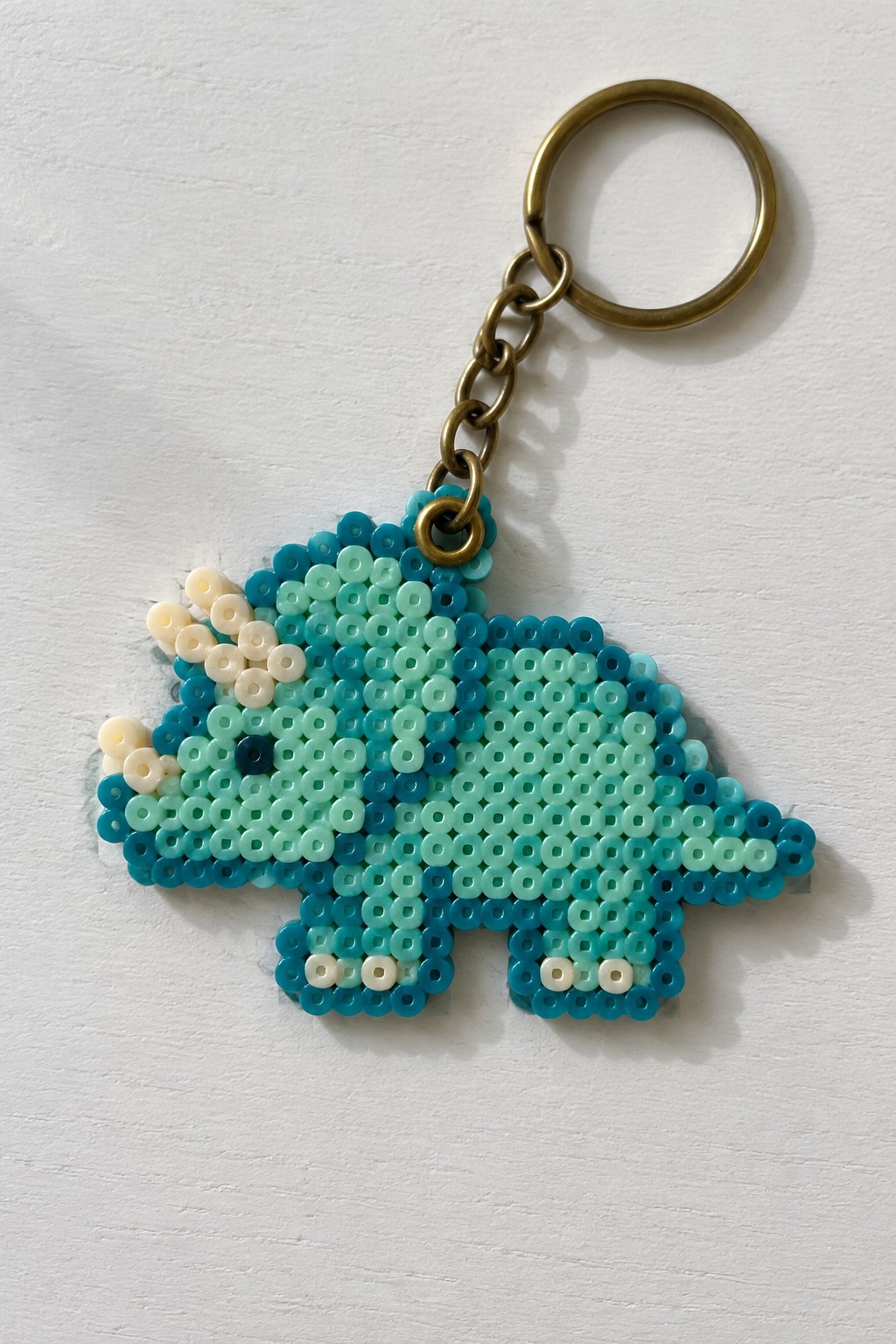
This Perler bead keychain forms a small triceratops using stacked rows of teal, turquoise, and dark blue beads for the body and frill. White beads outline the three horns and create small accents on the feet and jaw while a single black bead marks the eye. The stepped silhouette and gradual color shifts from light to dark give the dinosaur a readable pixel shape that stays intact once the beads are fused.
The compact layout works well for a finished keychain because the design stays balanced without extra bulk. Swapping the cool blues for greens or browns would quickly change the same pattern into a different dinosaur while keeping the horn and frill placement. A finished version like this can be clipped directly onto a keyring or bag without additional hardware.
Mini Stegosaurus Keychain
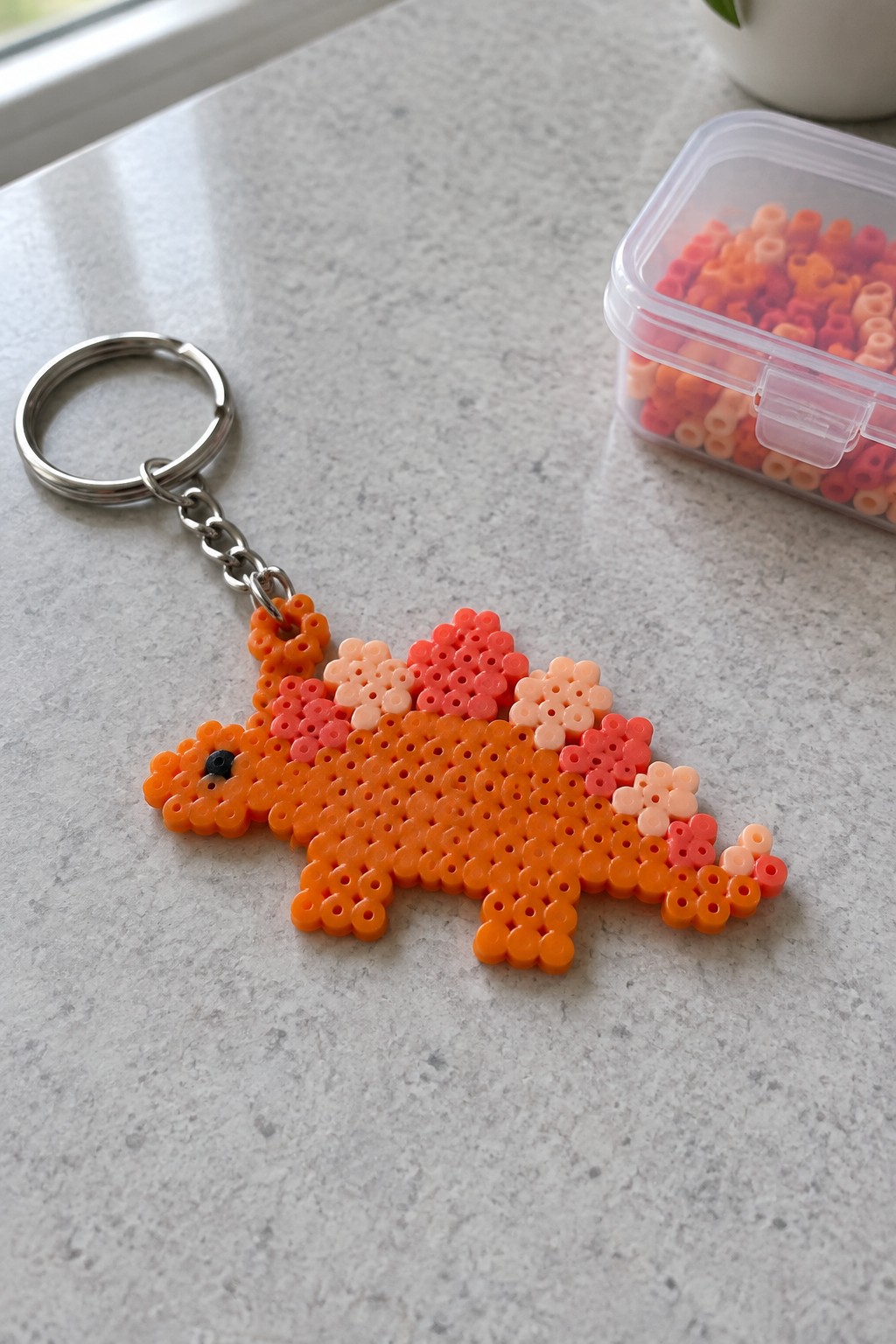
A small fused Perler bead stegosaurus forms the pendant on this keychain, built from solid orange beads across the body and tail with lighter peach and pink beads arranged in stepped rows for the back plates. The grid layout creates a clear pixel silhouette, including a short neck, pointed tail tip, and simple black bead eye that keeps the face readable at this scale. A short chain connects the finished piece directly to a standard metal keyring, keeping the overall size compact for everyday carry.
The compact bead count and flat profile make the design easy to finish in one session and turn into a functional keychain without extra hardware. The same base layout works for other color schemes, such as swapping the plates to greens or adding a contrasting border around the body. Variations with different plate colors or slight tail adjustments can produce a quick set of matching dinosaur keychains.
Mini Pixel Brontosaurus Keychain
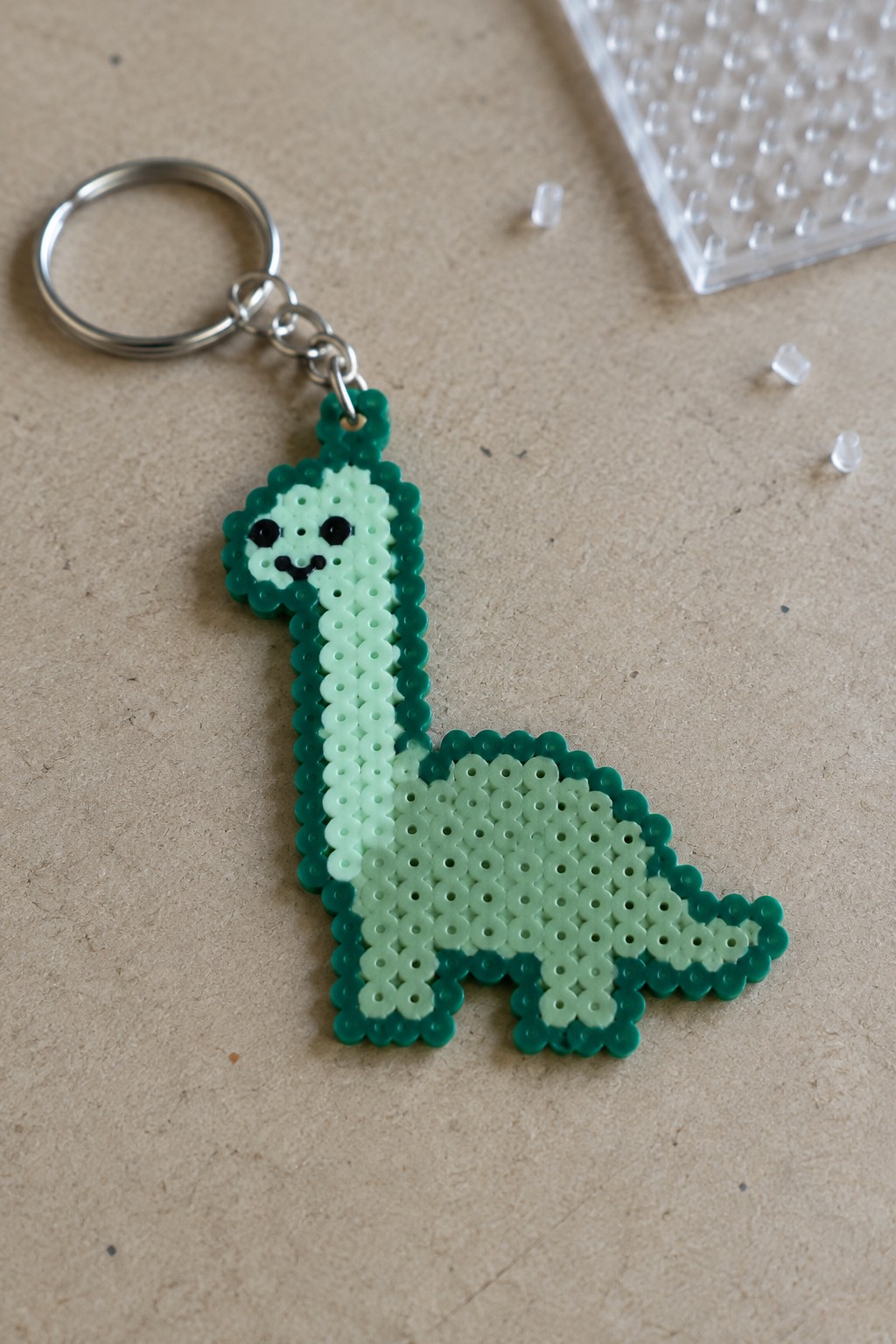
This Perler bead keychain uses a long-necked dinosaur silhouette built from dark green beads around the outer edge and lighter mint and seafoam beads for the inner body and neck. The stepped pixel edges and compact proportions keep the shape readable at a small scale, while the two black eye beads and single curved mouth bead create a simple face without extra detail. The entire design is fused into one solid piece and connected to a metal keyring through a small loop of beads at the top of the head.
The limited green palette makes the shape stand out clearly and lets you swap shades easily if you want a different dinosaur look. You could repeat the same outline in earth tones or bright colors to make a matching set of mini keychains. A finished piece this size clips neatly onto a backpack or bag without adding bulk. The basic body and neck layout also works as a starting point for other long-necked dinosaur variations by adjusting the tail angle or leg placement.
Mini Purple T-Rex Keychain
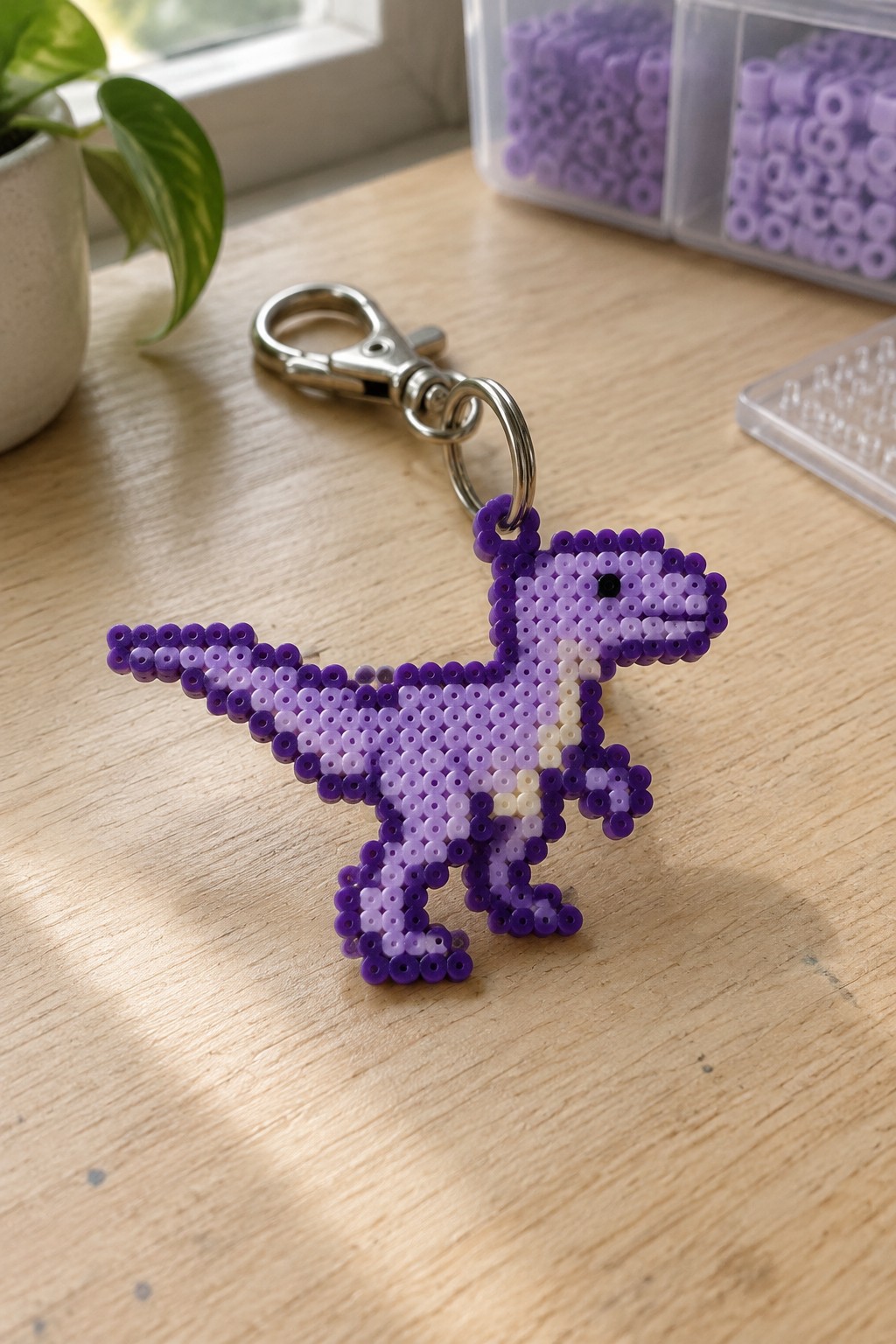
A fused Perler bead keychain forms a compact dinosaur figure using several shades of purple beads. Darker purple beads outline the back, head, and tail while lighter purple and white beads fill the body and underbelly. The stepped placement of beads creates the recognizable T-Rex silhouette with small arms, sturdy legs, and an open mouth, and one black bead marks the eye. The finished piece hangs from a standard metal keyring clasp.
The small scale makes this pattern practical as a keychain or bag charm. Changing the purple tones to greens or earth colors would produce other dinosaur variations using the same basic layout. The clear color blocking and simple outlines keep the shape easy to recognize even with a limited number of beads. A set of similar dinosaurs in different color schemes could work together as matching keychains.
Stegosaurus Perler Bead Keychain
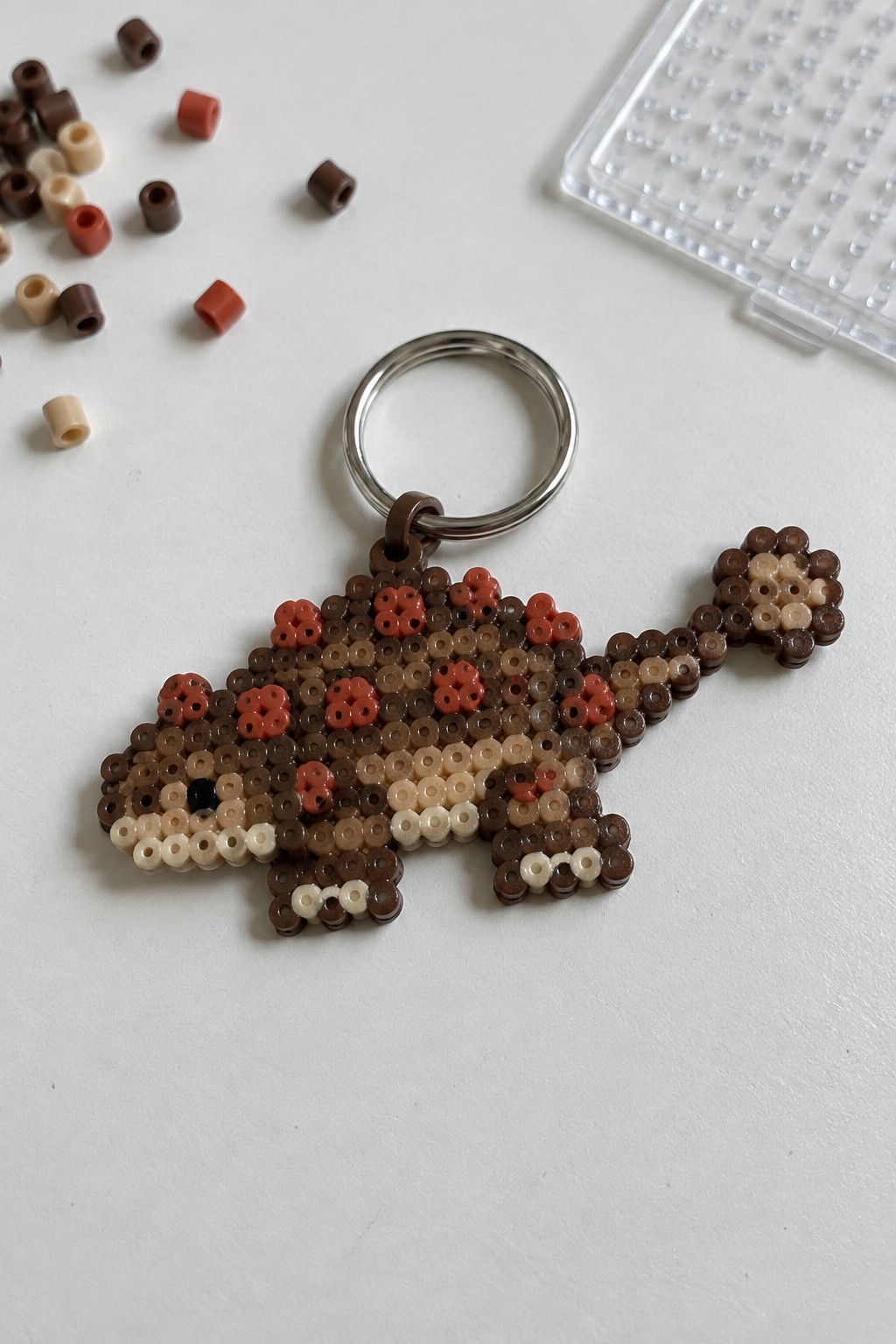
This Perler bead keychain forms a stegosaurus using a grid of brown, tan, and beige beads for the body and head. Red beads create the row of plates along the back while a small black bead marks the eye. The tail extends into a rounded cluster of beads that suggests the spiked tip, and the entire design stays compact enough to hang from the attached metal ring.
The limited color palette keeps the silhouette readable even at small scale. Swapping the brown tones for greens or grays would produce other dinosaur variations without changing the bead layout. A finished piece like this works well as a bag charm or backpack tag because the flat fused shape stays lightweight and the keyring attachment is already built in.
Mini Pink Dinosaur Keychain in Pixel Style
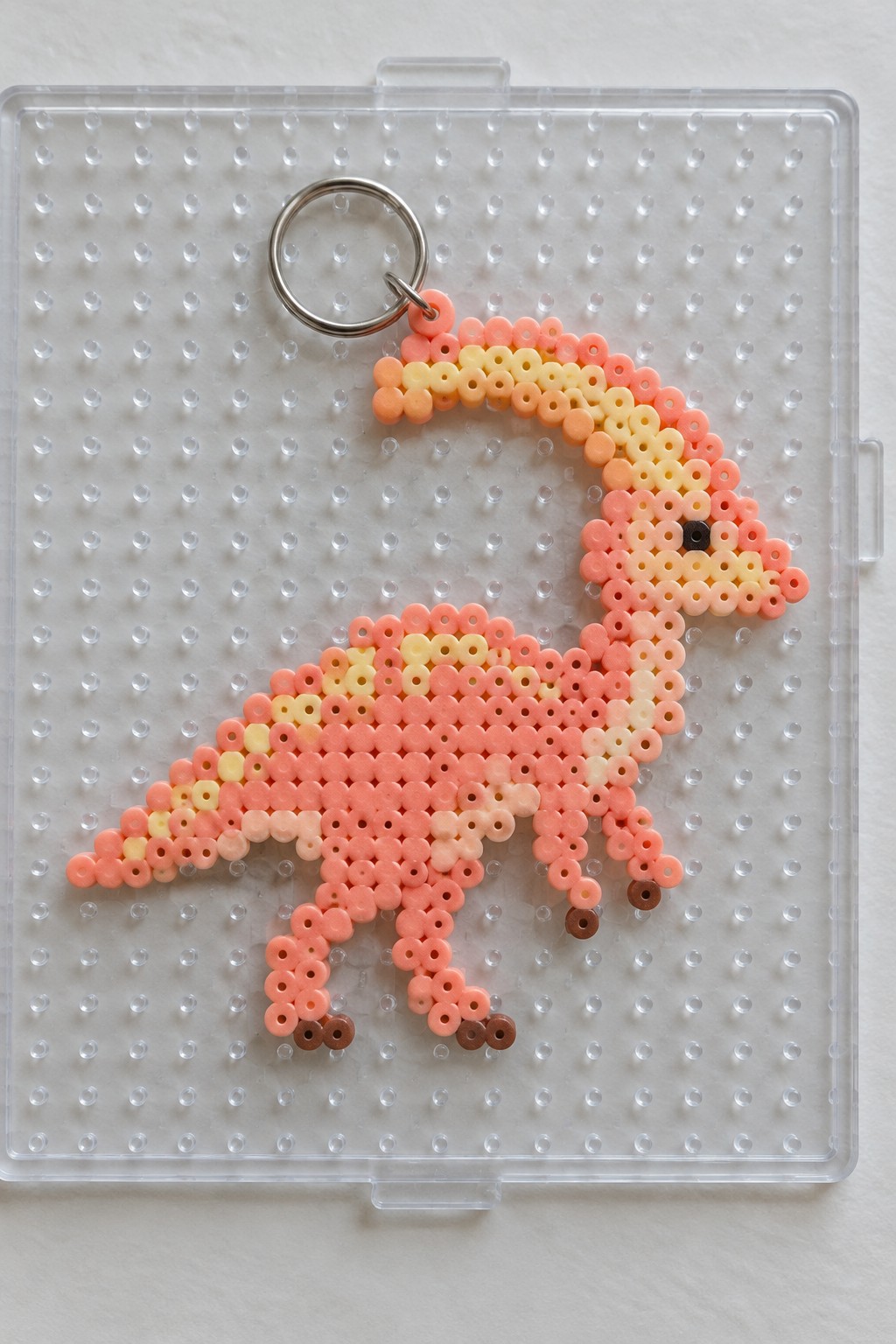
This Perler bead keychain uses a compact dinosaur silhouette arranged on a pegboard with individual fuse beads. The design builds the body and tail from rows of coral and peach beads, while lighter yellow and cream beads create a simple gradient along the back and head crest. A single black bead marks the eye and small brown beads form the toe details, keeping the overall shape readable at a small scale.
The limited color palette and clear outline make this pattern easy to recreate or resize for other dinosaur shapes. Changing the coral tones to greens or earth colors would produce a different species using the same basic layout. A finished piece attaches directly to the included keyring and works well as a bag charm or everyday key identifier.
Mini Stegosaurus Keychain with Pink Plates
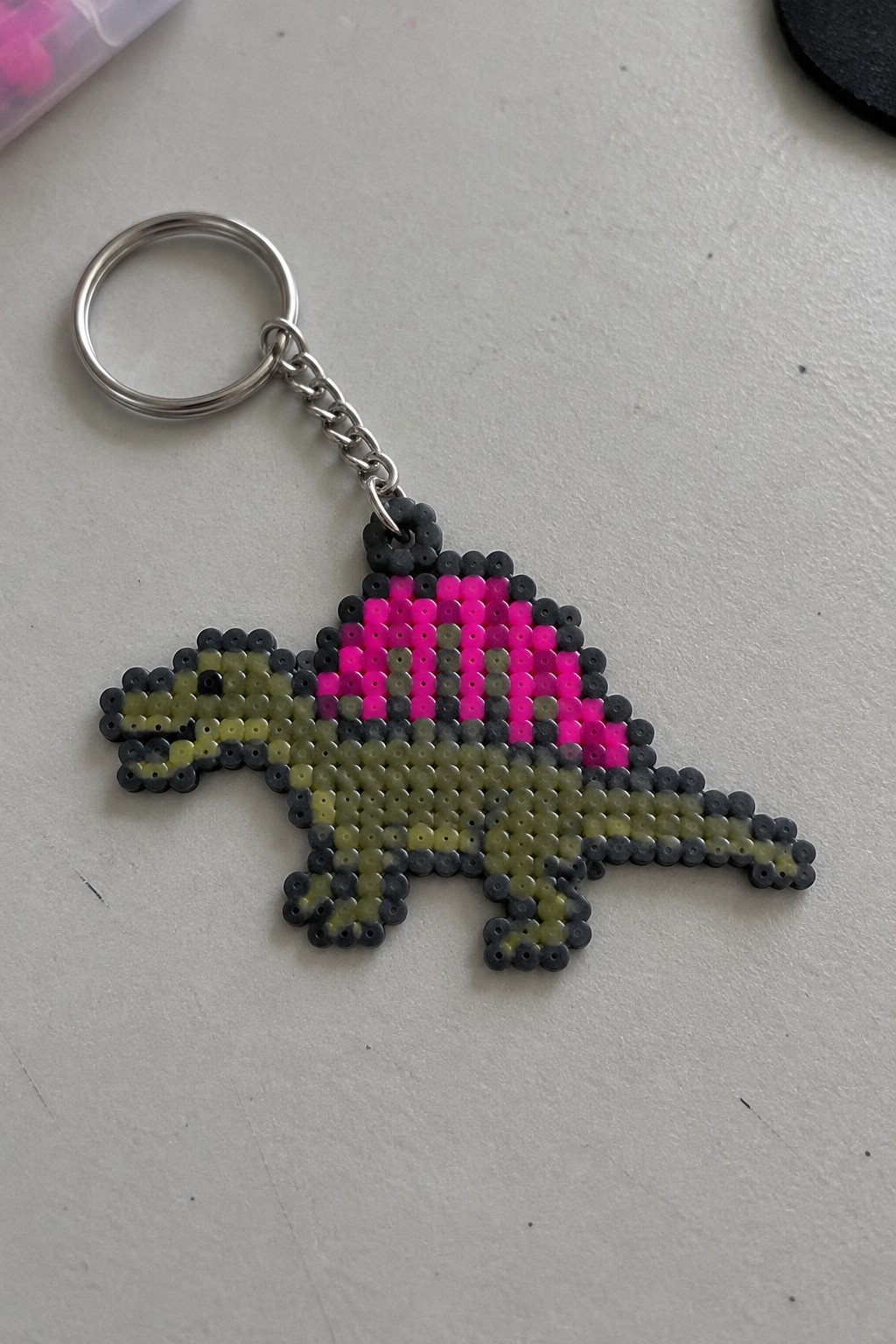
A fused Perler bead keychain forms a compact stegosaurus dinosaur in a pixel-art style. Lime green beads make up most of the body while gray beads define the outline, legs, tail, and head. Bright pink beads create the row of back plates and a single black bead forms the eye. The grid layout and strong color contrast keep the dinosaur shape clear even at small scale.
The compact size suits a keychain because the bold color blocks help the silhouette read from a distance. Changing the pink plates to another color would create quick variations while keeping the same body pattern. The finished piece already includes the metal ring and chain so it can attach directly to keys or a bag. The same basic stegosaurus layout could serve as a starting point for other dinosaur keychains by adjusting the plate colors and body tones.
Mini Pixel Dinosaur Keychain
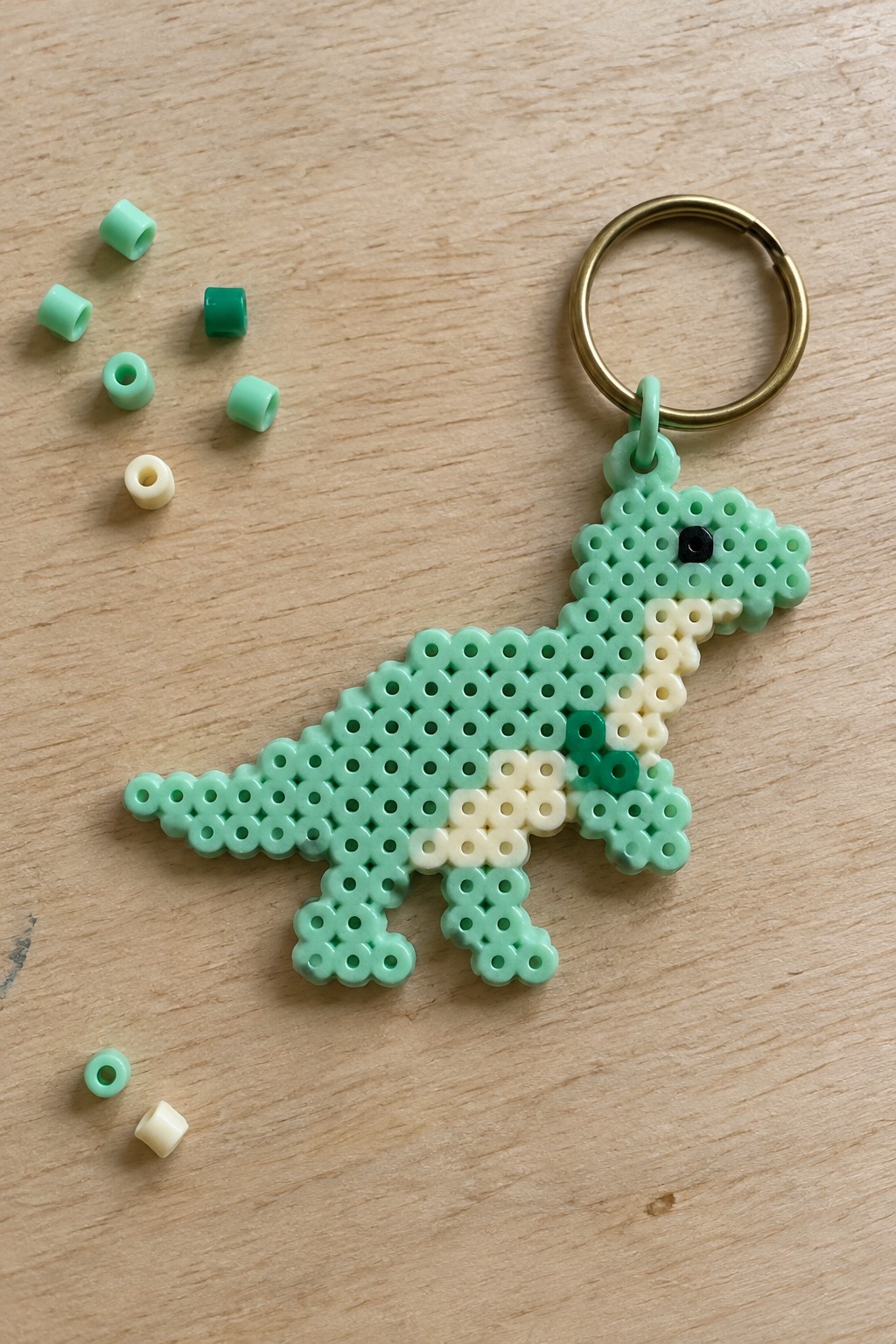
A small dinosaur keychain built from Perler beads uses a light green body arranged in a stepped pixel silhouette. Cream beads fill the belly and upper back to create clear color blocking, while a single black bead forms the eye and two darker green beads mark a small side detail. The finished shape connects to a metal keyring through a top loop, producing a compact charm that hangs from the ring.
The limited color palette keeps the outline easy to follow when recreating the pattern. Swapping the light green for another shade would quickly produce a new dinosaur variation without changing the bead layout. The same basic silhouette could be adapted into a set by altering the belly color or adding a matching spike along the back on additional keychains.
Mini Brown and Tan Dinosaur Keychain
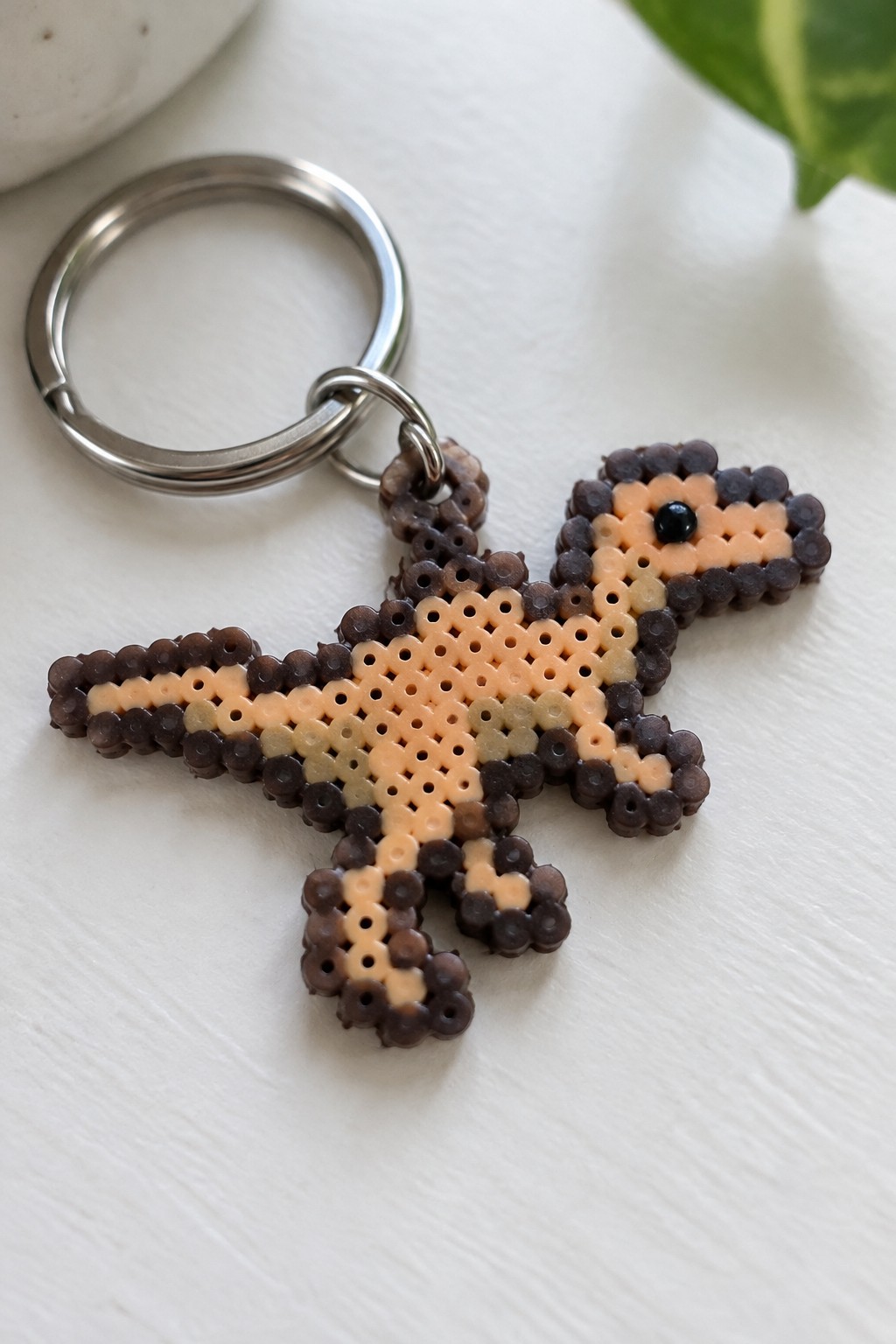
This Perler bead keychain uses a compact grid layout to form a small dinosaur silhouette with a rounded head, short arms, long tail, and two legs. Brown beads create the outer border and back details while peach, tan, and light brown beads fill the body in distinct color blocks. A single black bead forms the eye, and the entire fused piece attaches directly to a metal keyring through a loop of beads at the top.
The limited color palette and clear stepped edges make the dinosaur shape easy to recognize even at this small size. The same basic outline could be adapted into other dinosaurs by swapping the brown tones for greens or adding different accent colors along the back. A finished version like this works well as a bag charm or keychain because the fused beads stay flat and sturdy without extra hardware.
Triceratops Keychain
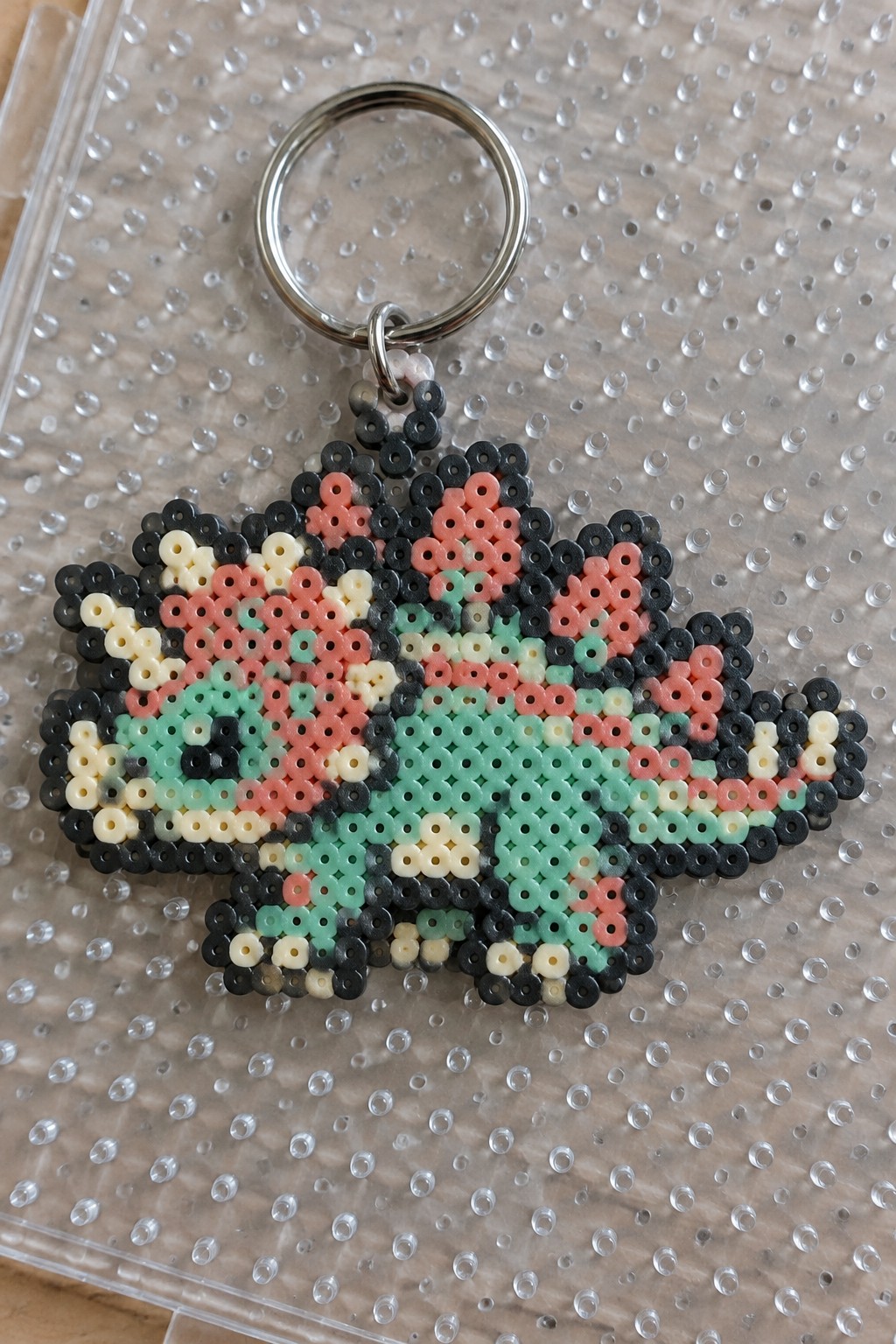
This Perler bead keychain forms a compact dinosaur shape using a grid-based pattern with a solid black border that outlines the entire figure. Mint green beads fill the main body sections while coral beads create the head frill and scattered accents along the tail. Cream and pale yellow beads mark the eye area and edge details to separate the facial features from the surrounding colors. The flat arrangement connects directly to a metal keyring through a small loop of beads at the top.
The strong black outline makes the dinosaur silhouette easy to recognize even at a small scale. Changing the coral beads to a different accent color would produce a new dinosaur variation while keeping the same bead layout. A finished keychain of this size works well clipped to a bag or set of keys because the fused construction holds its shape.
Mini Green Dinosaur Keychain
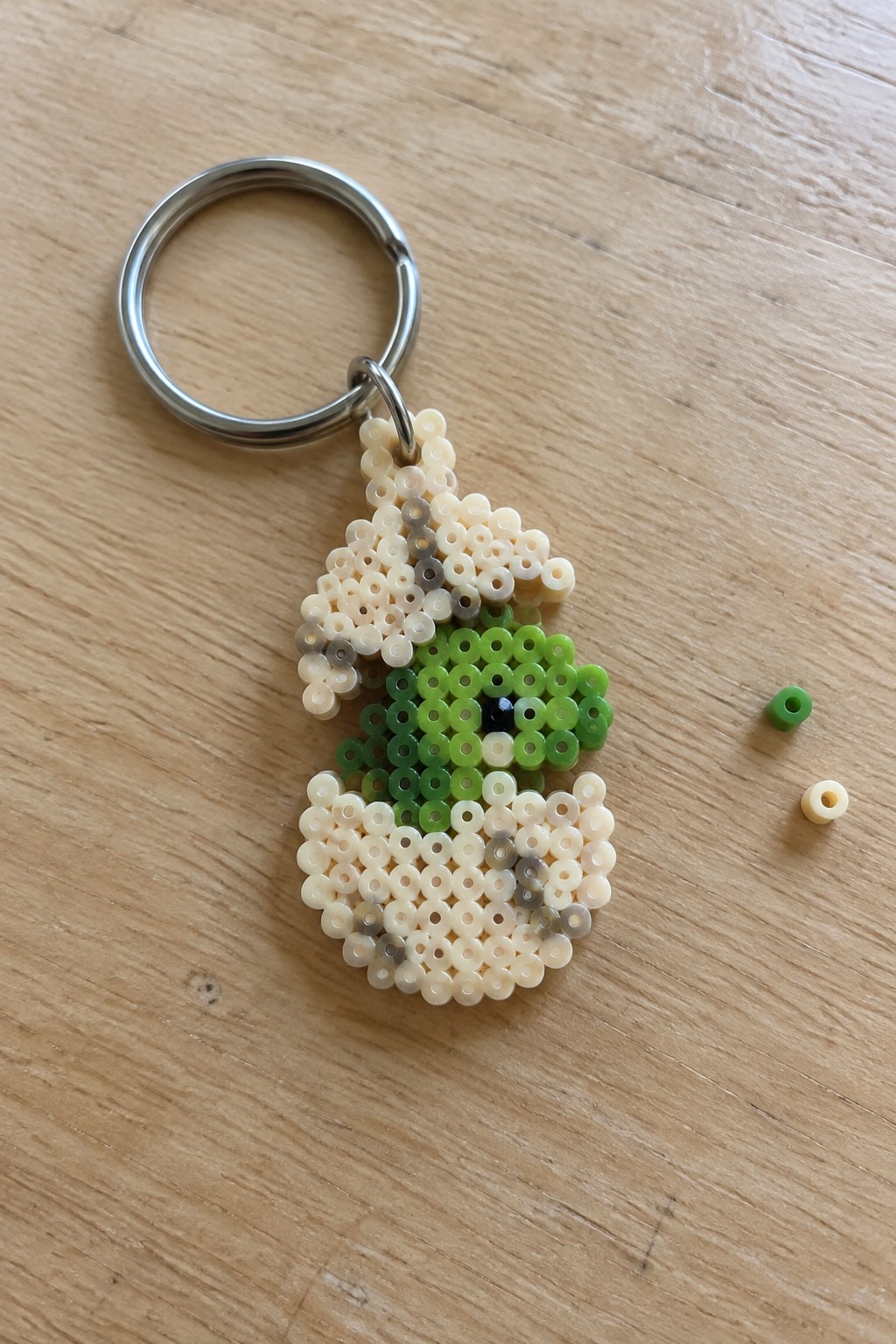
This keychain uses fuse beads arranged in a compact pixel-art dinosaur shape. Several shades of green form the head and upper body while off-white beads create the lower section, with a single black bead for the eye and small gray accents along the edges. The stepped bead placement produces a clear silhouette that stays recognizable even at small scale, and the finished piece is fused into one solid panel before being attached to the metal ring.
The limited color palette helps the shape read clearly without needing many beads. Changing the green tones to other colors would let the same outline become different dinosaur variations for a matching set. A finished version works well as a keychain because the compact size and fused structure hold up to everyday use.
Stegosaurus Keychain with Green Back Plates
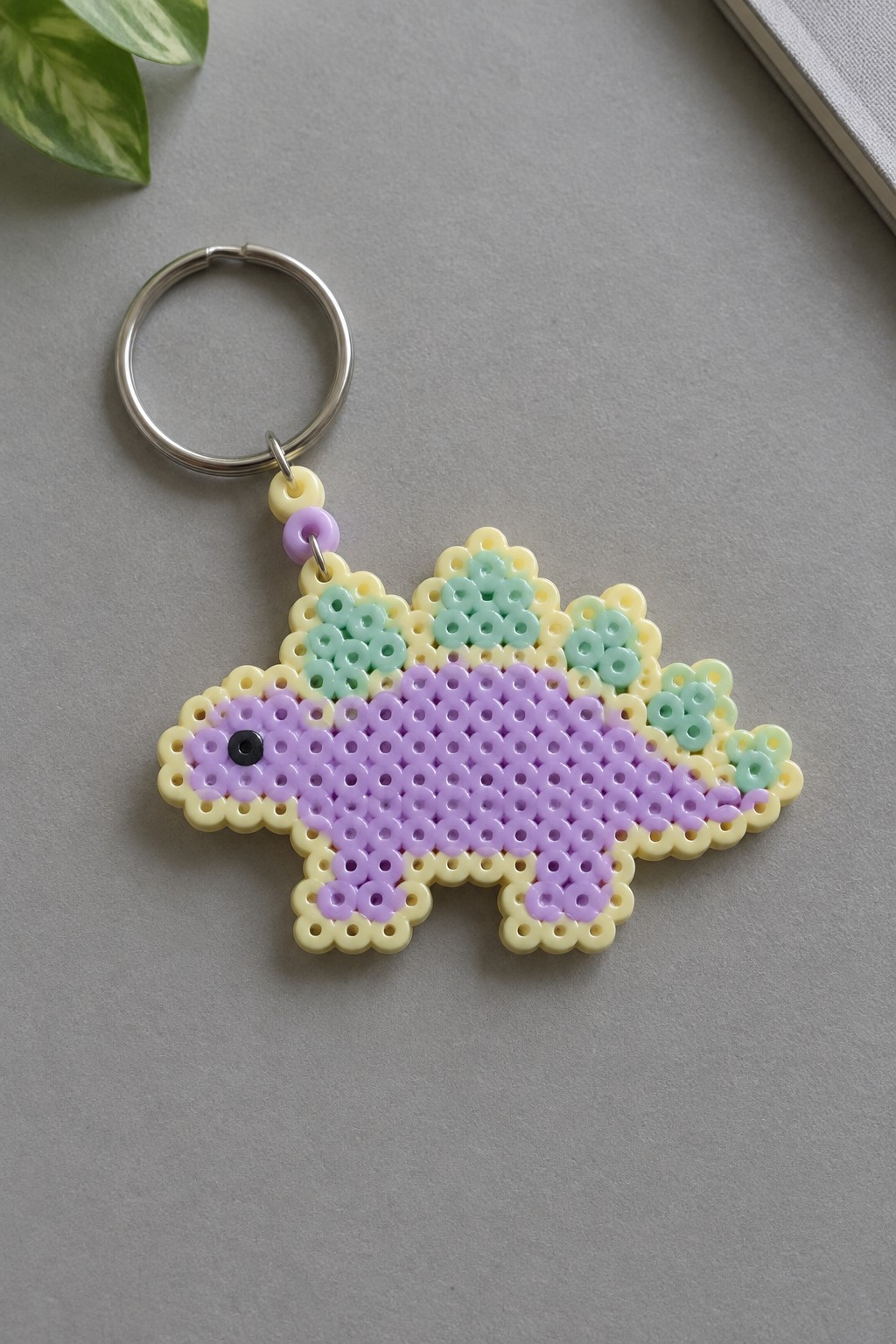
A finished Perler bead keychain forms a compact stegosaurus using a grid of individual fused beads. The dinosaur body consists of a solid purple section bordered by yellow beads that create a clear outline around the head, body, legs, and tail. Light green beads form the row of back plates, while a single black bead marks the eye, and the entire piece hangs from a metal keyring attached through a small yellow and purple bead loop.
The limited number of colors keeps the pattern easy to follow while still producing a recognizable dinosaur shape through simple color blocking. You could switch the purple body to teal or red to make additional dinosaurs that coordinate as a set. The same basic outline also works for other stegosaurus-style variations by changing only the plate color or extending the tail length slightly. A finished piece this size attaches easily to a backpack, keyring, or zipper pull without adding much weight.
Green T-Rex Perler Bead Keychain
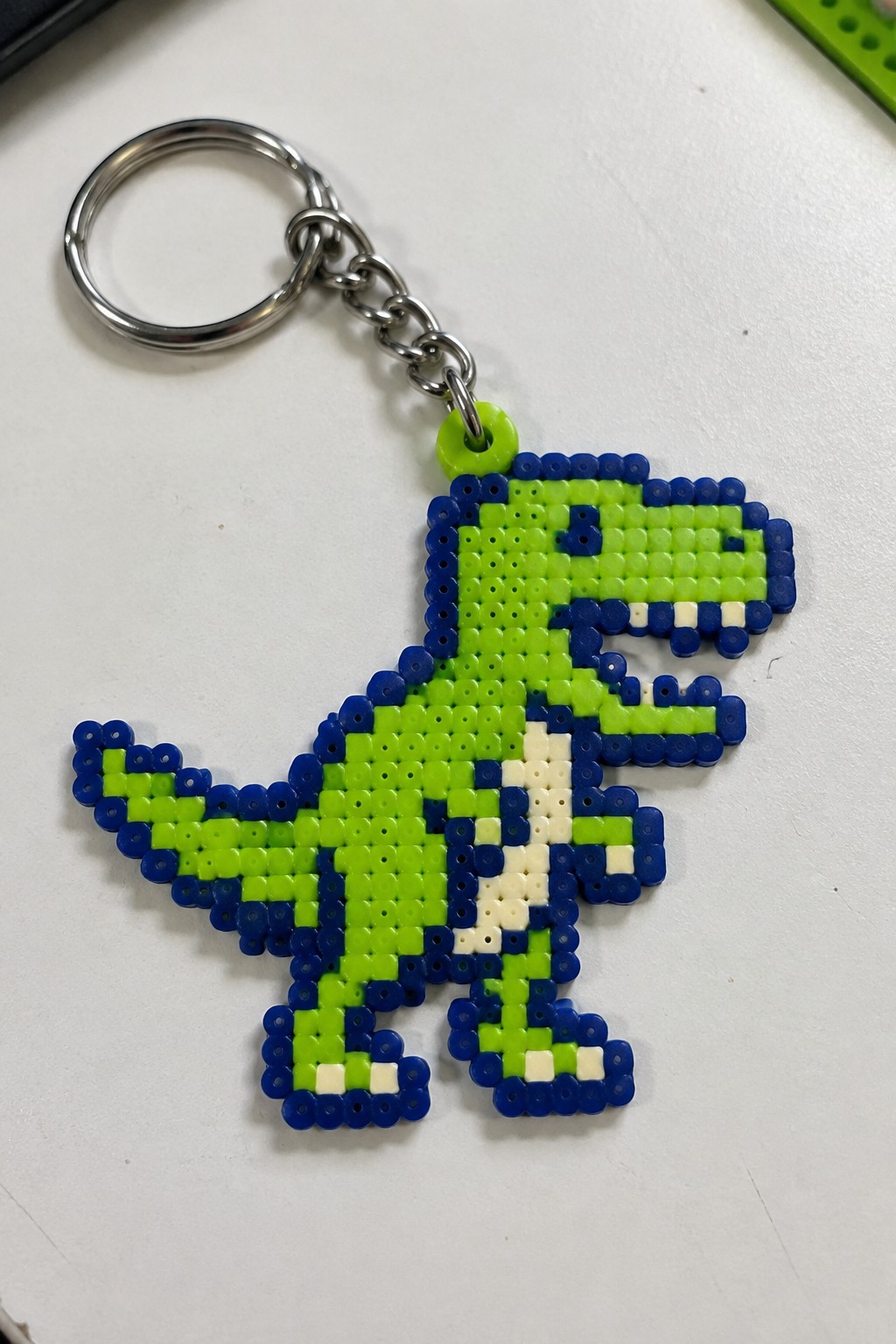
This keychain uses individual Perler beads fused into a compact pixel-style T-Rex. Lime green beads fill the body, legs, arms, and tail while dark blue beads form the outer border and inner details such as the eye and back ridges. White beads mark the teeth along the jaw and the claws on the feet, and the stepped edges create a clear dinosaur silhouette that stays readable at small size.
The small scale makes this pattern practical for keychains or bag charms. Swapping the green body beads for red or orange would produce quick color variations without changing the layout. The strong blue outline helps the shape remain distinct even when the finished piece hangs from a ring.
Long-Necked Dinosaur Keychain
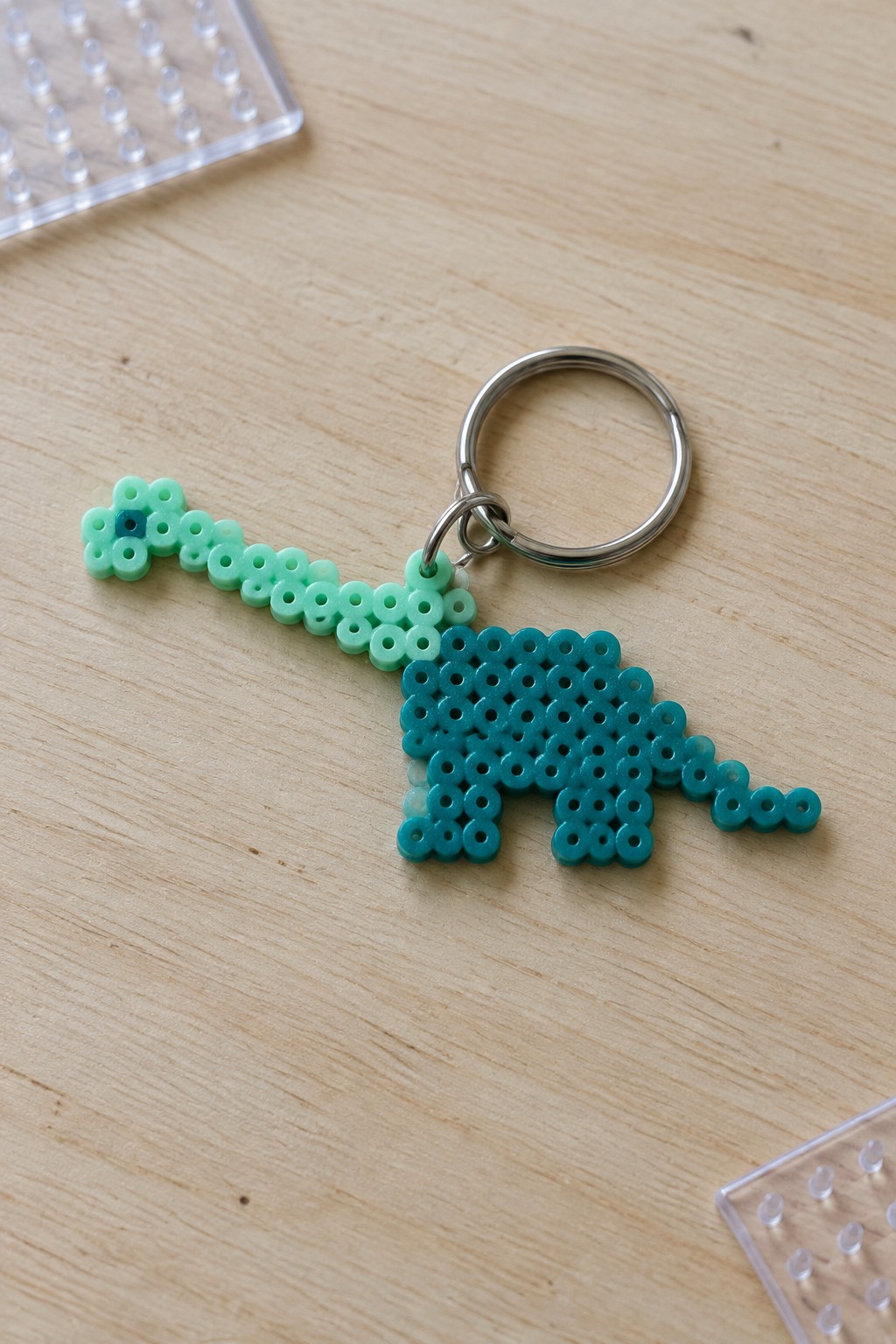
This Perler bead project forms a keychain using a pixel-style silhouette of a long-necked sauropod dinosaur. The design places light mint beads along the extended neck and head while using darker teal beads for the body and tail, with a single dark bead positioned as the eye. Individual bead placement creates the stepped outline that defines the dinosaur shape on the pegboard.
The two-color blocking keeps the pattern compact enough to work as a keychain while still producing a clear dinosaur profile. You could recreate the same silhouette in different greens or earth tones to make several variations for a set. The simple layout also lends itself to shrinking the neck length slightly for a different dinosaur type or expanding the body with one extra row of beads for more detail.
Pterodactyl Keychain in Yellow and Blue
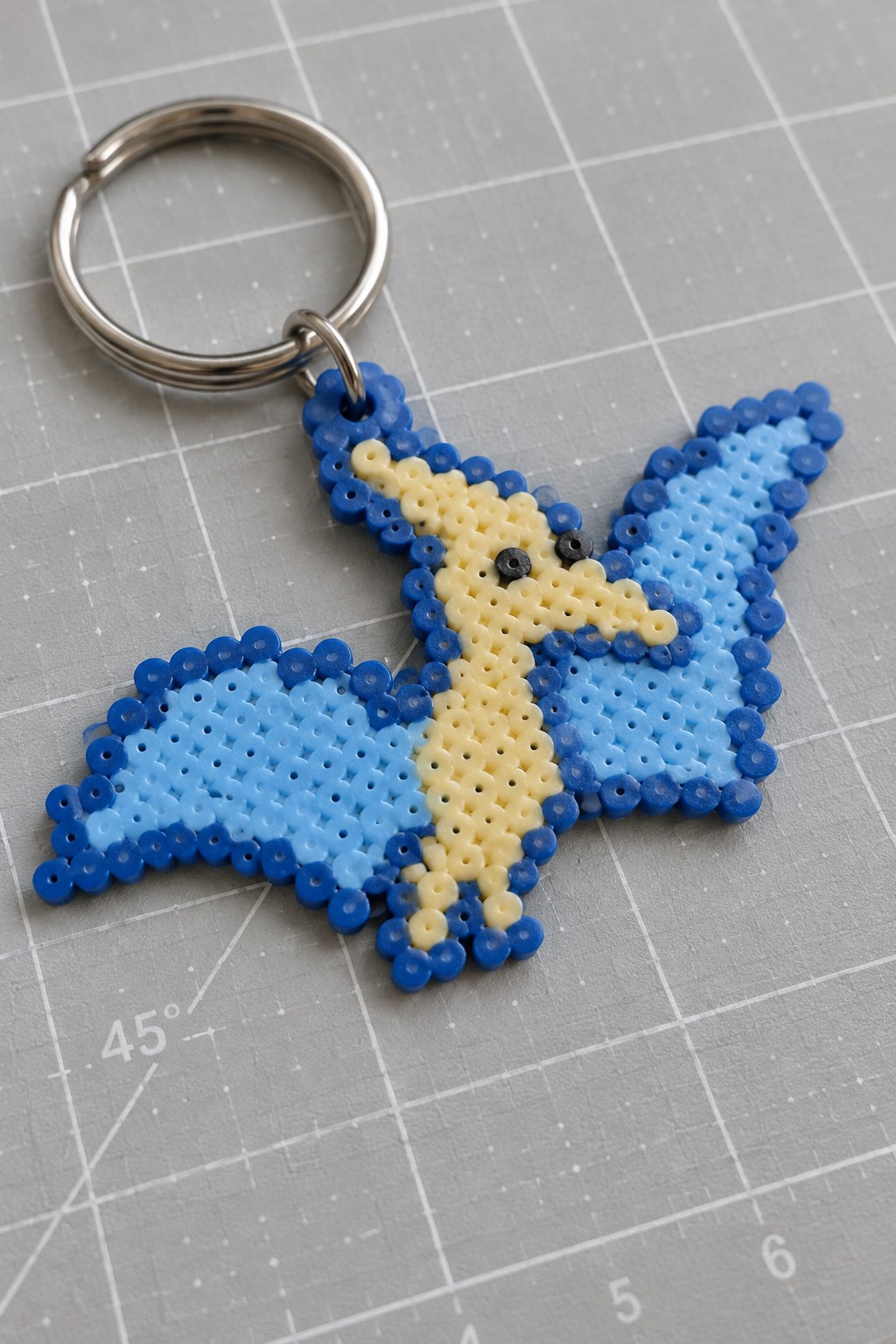
This Perler bead keychain uses a compact pixel layout to form a pterodactyl with a yellow body running down the center and blue beads shaping the outstretched wings on both sides. Darker blue beads outline the wing edges while lighter blue beads fill the inner sections, and two black beads mark the eyes on the head. The flat fused design connects at the top to a metal keyring, keeping the overall size small enough for everyday carry.
The two-tone blue wings help the silhouette stay clear even with a limited bead count. You can change the yellow to green or orange and keep the same wing structure to make other dinosaur keychains from one basic pattern. A finished piece this size also works as a bag charm or zipper pull when you want a quick dinosaur accent without extra hardware.
Mini Pixel Dinosaur Keychains in Pastel Shades
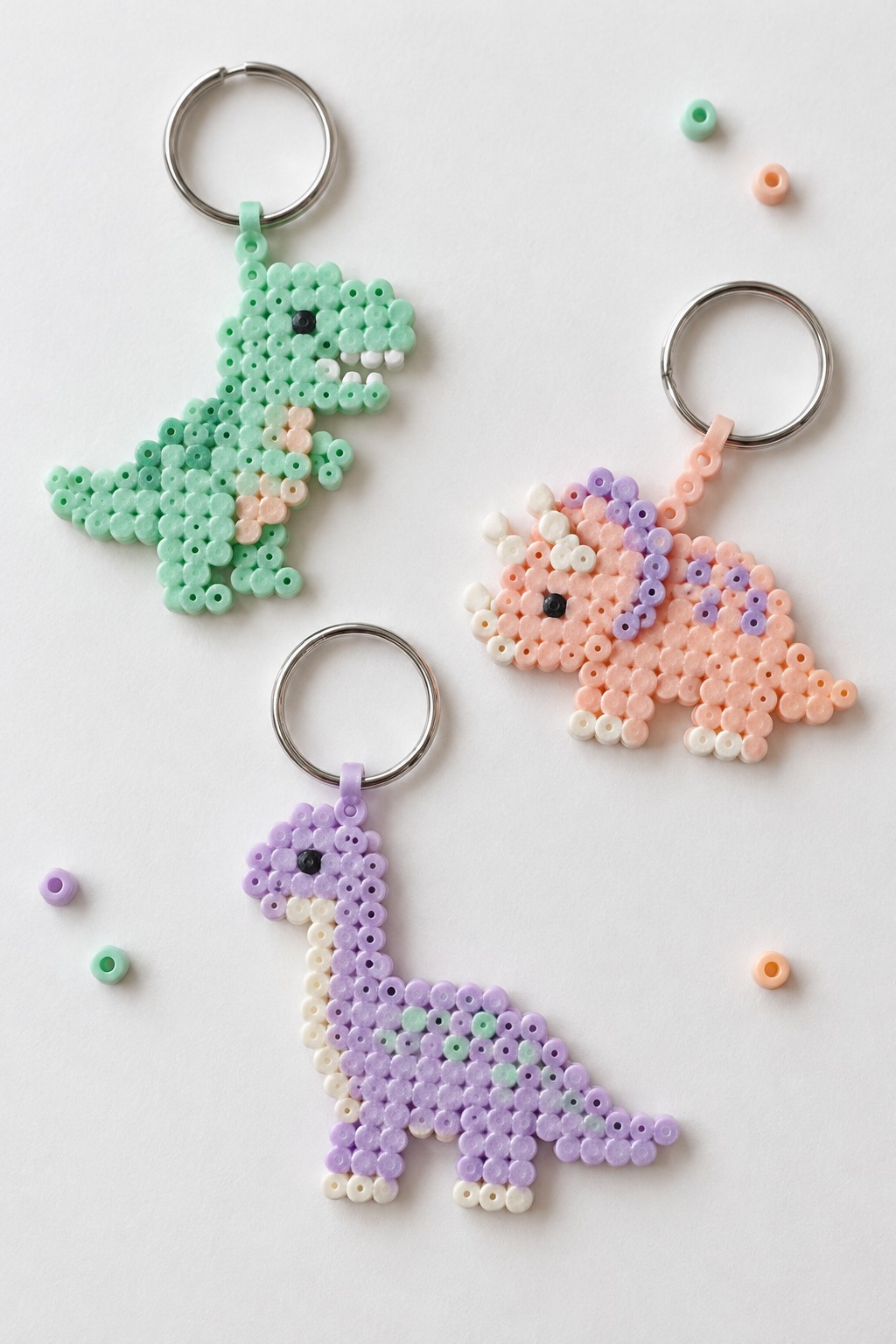
These Perler bead keychains use small grids of fuse beads to form three different dinosaur shapes attached directly to metal rings. The mint green design creates a T-rex silhouette with an open mouth using white beads for teeth and a black bead for the eye. The peach version forms a triceratops with purple beads marking the frill and back spikes. The lavender sauropod uses white and mint beads to define its long neck and body segments.
The compact size works well for keychains because the bead patterns stay flat and lightweight. Switching the main colors while keeping the same outlines would produce a fresh set without redrawing the patterns. The same silhouettes could easily become other dinosaurs by adjusting the head or tail shapes. A finished keychain like these could also serve as a bag charm or small gift.
Frequently Asked Questions
Q: What supplies do I need to start making these dinosaur Perler bead keychains? A: Gather mini Perler beads in colors like green, brown, and orange for the pixel designs, a small square pegboard, parchment paper, an iron set to medium heat, keychain rings, and optional jump rings. Start with a basic kit from a craft store to ensure you have enough beads for all 17 designs without running out midway.
Q: How do I fuse the beads properly for a sturdy keychain? A: Arrange the beads on the pegboard following the mini pixel pattern, cover with parchment paper, and iron in gentle circles for 10 to 15 seconds until the beads melt together. Allow the piece to cool fully before peeling it off the board, then test the strength by flexing it lightly to confirm it holds up on a key ring.
Q: What is the best way to attach the finished design to a keychain? A: Thread a jump ring through one of the edge bead holes on the cooled design and connect it to the keychain ring. For extra security, add a drop of clear craft glue at the connection point and let it dry overnight before using the keychain daily.
Q: Are these projects suitable for beginners or kids? A: Yes, the mini pixel designs simplify the process since they use fewer beads per dinosaur. Supervise children under 10 during the ironing step and begin with simpler dinosaurs like the T. rex before moving to more detailed ones to build confidence.
Q: How can I store or display multiple keychains without damage? A: Keep them in a small fabric pouch or hang them on a dedicated key rack to prevent beads from scratching. Avoid stacking them directly on top of each other to preserve the fused pixel details over time.
