

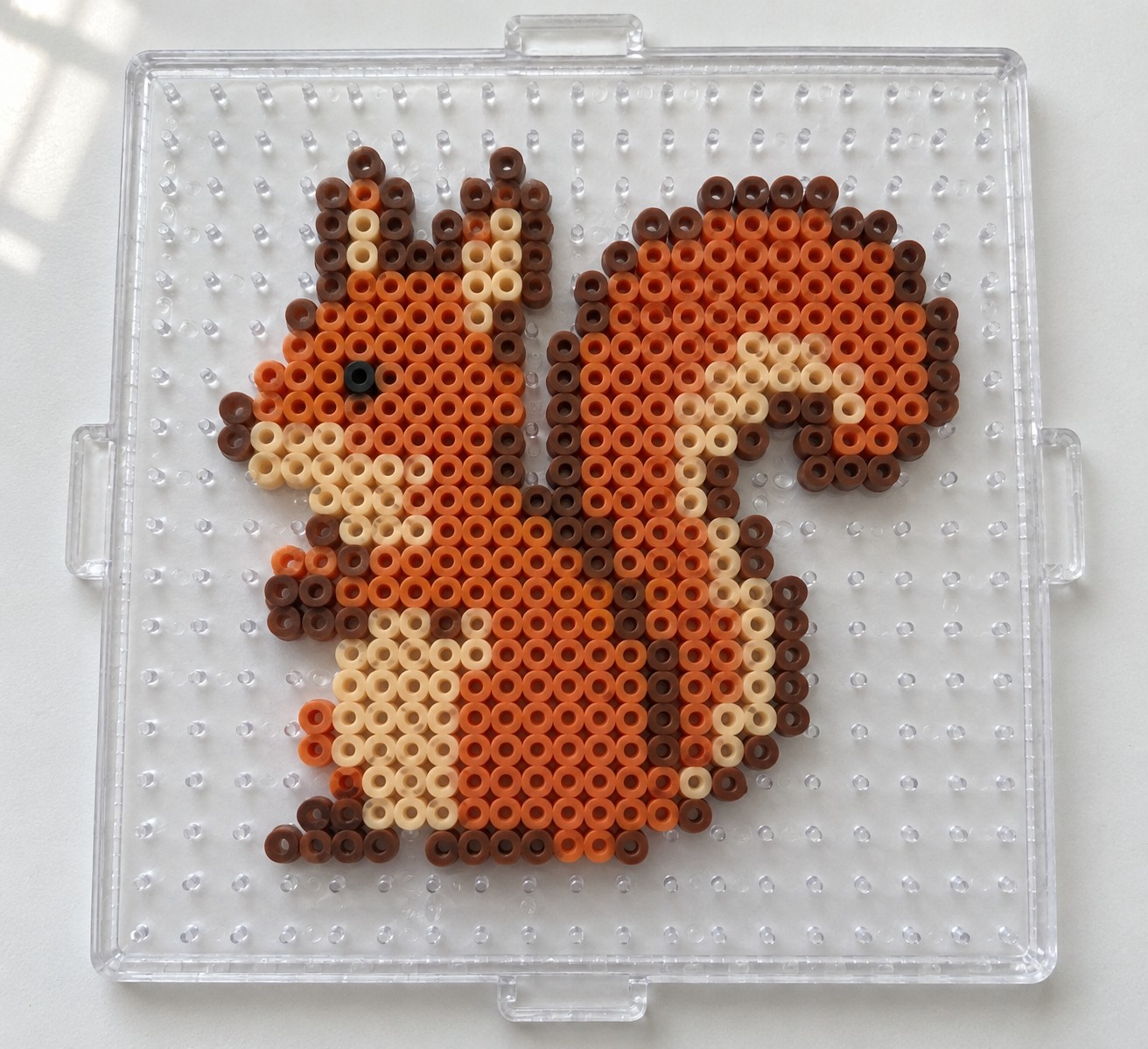
I like using Perler beads to make small seasonal designs, and woodland animals are a fun fit for fall.
These patterns feature squirrels along with other familiar forest creatures, often paired with leaves, acorns, and warm autumn colors.
I’ve gathered a mix of ideas, from simple shapes to more detailed designs, so there are options for different crafting moods.
You can use them as inspiration for your next pegboard project or adapt the colors to make each pattern your own.
Fall Fox Perler Bead Pattern

This flat fox pattern uses individual fuse beads arranged on a pegboard, with orange blocks defining the body and large tail. Cream beads mark the muzzle, chest, and tail tip, while dark brown beads create a stepped outline, pointed ears, and small facial details. The contrasting color sections make the fox’s curled shape easy to read.
The clear color blocking offers a useful starting point for a woodland animal set: keep the same outline style and try a squirrel, raccoon, or owl with its own distinctive markings. For a simpler version, reduce the cream and brown details while keeping the orange body and dark border that define the fox.
Fall Squirrel Perler Bead Pattern with Acorn Colors
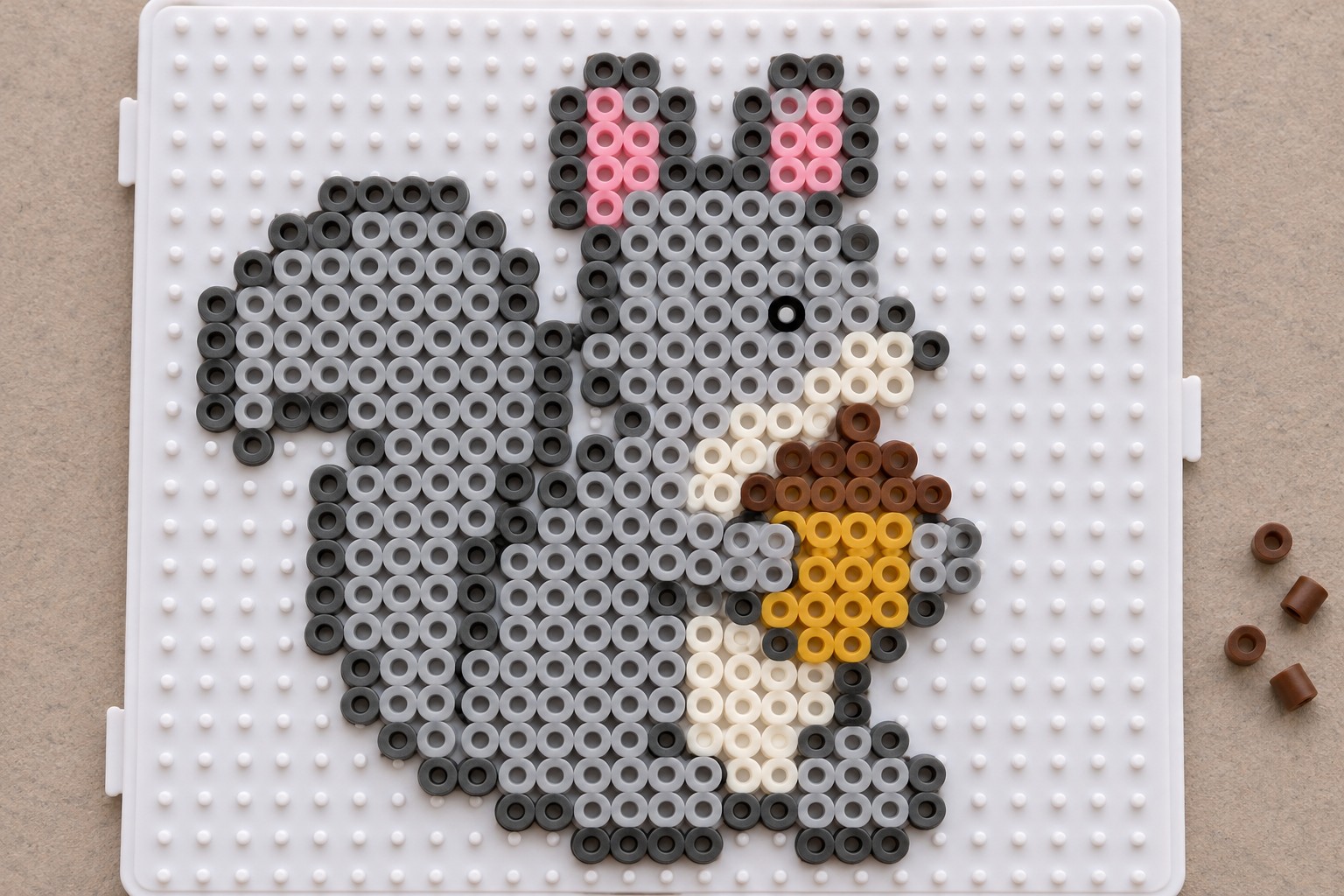
This flat squirrel Perler bead pattern uses individual fuse beads arranged on a pegboard to form a curled, bushy tail and compact body. Gray beads create the main shape, while dark outlines and cream sections define the face and underside; pink accents add detail above the head, and brown and golden-yellow beads form an acorn-like feature. The stepped edges and clear color blocks keep the animal recognizable within the grid.
The gray-and-brown palette suits a fall woodland set, and swapping the gray for reddish brown would give the squirrel a different look. To simplify the pattern, reduce the small color changes while keeping the dark outline and broad tail shape; for a coordinating set, reuse the same silhouette with different acorn colors or poses.
Fox Perler Bead Pattern with a Raised Tail

This fall Perler bead pattern forms a seated orange fox with pointed ears, a dark brown outline, and cream accents on its face, chest, paws, and raised tail. Individual fuse beads create a clear stepped silhouette, while the contrasting colors separate the fox’s features and make the curled tail easy to recognize. The beads are arranged on a pegboard, so this is a flat pattern rather than a fused finished piece.
The strong outline and color blocks make the fox a useful starting point for a woodland animal set. Keep the same seated pose and change the colors to create a red fox, gray fox, or even a raccoon-like variation, adjusting the tail markings to match. A fused version could work as a small display accent, and a smaller adaptation could be planned for a charm if its shape and size allow.
Perler Bead Squirrel With an Acorn

This flat Perler bead pattern pairs a cream-colored squirrel with a large brown acorn, using stepped edges to make both shapes readable on the pegboard. The squirrel’s dark eye and pink nose add small facial details, while the acorn’s layered brown shades create color blocks across its rounded cap and body. The individual beads are arranged as a fall-themed design and have not yet been fused.
The contrasting cream and brown sections help define the squirrel and acorn without needing many small details. To adapt the pattern, try different shades of brown for the acorn or change the squirrel’s body color, keeping the dark eye and nose as clear accents; a leaf or another acorn could extend it into a matching woodland set.
Woodland Fox Perler Bead Pattern with a Bright Chest
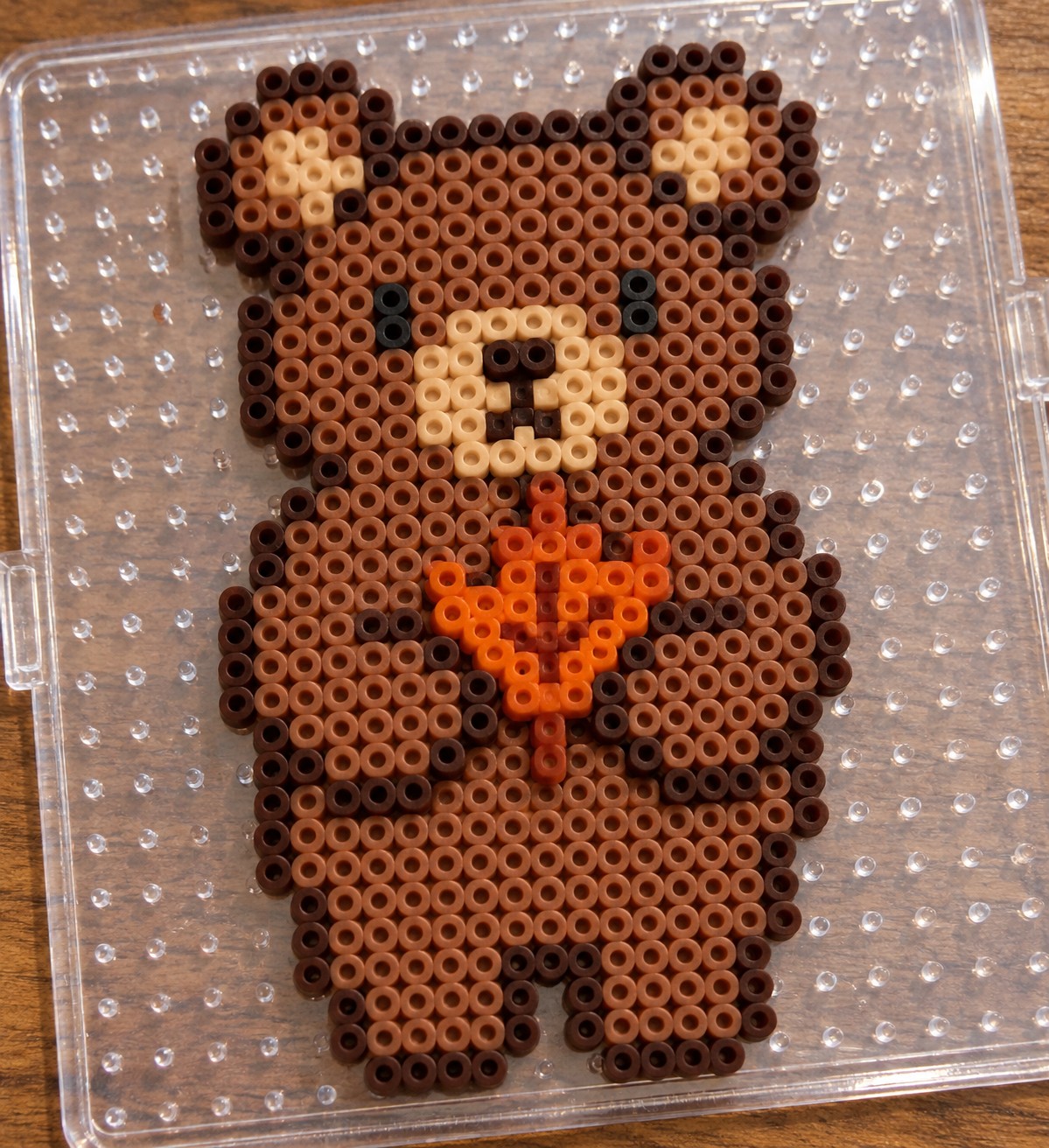
This flat fox Perler bead pattern uses individual brown, tan, cream, and orange beads to build a recognizable woodland animal. Its pointed ears, dark outer outline, pale muzzle, and orange chest create clear color blocks, while the small dark facial details give the fox a focused expression. The beads are arranged on a pegboard, so the design is still an unfused pattern.
The strong contrast between the cream face and darker fur helps the fox read clearly, and the bright chest gives the pattern a fall-ready accent. For a coordinated woodland set, keep the same dark outline and cream facial details while changing the body colors or pose to make other forest animals.
Fall Raccoon Perler Bead Pattern
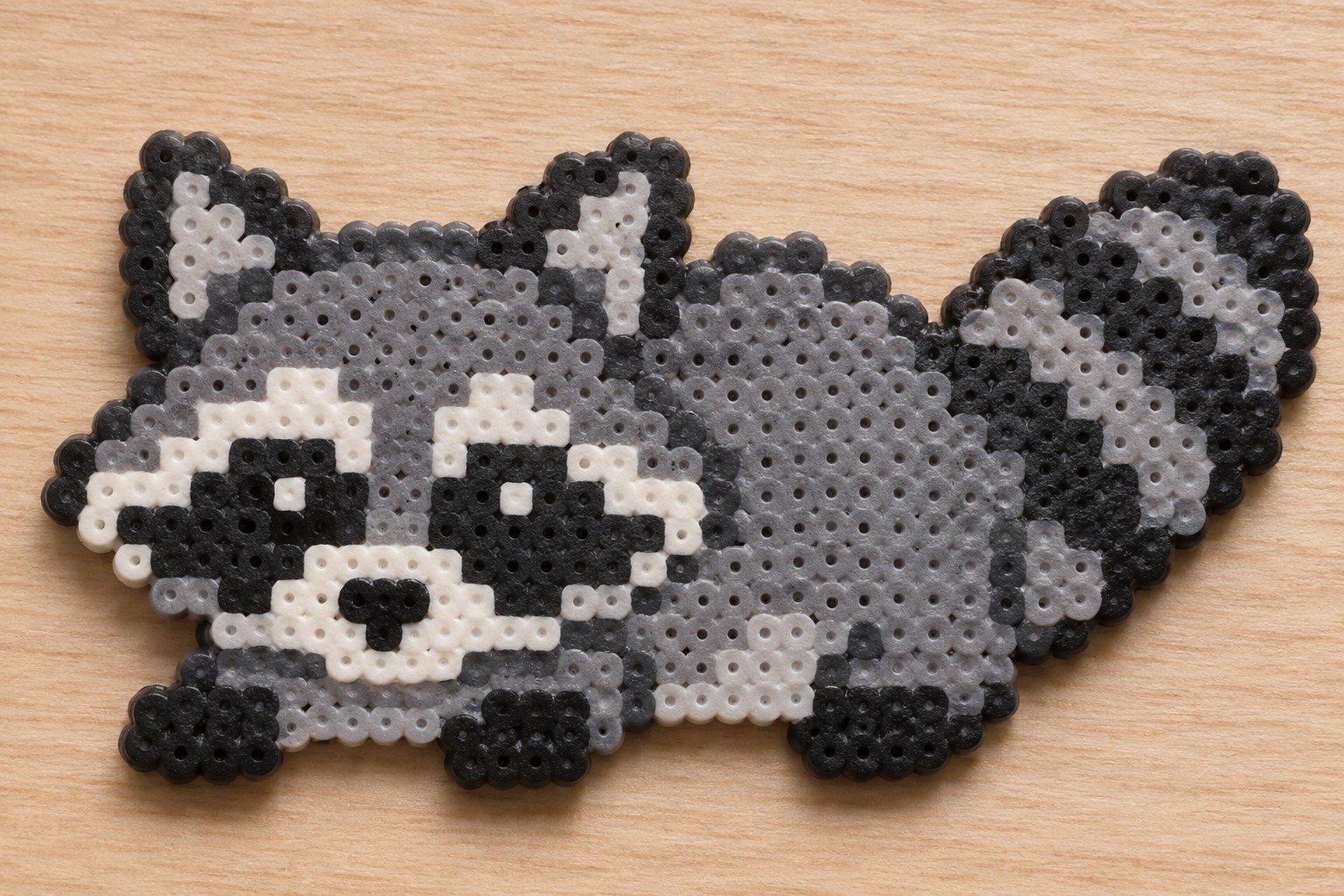
This flat Perler bead pattern features a raccoon with a broad gray body, a dark stepped outline, and the animal’s distinctive black eye patches. White and gray bead blocks create the face and striped tail, while small dark beads form the eyes and nose. The individual beads make the silhouette and facial markings easy to read.
The strong contrast between gray, black, and white keeps the raccoon recognizable, and the same layout could be recolored for a matching woodland animal set. For a simpler version, reduce some of the gray shading while keeping the dark mask and tail stripes.
Woodland Squirrel Perler Bead Pattern with Green Leaves

This physical Perler bead pattern forms a seated squirrel with a large curled tail and a small cluster of green leaves beside it. Cream, tan, and rust-colored beads block out the squirrel’s body, while dark brown beads create a stepped outline and black-and-white beads define its eye. The individual beads are arranged on a pegboard, so the design is still a pattern rather than a fused ornament.
The contrasting outline helps the squirrel’s shape stay readable, and the different browns give the tail and body more definition. For a coordinated woodland set, keep the same outline style and try changing the leaf cluster or adding an acorn in a different pose; reducing some of the interior color changes can simplify the pattern.
Autumn Owl Perler Bead Pattern
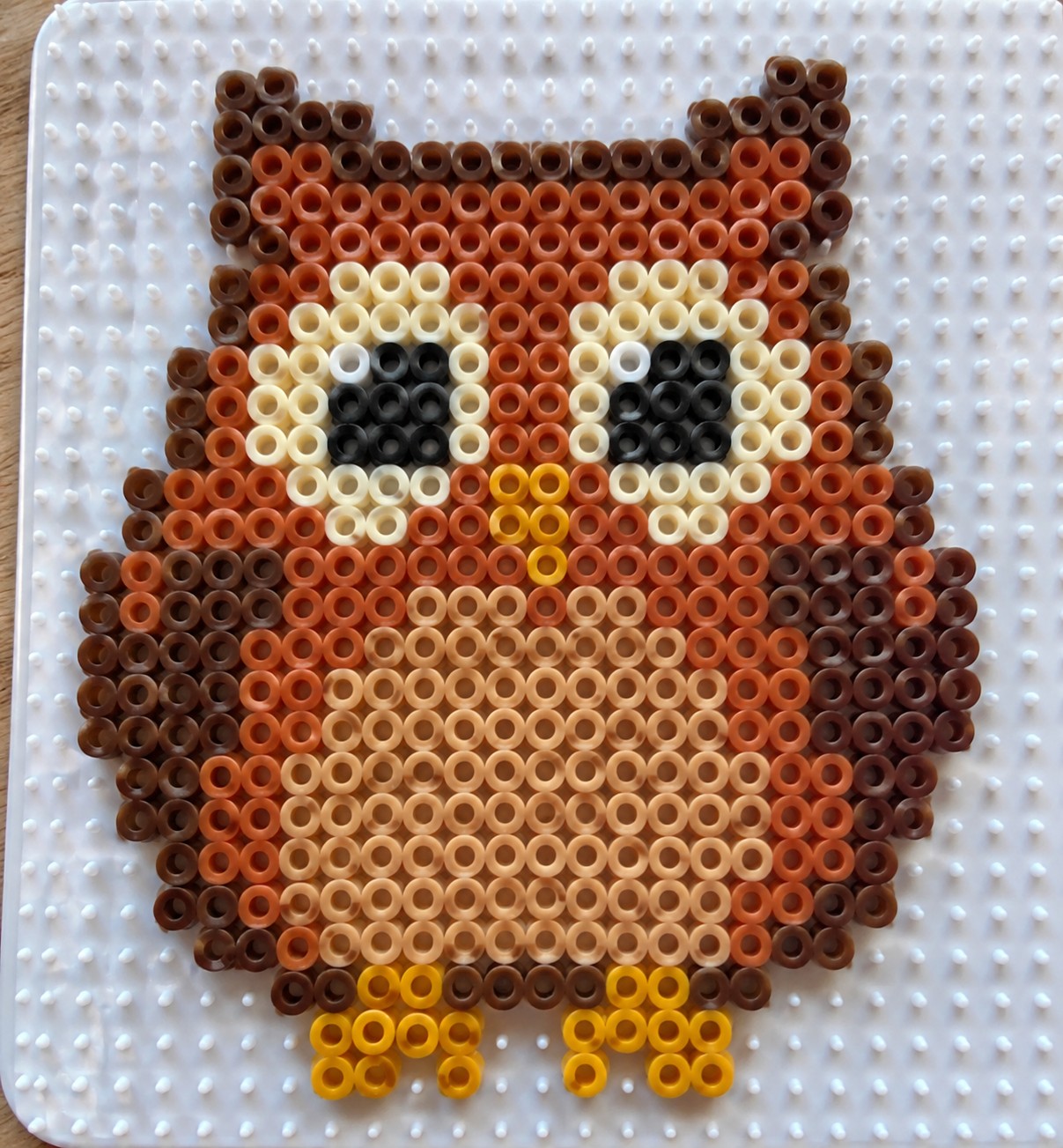
This flat Perler bead pattern makes an owl from individual beads arranged on a pegboard, with a broad rust-orange head, dark brown stepped outline, and cream-colored chest. Large black eyes and a small golden beak give the face clear features, while the layered brown and orange sections define the wings and body.
The contrasting eye and chest colors keep the owl easy to recognize within a detailed arrangement. For a coordinating woodland set, use the same dark outline with different browns and cream tones for other animals, or simplify the owl by reducing the feather and body color changes.
Fall Fox Perler Bead Pattern with a Cream Chest
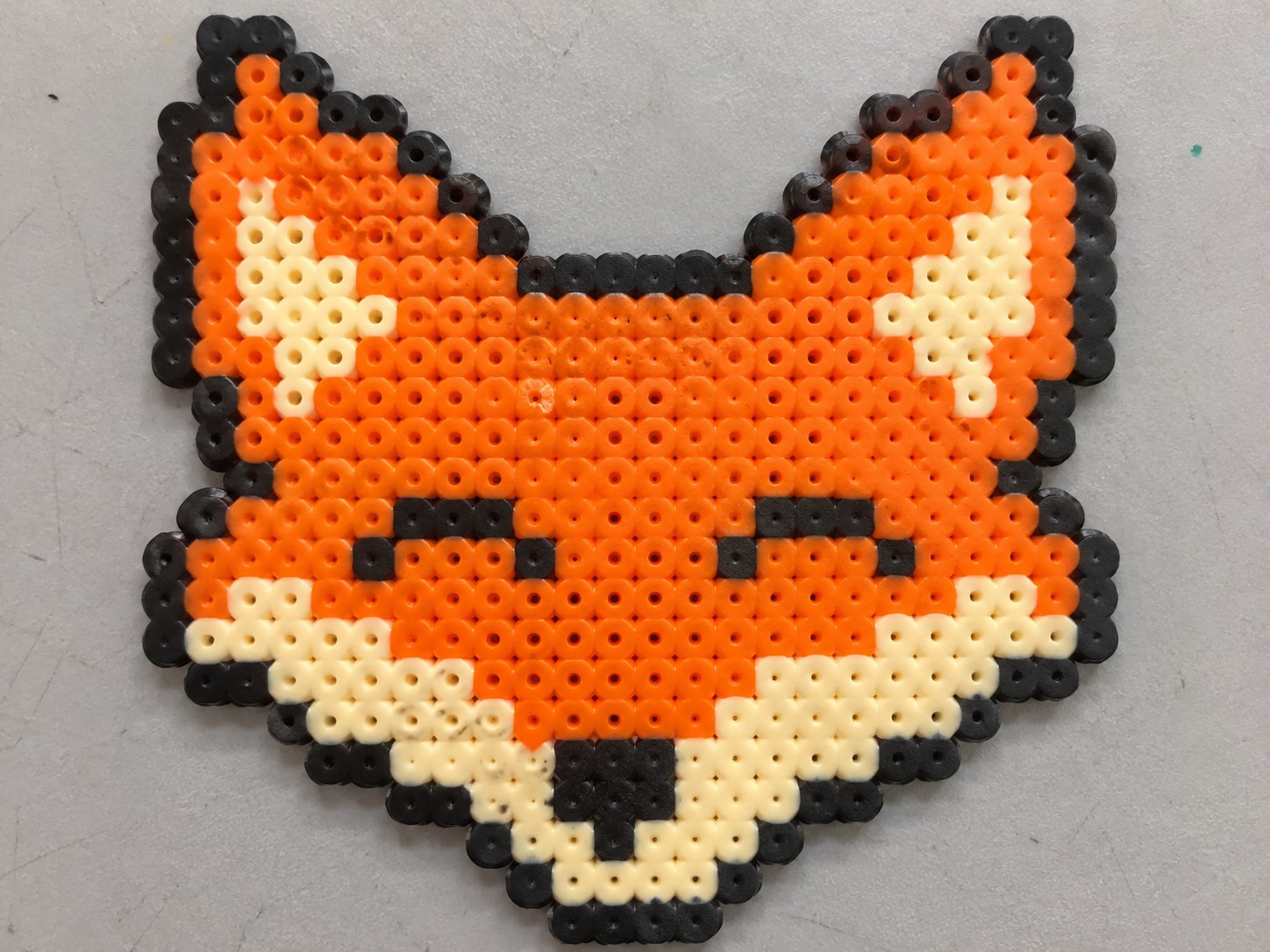
This flat fox Perler bead pattern uses individual orange, cream, and black fuse beads to build a broad face with pointed ears and a dark outline. Cream patches around the eyes and muzzle break up the orange color blocks, while the black beads define the ears, sides, and nose so the fox’s shape stays clear.
The contrasting colors make this woodland animal pattern easy to adapt: swap in deeper rust or brown beads for a muted fall palette, or change the cream patches to white for a different look. The same face layout could also be varied with different ear shapes or markings to make a coordinated set of fox designs.
Woodland Badger Perler Bead Pattern

This flat woodland animal pattern uses individual black, gray, and white fuse beads to build a long-bodied badger with a low profile and short legs. White stripes running across the head contrast with dark patches around the face, while gray beads fill out the body and create a clearly stepped silhouette. The beads are arranged on a pegboard and are not fused yet.
The bold face markings are what make this pattern readable, so keep the dark-and-white contrast if you adapt it with a different body color. For a simpler version, reduce the gray shades or smooth out some of the smaller edges, while leaving the stripe pattern intact. Similar layouts could make a matching woodland set with other animals in the same limited-color style.
Woodland Animal Perler Bead Pattern Set

This coordinated Perler bead set pairs a rust-orange fox with two brown squirrels and a gray raccoon, using individual fuse beads arranged in clear, stepped silhouettes on pegboards. Cream-colored faces and chest patches separate the animals from their darker outlines, while small black eyes and the raccoon’s yellow accents help each design read at a glance. The squirrel patterns use layered brown and tan beads to suggest fur and bushy tails.
The shared woodland palette makes these patterns easy to adapt into a matching fall collection: try adding an acorn or changing one animal’s accent colors to suit your own set. For a simpler version, reduce the fur shading to a few broad color blocks while keeping the contrasting face and outline. The bead arrangements are still on the pegboard, so they are patterns rather than finished, fused decorations.
Fall Fawn Perler Bead Pattern
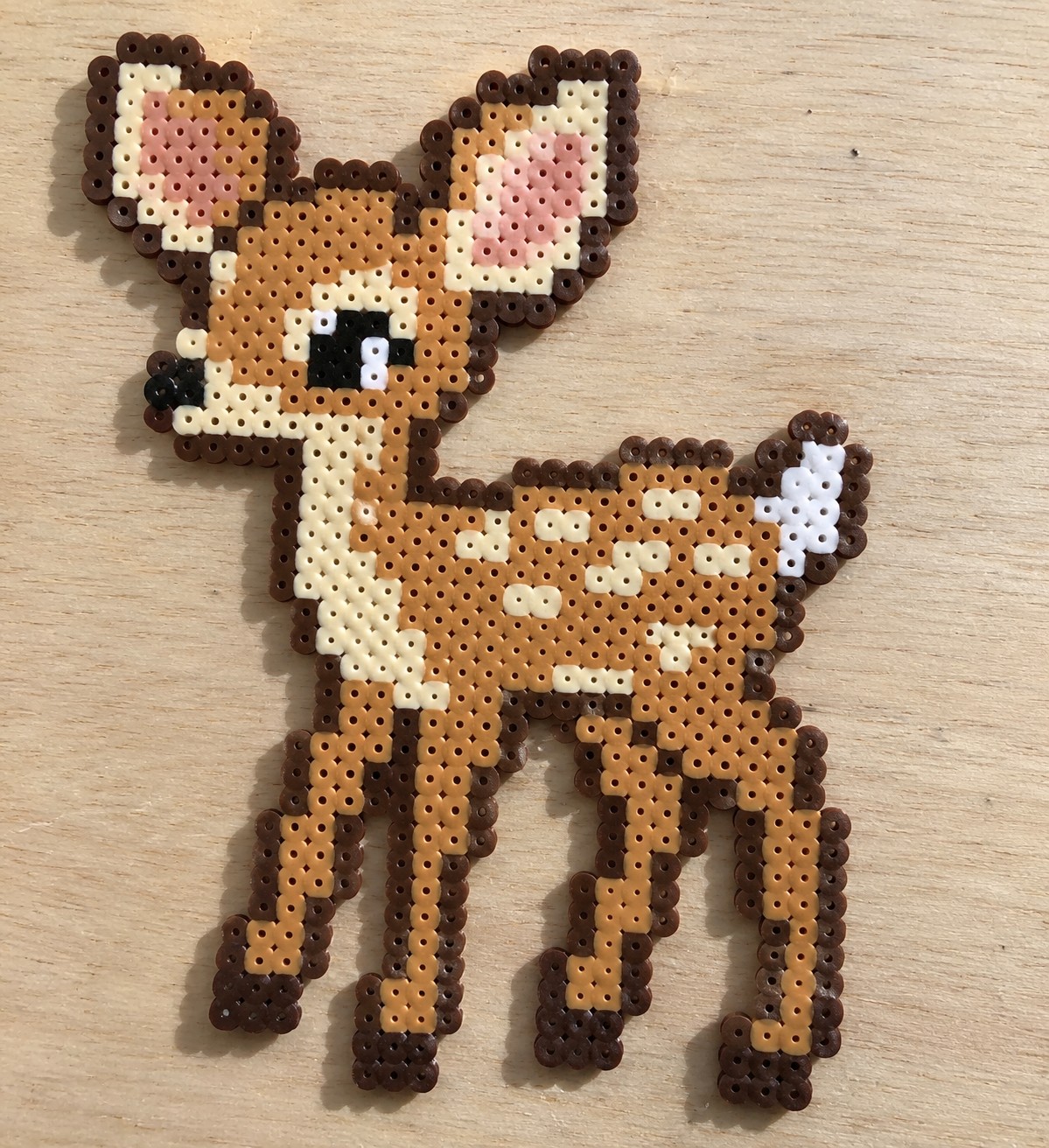
This flat Perler bead pattern forms a standing fawn with tall ears, a small dark nose, and white markings across its back. Individual tan and brown beads build the stepped silhouette, while cream patches and pink inner ears make the animal easy to recognize against its dark outline.
The contrasting border helps keep the fawn’s shape readable, even with several connected body parts and color changes. For a coordinating woodland set, keep the same brown outline and cream accents while changing the body shape and details to make other animals, or simplify the spots for a less detailed pattern.
Woodland Squirrel Perler Bead Pattern with an Acorn
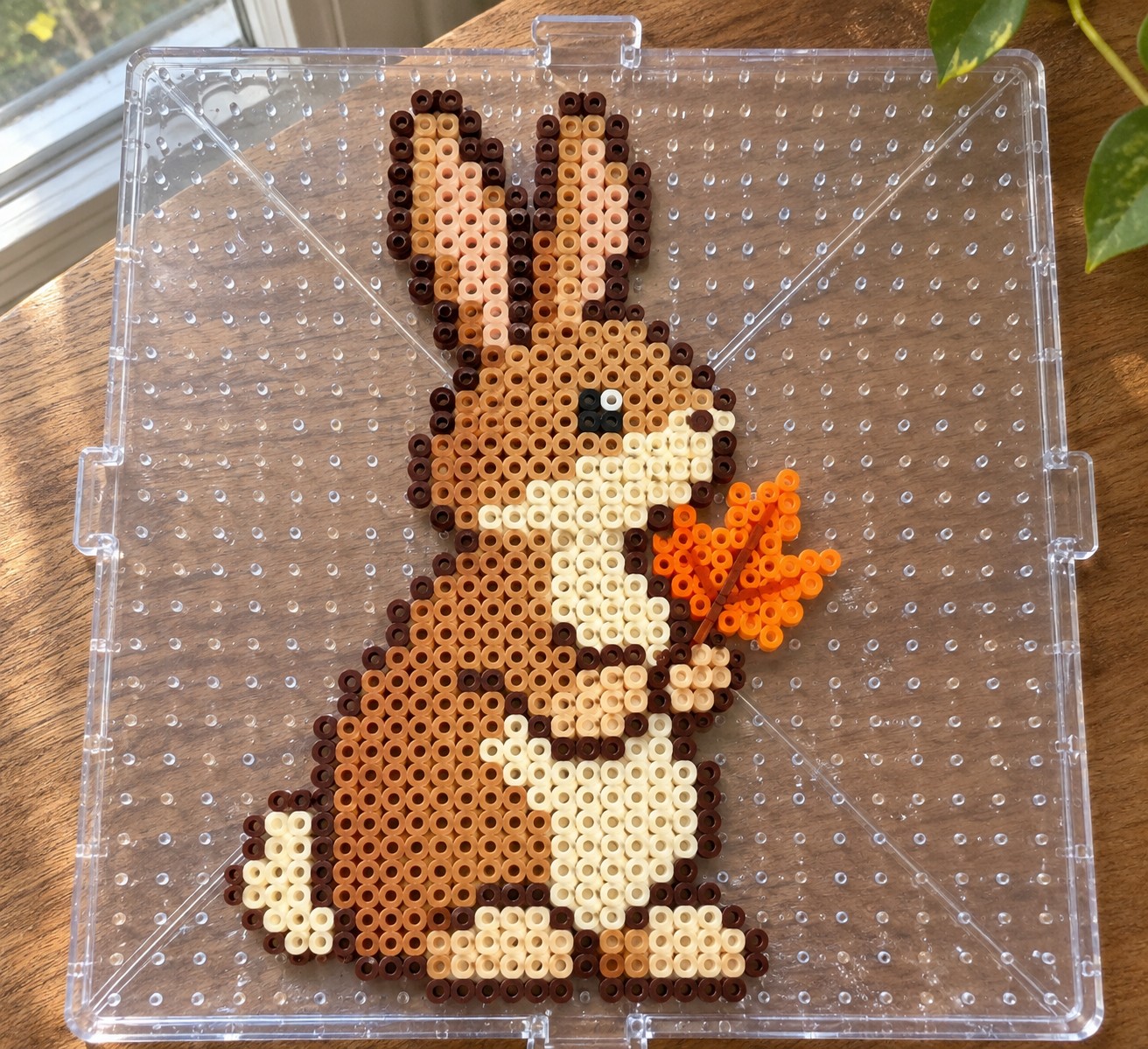
This physical Perler bead pattern forms a seated brown squirrel holding a bright orange acorn. Individual beads create the squirrel’s upright ears, curled body, cream belly, and small dark eye, while a darker brown outline keeps the stepped silhouette easy to read against the pegboard.
The contrast between the squirrel’s warm browns and the acorn’s orange makes the fall motif clear without needing many extra details. To adapt the pattern, try different brown and cream shades, or make a matching woodland set with the same outline style and other autumn animals.
Woodland Fox Perler Bead Pattern with a Bushy Tail

This flat fox Perler bead pattern uses individual brown, black, cream, and white fuse beads to build a recognizable woodland animal. Its broad, bushy tail has a dark border and a repeating brown-and-black pattern, while the pointed ears, cream muzzle, and bright eyes give the face clear definition. The stepped pixel outline connects the tail and body into one large silhouette.
The contrasting tail pattern makes this design a useful starting point for a fall woodland set. Try changing the brown shades or adding small leaf motifs nearby, while keeping the dark border to preserve the fox’s outline. The finished flat piece could work as a display accent or, if its size and shape suit the hardware, a bag charm.
Woodland Skunk Perler Bead Pattern

A black-and-white skunk takes shape from individual fuse beads arranged in a flat, pixel-style pattern on a pegboard. Its broad black body and stepped silhouette make the animal recognizable, while a white stripe running from the head down the back creates a strong contrast; small pink details add color around the face and tail.
The clear color blocking makes this woodland animal pattern a useful starting point for a matching set: keep the silhouette and swap in colors and markings for other forest animals. For a simpler version, reduce the small pink and gray details, or add more shades to give the skunk’s body and stripe extra definition.
Fall Fox Perler Bead Pattern with an Autumn Leaf

A flat Perler bead arrangement pairs a curled orange fox with an acorn and a large maple leaf, making a small woodland scene for a fall pattern collection. Brown bead outlines define the fox’s ears, tail, paws, and face, while cream patches and a dark eye keep its shape readable; orange and yellow blocks give the leaf its autumn colors and distinct stepped edges.
The contrasting outlines help each motif stay recognizable, and the same layout could be adapted with different leaf colors or a lighter fox coat. For a coordinating set, keep the acorn and leaf colors consistent while changing the animal pose or adding another woodland creature.
Fall Squirrel Perler Bead Pattern with a Bushy Tail
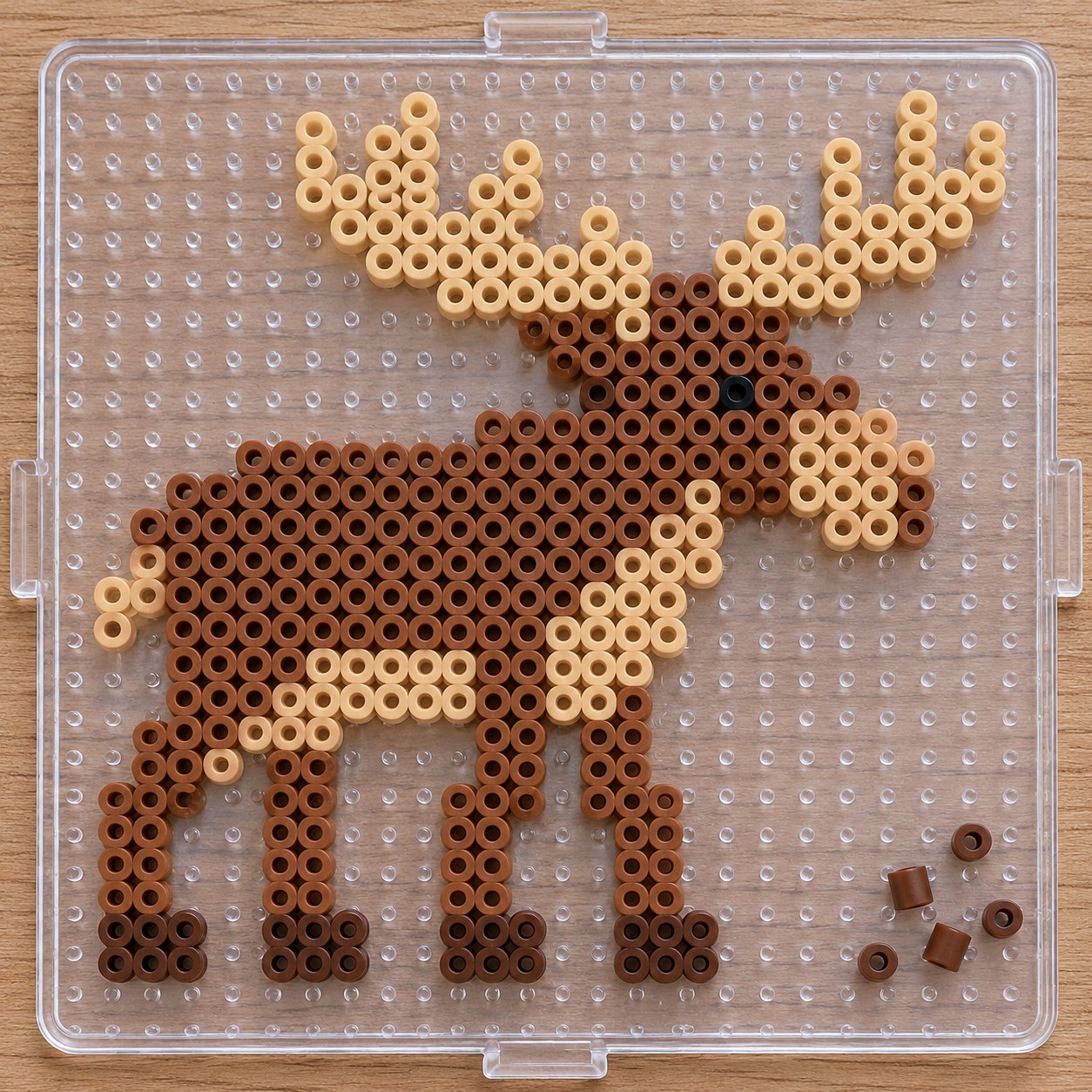
This fall squirrel Perler bead pattern uses individual brown and tan fuse beads to form a side-facing woodland animal with a large curled tail and a small acorn detail. The stepped outline makes the tail, pointed muzzle, and legs easy to distinguish, while cream-colored beads add contrast along the tail and body. The beads are arranged on a pegboard, so this is a flat pattern ready to be fused rather than a finished piece.
The bold tail shape gives the squirrel a recognizable silhouette, even with limited facial detail. For a coordinating woodland set, keep the brown-and-tan palette and change the pose or add a leaf; simplifying the cream sections can also make the arrangement easier to follow.
Woodland Animal Perler Bead Keychains

These flat Perler bead keychains turn a brown squirrel and an orange fox into recognizable woodland characters with individual fuse beads arranged in stepped silhouettes. Dark brown borders define their shapes, while cream and black beads create the fox’s face and contrasting patches; the squirrel’s layered brown tones and small acorn detail add texture.
The visible metal rings make these designs easy to adapt as bag charms or small seasonal gifts once the bead patterns are fused and attached. Keep the contrasting outlines and facial features, then change the body colors or details to make a coordinated set of woodland animals.
Frequently Asked Questions
Gather warm autumn shades such as orange, rust, red, brown, tan, and yellow, along with black, white, and cream for details. Green and dark brown are useful for leaves, acorns, and tree branches. Exact colors vary by pattern, so check each design’s color key before you start. If you’re improvising, small differences in shade can give a squirrel’s tail or an animal’s fur a nice textured look.
You’ll need Perler beads, a pegboard, ironing paper, and an iron. Tweezers can make it easier to place individual beads, especially for tiny features such as eyes, paws, and leaf tips. Keep a printed or on-screen pattern nearby, and sort your beads by color before beginning. A flat work surface also helps prevent beads from shifting while you build.
Start with the outline, then fill in larger sections before adding small details. Work on a flat surface and avoid bumping the pegboard. If a pattern has several colors close together, place one color at a time and check it against the reference before moving on. For very small designs, tweezers can help you place beads more precisely.
Place ironing paper over the finished design and use a household iron on a medium setting, following the bead manufacturer’s directions. Move the iron in gentle circles rather than pressing hard in one spot. Check the beads periodically and stop when they’ve fused to your liking. Let the design cool under a flat weight if you want it to stay even. Adults should handle the iron, and children should be supervised.
Use them as seasonal decorations, fridge magnets, bookmarks, gift tags, or ornaments. To make a hanging decoration, add a small hole or attach a loop after the design has cooled. You can also combine several animals with fall leaves and acorns to create a garland or a tabletop display. For items that will be handled often, check that the beads are fused securely before putting them to use.
