

I like using Perler beads to make simple autumn decorations in warm, seasonal colors.
These patterns include leaves, pumpkins, acorns, and other familiar fall shapes that can be mixed and matched.
Some are easy to arrange on a pegboard, while others can inspire small decorations for around the home.
I’ve gathered 18 ideas to help you find a pattern that suits your next cozy afternoon of crafting.
Autumn Pumpkin Perler Bead Pattern with Green Vines

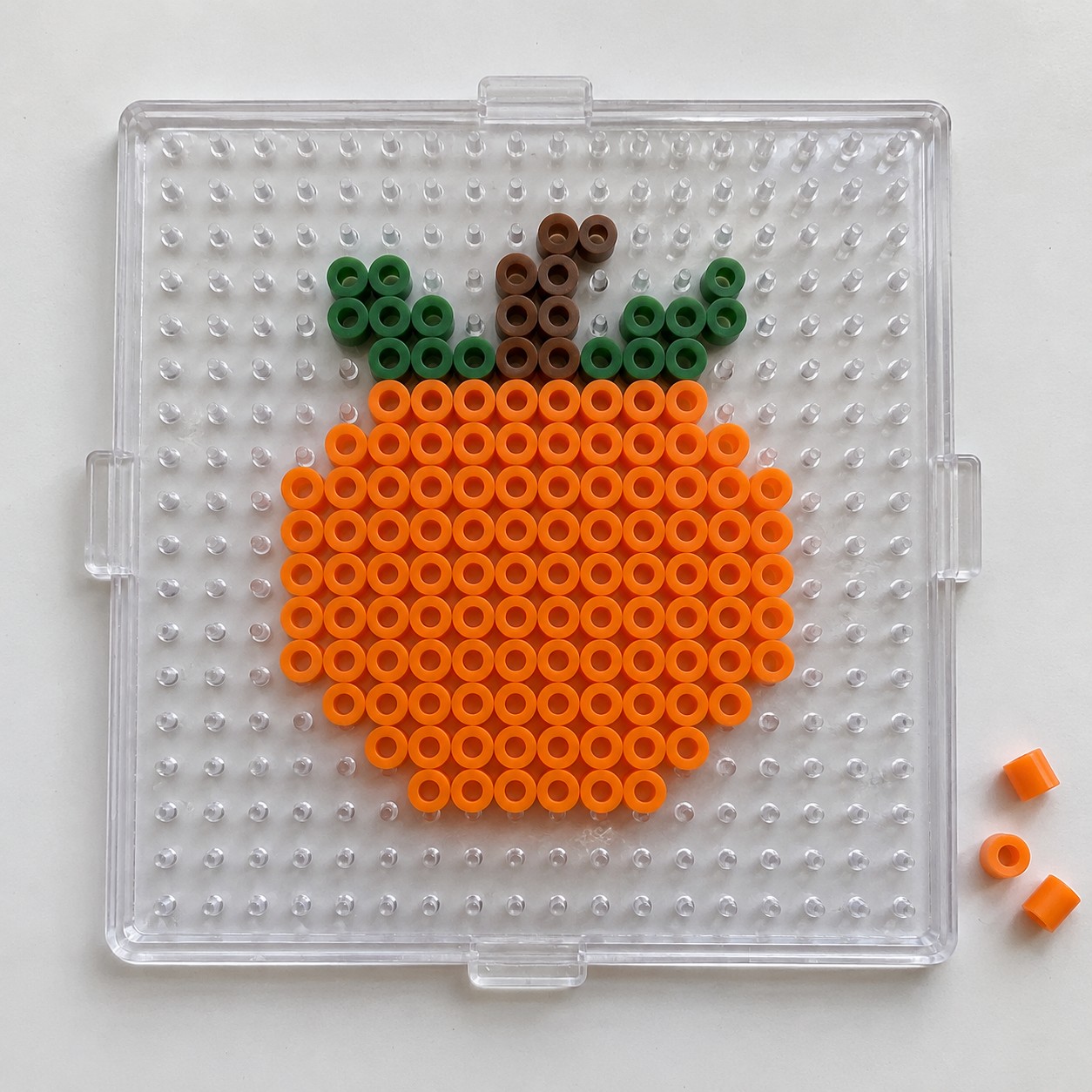
This flat pumpkin pattern uses orange fuse beads to build a rounded, stepped silhouette, with a brown stem and green leaf-like sections at the top. The individual beads are arranged on a pegboard, and the strong color blocks make the seasonal shape easy to recognize without adding small details.
The orange body could be recolored in yellow or deep red for a coordinated fall set, while changing the greens would give each pumpkin a slightly different top. A more compact version could keep the same outline and simplify the leafy sections, or a larger pattern could add extra shading with lighter and darker orange beads.
Autumn Leaf Perler Bead Pattern in Warm Fall Colors

A large maple leaf pattern turns individual Perler beads into a recognizable autumn motif, with a stepped red outline around bands of orange, yellow, and brown. The broad, roughly symmetrical shape and central stem help define the leaf, while the color blocks suggest the changing shades of fall. The beads are arranged on a pegboard and are not yet fused.
The clear outline makes this pattern easy to adapt into a coordinated set of fall leaves by changing the balance of red, orange, and yellow. For a simpler version, use fewer colors within the leaf; adding more color changes can create a richer, mottled effect while keeping the same basic silhouette.
Autumn Pumpkin Perler Bead Pattern

This flat pumpkin pattern uses individual fuse beads arranged on a pegboard, with a broad brown outline around a golden-orange body. The stepped sides and tapered bottom create a recognizable pumpkin silhouette, while the two dark brown beads at the top suggest a short stem. The design is still arranged on the board, not fused.
The contrasting outline helps the pumpkin’s shape read clearly, and the orange center is easy to recolor with deeper rust or lighter gold beads for a different fall palette. Pair it with matching leaf or acorn patterns to make a coordinated autumn set, or keep it as a standalone seasonal display piece once fused.
Autumn Fox Perler Bead Pattern
This autumn fox pattern uses individual orange, brown, cream, black, and white fuse beads to build a recognizable pixel-style animal. Its wide ears, pointed muzzle, dark eye, and cream-colored face and chest stand out against the orange body, while brown beads create a stepped outline and small patches of shading. The beads are arranged on a pegboard and have not yet been fused.
The contrast between the orange body and cream markings makes the fox’s shape easy to read, even with the many small color changes. For a coordinated fall set, keep the same outline and try different orange or rust shades, or simplify the pattern by reducing the brown shading and cream details.
Autumn Sunflower Perler Bead Pattern with Green Leaves
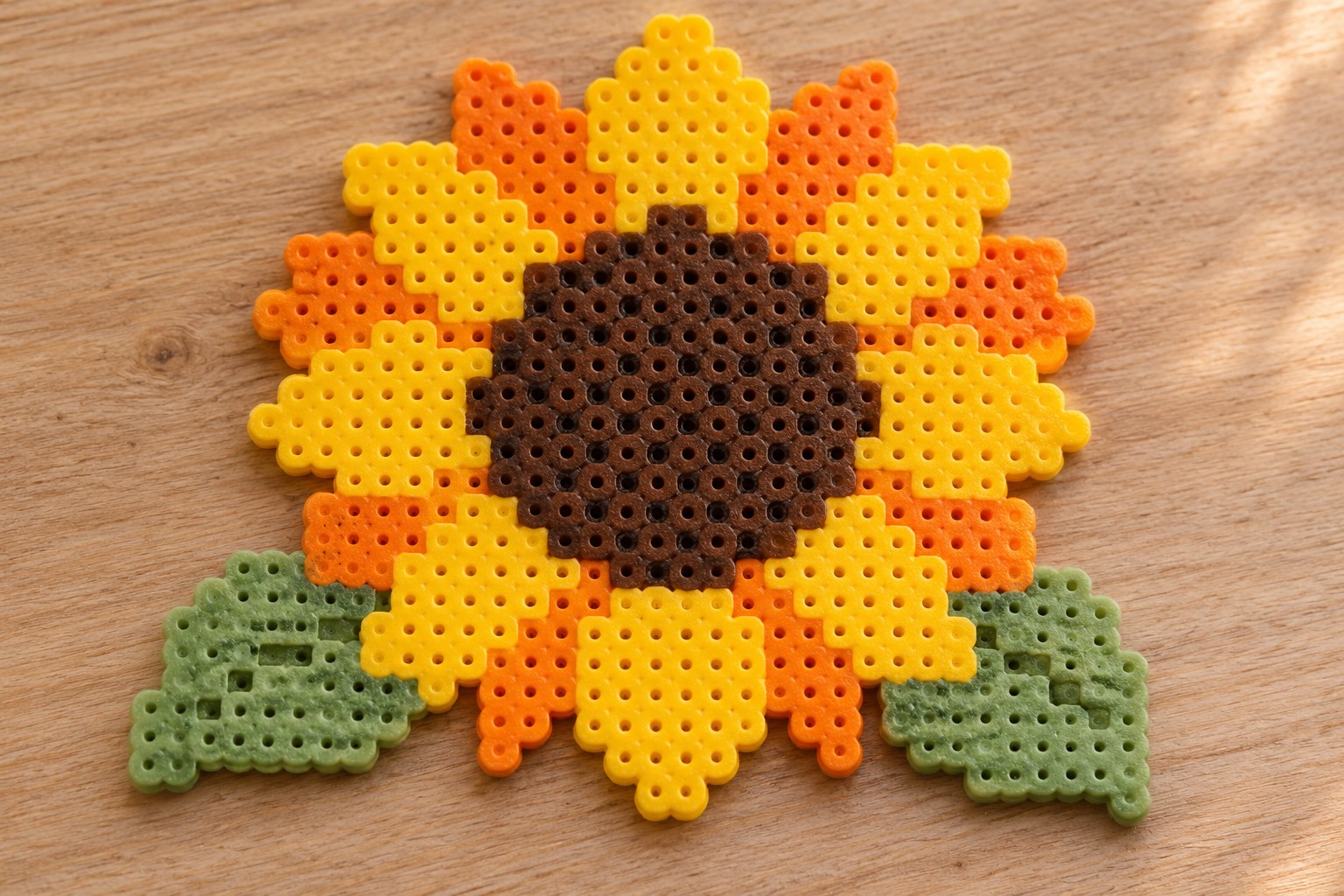
This flat autumn sunflower pattern uses individual fuse beads to build a broad yellow flower with orange accents, a dark brown center, and two green leaves. The stepped petal silhouette and contrasting color blocks keep the flower recognizable while giving the bead arrangement a layered look.
The alternating yellow and orange sections are useful inspiration for making matching fall flowers in different color combinations. Keep the brown center and green leaves for a familiar sunflower, or swap in deeper reds and golds for a more autumnal variation.
Autumn Mushroom Perler Bead Pattern with Cream Spots

This autumn Perler bead pattern combines three flat mushroom designs, each arranged from individual fuse beads on a pegboard. Red and orange caps with cream spots sit above pale stems, while the larger brown mushroom uses a dark outline and a cream band to separate its cap from the stem. The stepped silhouettes and clear blocks of warm color make the mushrooms easy to distinguish as a coordinated set.
Changing the cap colors or spot placement would give each mushroom its own look while keeping the same basic shape. For a simpler variation, use fewer spot colors, or add extra shades of brown and orange for more detail. The patterns could also be adapted into a broader fall set with different cap shapes and colors.
Autumn Sun Perler Bead Pattern in Fiery Fall Colors

A flat autumn sun pattern uses individual fuse beads to create a round, smiling face with pointed rays extending in every direction. Red beads outline the stepped rays, while orange and yellow color blocks fill the face and center; small black beads form the eyes and curved smile. The arrangement is still on its pegboard, ready to be fused.
The layered warm colors make the sun easy to recognize and give it a strong fall palette without relying on a leaf or pumpkin shape. To adapt the pattern, swap in deeper reds and golds, or change the facial expression while keeping the ray outline; a simpler version could use fewer color transitions.
Autumn Apple Perler Bead Pattern with a Green Stem

This flat autumn apple pattern uses individual Perler beads to build a rounded red shape, with a brown stem and a small green leaf at the top. Yellow and orange beads form a bright patch on one side, adding color contrast while keeping the apple silhouette easy to recognize. The stepped bead edges give the design its pixel-like outline.
The red base makes this pattern easy to adapt into other apple colors, while changing the yellow-orange patch to a few green beads could suggest a different variety. For a matching fall set, keep the same outline and vary the colors for red, green, and golden apples. The pattern is arranged on a pegboard, so it still needs fusing before it becomes a finished piece.
Autumn Squirrel Perler Bead Pattern with a Cream Tail

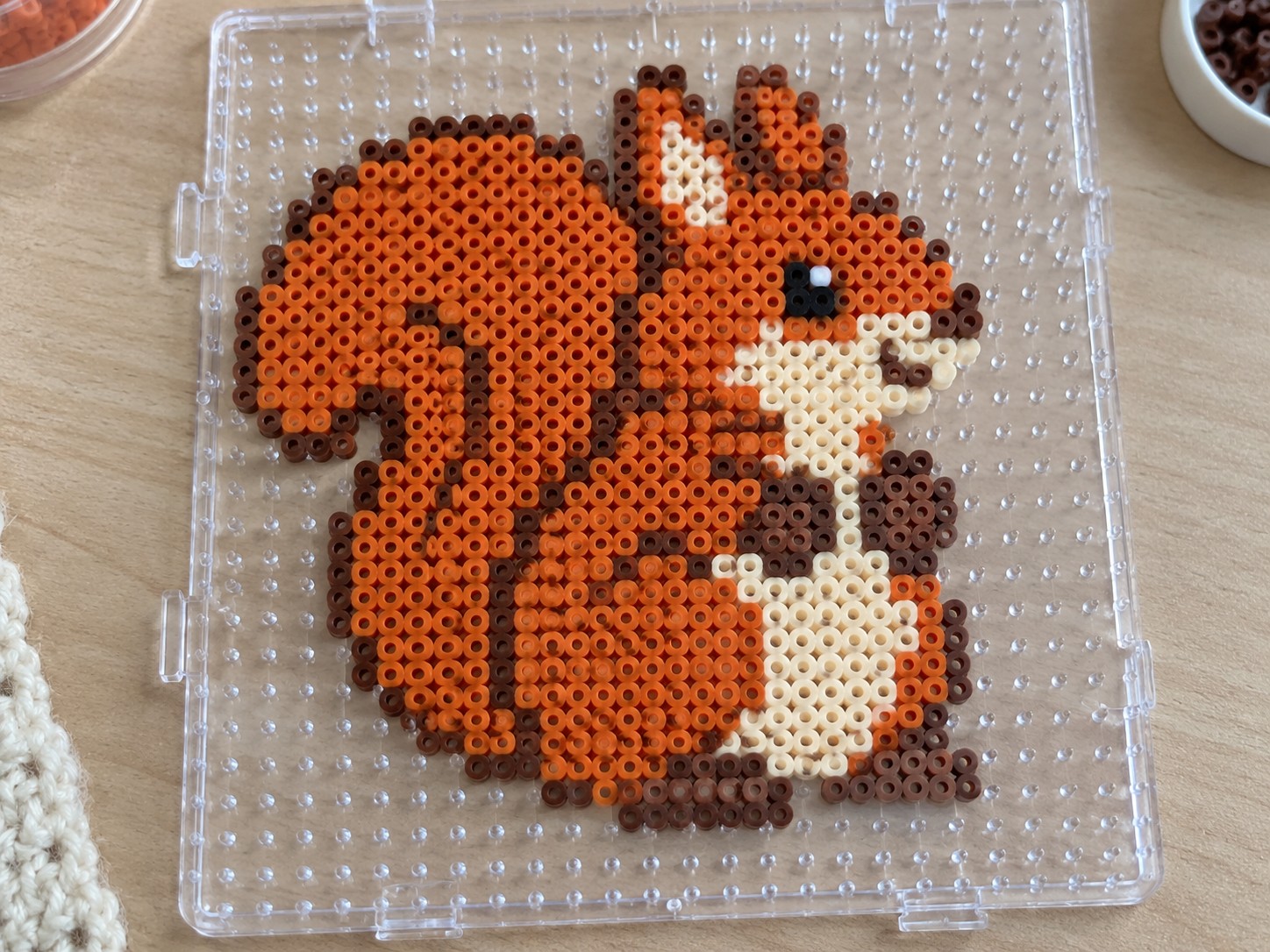
This flat autumn squirrel pattern uses individual fuse beads to form a curled, seated silhouette with pointed ears, a dark eye, and a large cream-and-orange tail. Stepped rows of orange and brown define the body, while the pale tail stands out clearly against the warmer colors.
The contrasting tail makes the squirrel easy to recognize and gives the pattern a useful starting point for a fall animal set. Try shifting the body toward reddish brown or gray, or change the tail colors to make related squirrel designs while keeping the same basic shape.
Autumn Squirrel and Flame Perler Bead Patterns

These flat autumn Perler bead patterns pair a warm-colored squirrel with a tall flame-like motif. The squirrel’s stepped outline, curled tail, and brown-and-rust color blocks make its shape readable, while yellow and orange beads frame the separate flame around a darker center. Both designs are arranged from individual fuse beads on a pegboard and are not yet fused.
The contrasting borders help define each silhouette, so the patterns can be adapted by changing the squirrel’s body colors or shifting the flame toward red, gold, or amber. For a coordinated fall set, use the same warm palette for other motifs such as leaves or acorns, keeping the darker beads as accents to preserve clear shapes.
Autumn Hedgehog Perler Bead Pattern with Cream Face

This flat autumn hedgehog pattern uses individual physical fuse beads to build a rounded, spiky silhouette from rows of dark brown, rust, and orange. A cream-colored face and underside create a clear contrast with the darker, mixed-color body, while a single black eye and nose make the animal recognizable without adding many facial details.
The warm, varied body colors make this pattern easy to adapt with more golden yellow or red beads for a different fall palette. For a coordinated set, keep the cream face and dark features while changing the body colors to create other hedgehogs with distinct autumn patterns.
Autumn Pumpkin Perler Bead Pattern with a Green Pixel Outline
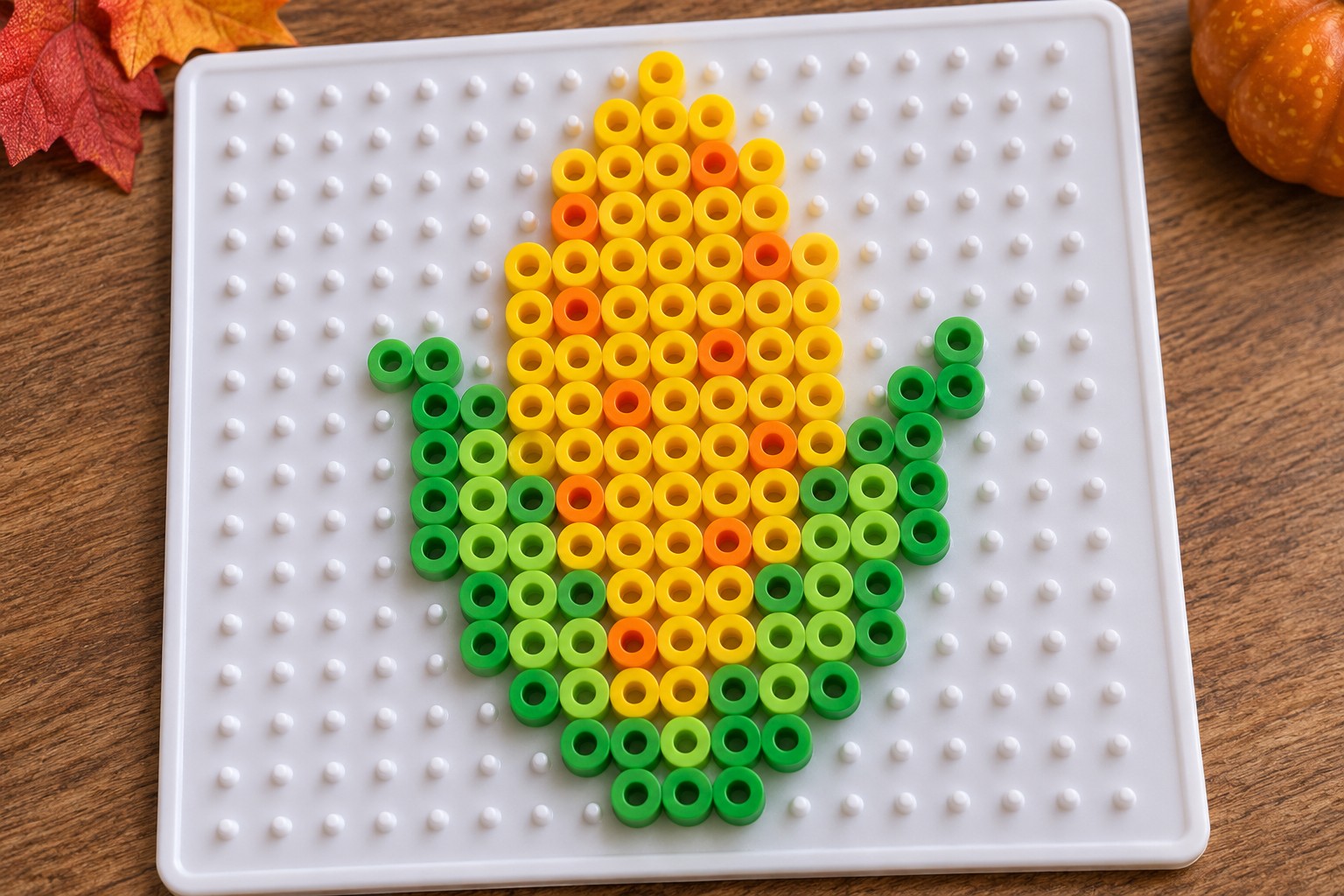
This pumpkin Perler bead pattern uses individual fuse beads arranged on a pegboard to create a broad, rounded pumpkin shape. Yellow and orange beads fill the center, while several shades of green form a stepped outline that suggests the pumpkin’s ribbed edges and tapering bottom. The beads are still arranged on the board, so this is a flat pattern ready for fusing rather than a finished decoration.
The contrasting green border keeps the pumpkin shape easy to read, and the warm center gives it a clear fall palette. For a coordinated autumn set, keep the outline and silhouette while changing the center to deeper orange or adding different green shades; simplifying the color blocks can also make a smaller version easier to arrange.
Two Autumn Leaf Perler Bead Patterns in Warm Colors

These flat Perler bead leaf patterns use stepped, branching silhouettes to make the autumn shapes easy to recognize. Red beads define the outer edges and vein-like lines, while orange and yellow sections create a bright color-blocked center; the second leaf uses deeper burgundy and rust tones for a more muted variation.
The paired designs make a useful starting point for a fall decoration set, with the same leaf layout recolored in different autumn palettes. Keep the red outlines for strong definition, or simplify the arrangement by using fewer shades and broader color blocks.
Autumn Owl Perler Bead Pattern with Golden Eyes
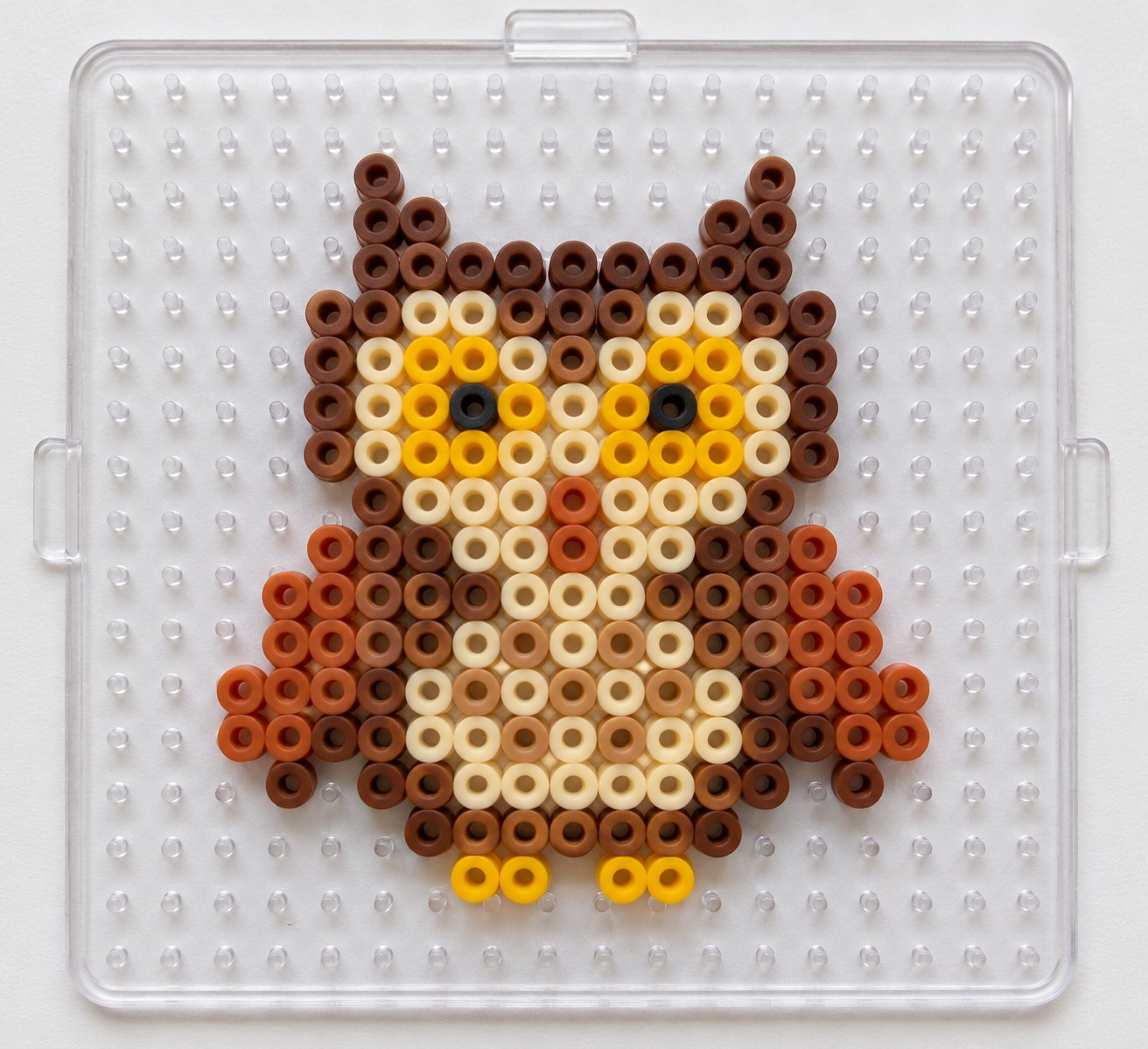
This autumn owl pattern uses individual fuse beads arranged on a pegboard to form a flat, pixel-style bird. Dark brown beads outline its tufted head and rounded body, while cream and golden yellow blocks define the face and feather markings; two black beads make the eyes easy to pick out.
The contrasting colors and stepped outline help the owl stay recognizable across the grid. For a coordinating fall set, keep the same brown-and-cream base and change the eye or body accents, or simplify the markings by using fewer color blocks.
Autumn Harvest Perler Bead Pattern Set with Pumpkin and Apple
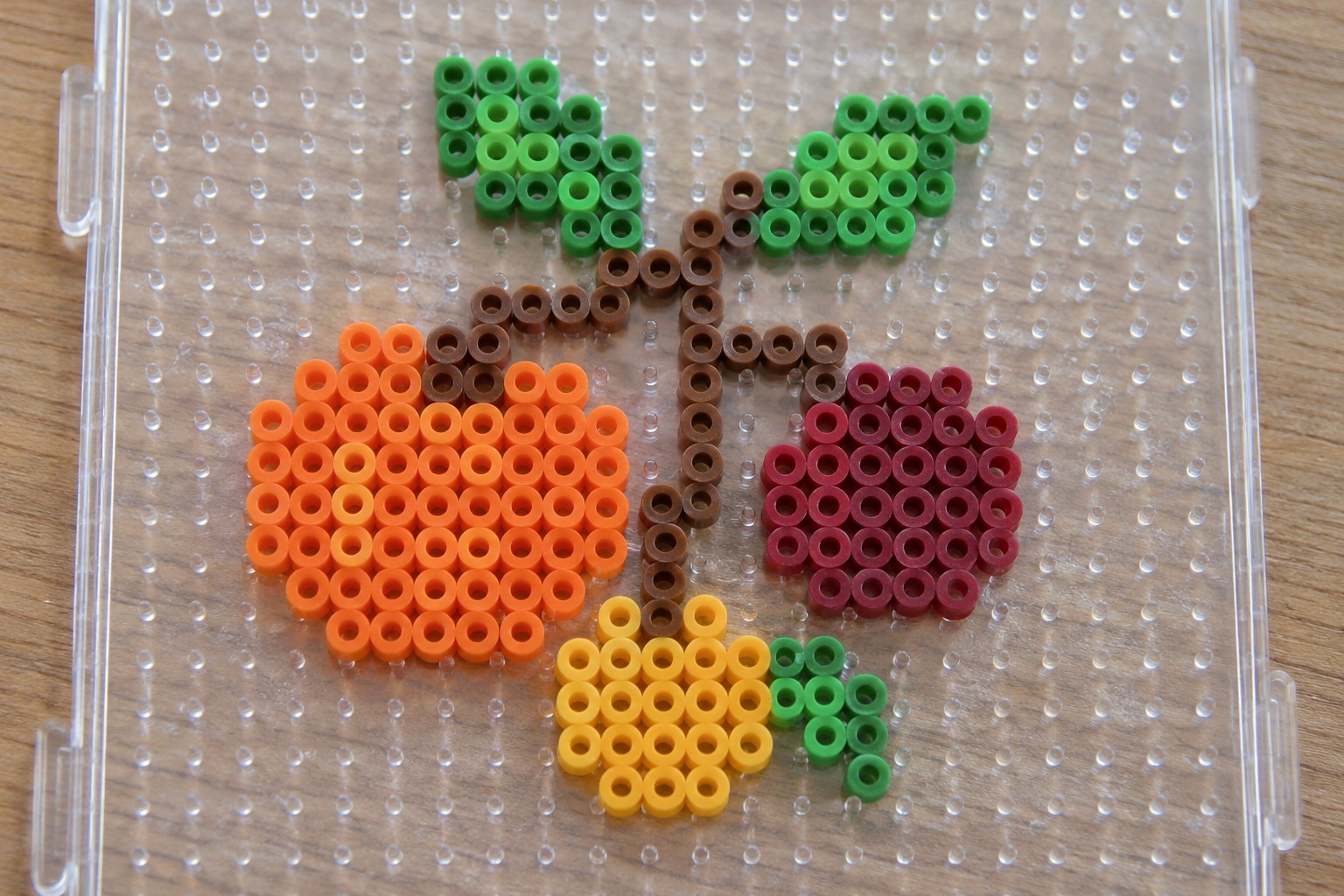
This flat autumn Perler bead set combines a large orange pumpkin, a red apple, and a smaller yellow-orange fruit with green leaves. Individual beads form stepped outlines and clear blocks of color, while the brown curling vine connects the upper green leaves and helps tie the separate motifs into one harvest-themed arrangement. The unfused designs are arranged on a pegboard as physical fuse-bead patterns.
The shared color palette makes these patterns easy to adapt into a coordinated seasonal set: try different shades of orange for the pumpkin or change the apple to green or yellow. The distinct silhouettes also make the designs useful starting points for adding more fall fruits or leaves while keeping each pattern readable through simple color blocking.
Autumn Slice of Pie Perler Bead Pattern

This flat Perler bead pattern turns a slice of pie into a clear fall motif using a stepped triangular silhouette, a golden crust border, and a deep red-orange filling. A small cluster of cream-colored beads forms the topping, while individual fuse beads keep the edges and color blocks crisp and readable.
The contrasting crust and filling make the slice easy to recognize, and the topping can be changed to suit another flavor or seasonal palette. Try brown beads for a pecan-style topping or a few green and red accents for a festive variation.
Autumn Scarecrow Perler Bead Pattern with a Wide-Brimmed Hat
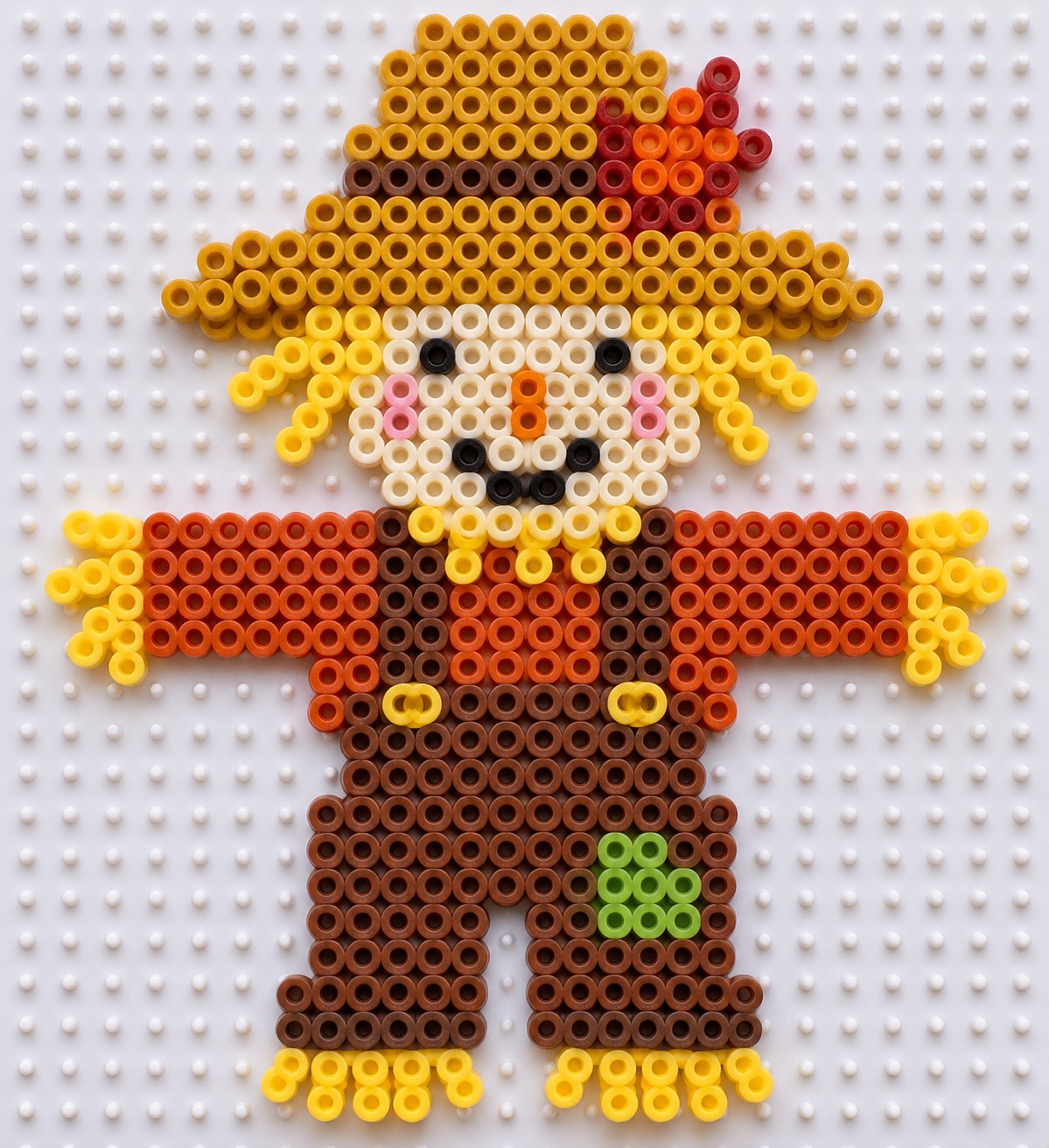
This flat scarecrow pattern uses individual fuse beads to build a recognizable autumn character, with a broad golden hat, a simple face, and a rust-red and brown outfit. The stepped outlines and clear blocks of yellow, cream, orange, and brown define the hat, facial features, outstretched sleeves, and legs on the pegboard.
The strong color blocks make the scarecrow easy to adapt: swap the outfit colors for a different fall palette or add small details such as a patch or a different hat band. It could also anchor a matching autumn set alongside bead patterns of pumpkins, leaves, or other harvest motifs.
Coordinating Pumpkin, Leaf, and Acorn Perler Bead Patterns

This fall Perler bead set pairs a large orange pumpkin with a red and orange maple leaf and a small acorn. Each is a flat pattern made from individual fuse beads, with dark brown outlines helping define the stepped shapes and separate their warm colors. Green beads form a short vine on the pumpkin, while the leaf’s contrasting orange center and the acorn’s lighter lower section add clear color blocks.
The shared brown borders and autumn palette make these patterns easy to mix into a seasonal display while keeping each motif distinct. Try changing the pumpkin’s orange shades or making the leaf more yellow to create variations, or add another fall fruit or leaf to build a matching set.
Frequently Asked Questions
You’ll need Perler beads in fall colors, pegboards, ironing paper, and an iron. Useful colors include red, orange, yellow, brown, cream, and green, plus a few bright shades for playful accents. Tweezers can make placing small beads easier, and a key ring, string, or adhesive hook can help you display the finished pieces.
Choose a few colors or motifs to repeat throughout your decorations. For example, combine leaf, acorn, pumpkin, and mushroom designs in a shared palette, then add a brighter pattern or two for contrast. Varying the sizes and shapes helps the collection feel balanced. You can arrange the finished pieces on a garland, wreath, table display, or seasonal shelf.
Yes. Perler bead patterns are easy to customize. Swap colors to match your décor, or use different shades to give leaves and pumpkins more depth. To make a design larger, expand it bead by bead while keeping its outline and proportions. If you change the pattern, count your beads as you go so both sides remain symmetrical where needed.
Place the design on a flat, heat-safe surface and cover it with ironing paper. With adult supervision, move a preheated iron gently over the paper using even pressure. Check the beads as they fuse, and stop when they hold together but still show their holes. Let the piece cool before removing it from the pegboard. Follow the bead manufacturer’s instructions, since iron settings can vary.
Turn them into ornaments, magnets, gift tags, garland pieces, or accents for a wreath. You can also attach a small loop before ironing if you want to hang a design. For outdoor use, keep in mind that heat and weather may damage the beads, so these decorations are best displayed indoors or in a sheltered spot.
