

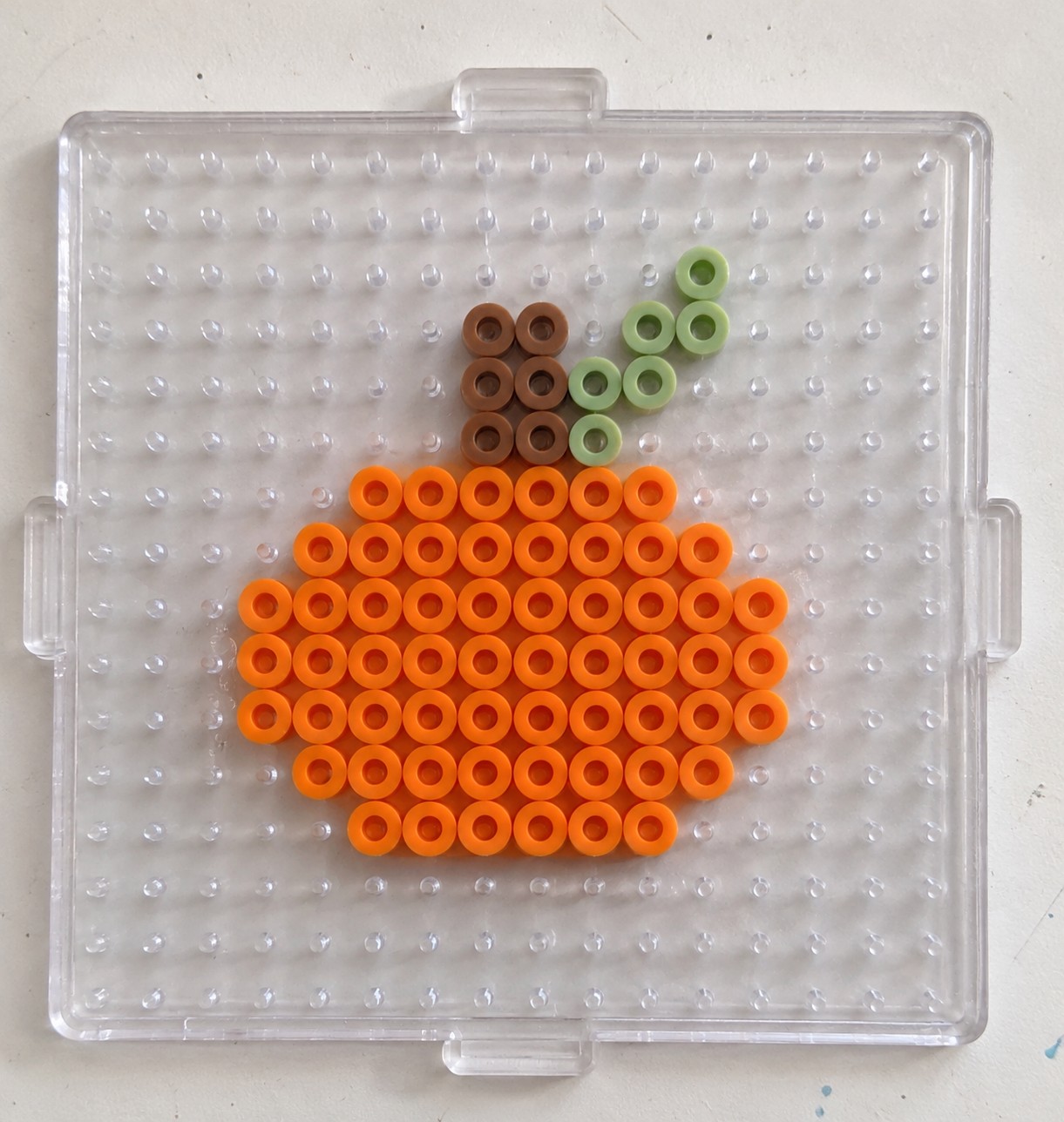
I like how fall colors make even simple Perler bead designs feel seasonal, from little pumpkins to colorful leaves.
These easy patterns are a nice place to start if you’re new to fuse beads or want a relaxed craft to work on at home.
I’ve gathered beginner-friendly ideas with manageable shapes and clear designs to follow.
You’ll find plenty of inspiration for making a few autumn decorations or simply enjoying a cozy afternoon of crafting.
Make a Pumpkin Perler Bead Pattern with a Green Stem
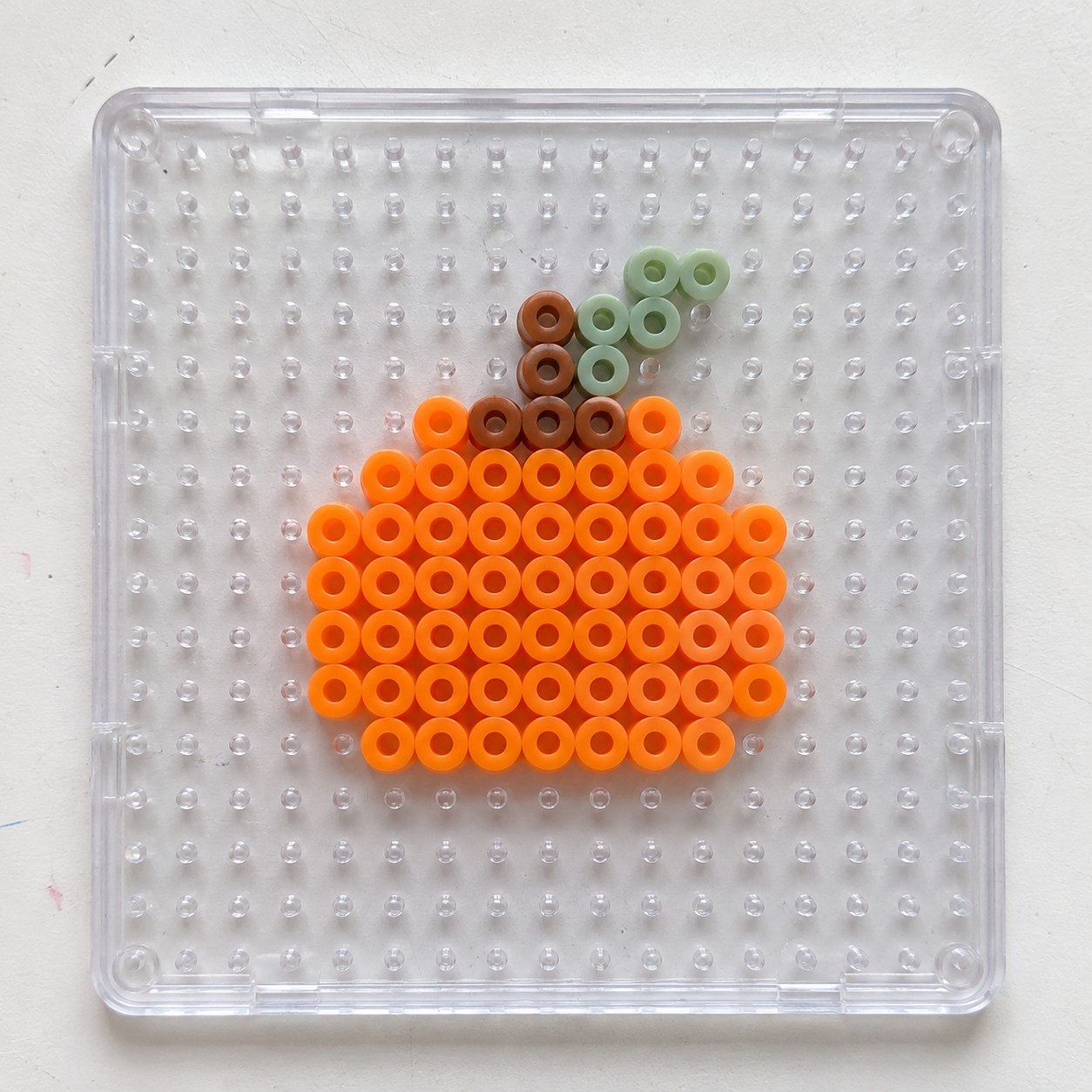
This flat fall Perler bead pattern forms a rounded orange pumpkin with a short brown section at the top and a small green stem. The staggered rows of orange beads create a stepped outline, while the darker beads add definition around the top and separate the stem from the pumpkin. The individual fuse beads are arranged on a pegboard and have not yet been fused.
The clear color blocks make the pumpkin easy to recognize and simple to adapt for a fall craft session. Try changing the orange shades for more variation, or make a matching set with different pumpkin sizes and stem colors; fewer rows can create a smaller, simpler version.
A Bright Fall Maple Leaf Perler Bead Pattern
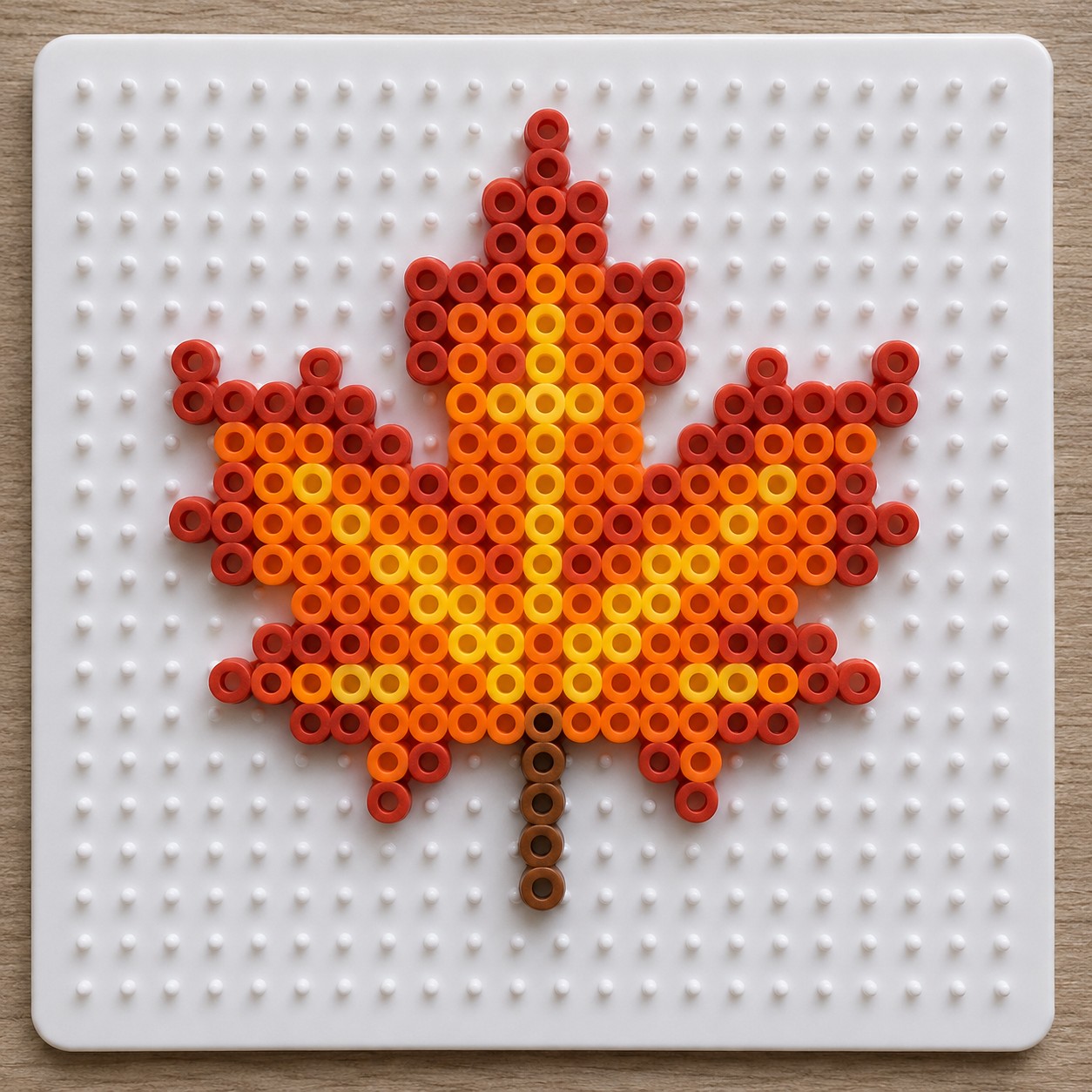
This flat fall leaf pattern uses individual physical fuse beads arranged in a stepped, symmetrical silhouette. Red beads outline the edges, while orange and yellow color blocks create the veins and fill, making the maple-leaf shape easy to recognize on the pegboard.
The contrasting colors help define the leaf even across its wider lower sections, so the pattern could be adapted with fewer shades for a simpler version or more gradations for extra detail. Try swapping in gold, brown, and deep red beads for a different autumn palette, or make matching leaves in varied colors for a seasonal set.
Fall Acorn Perler Bead Pattern
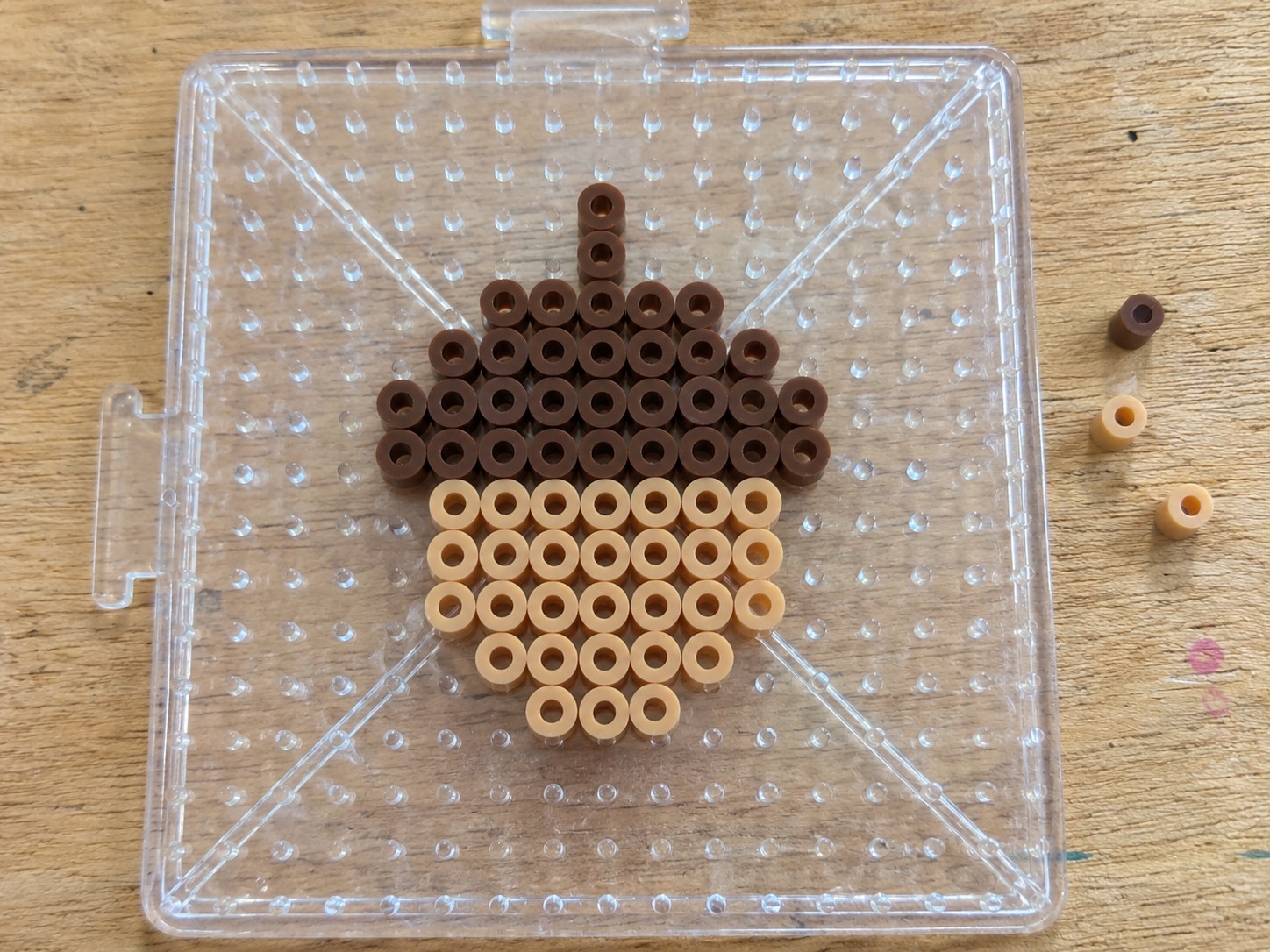
This fall Perler bead pattern forms an acorn with a dark brown cap and a golden tan body. Individual fuse beads create a stepped, symmetrical outline, while the two-color blocks make the familiar acorn shape easy to read. The beads are still arranged on the pegboard, so this is a pattern ready to fuse rather than a finished piece.
The clear color division makes the design easy to adapt: try a deeper brown body, a rust-colored cap, or several combinations for a matching autumn set. The straightforward silhouette also gives beginners a manageable way to practice arranging beads in even rows before trying more detailed fall motifs.
Fall Fox Perler Bead Pattern
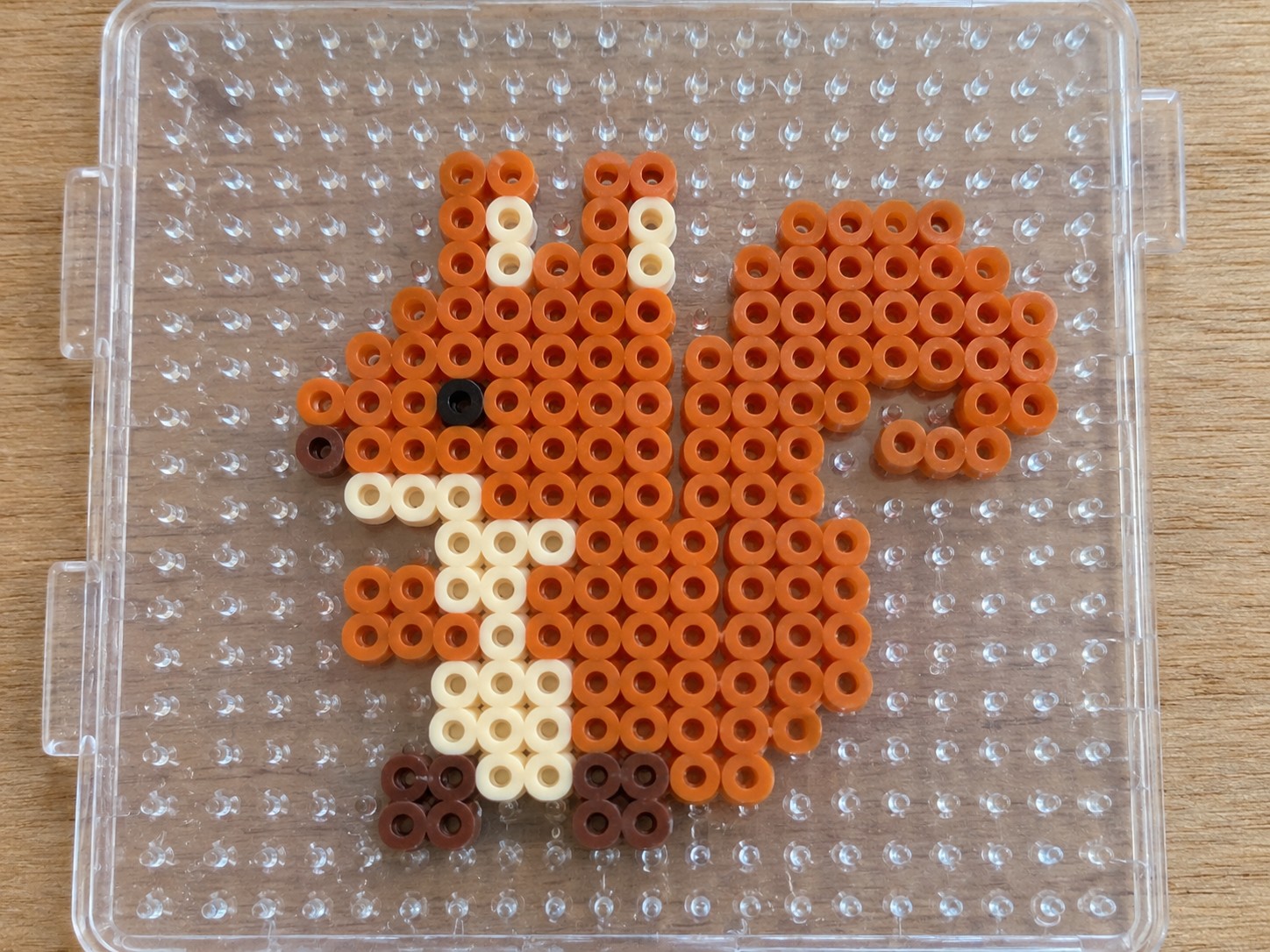
This flat fall fox pattern uses individual orange, cream, brown, and black fuse beads to create a recognizable pixel-style fox. The stepped outline forms its pointed ears, broad body, and curled tail, while cream patches add contrast and a dark bead marks the eye. The beads are arranged on a pegboard and are not yet fused.
The clear color blocks make the fox shape easy to follow, and the orange-and-cream palette can be adjusted for a different seasonal look. For a simpler version, reduce the cream markings or omit the small dark facial detail. A fused version could also be paired with other woodland-animal patterns for a fall display.
Make a Fall Apple Perler Bead Pattern
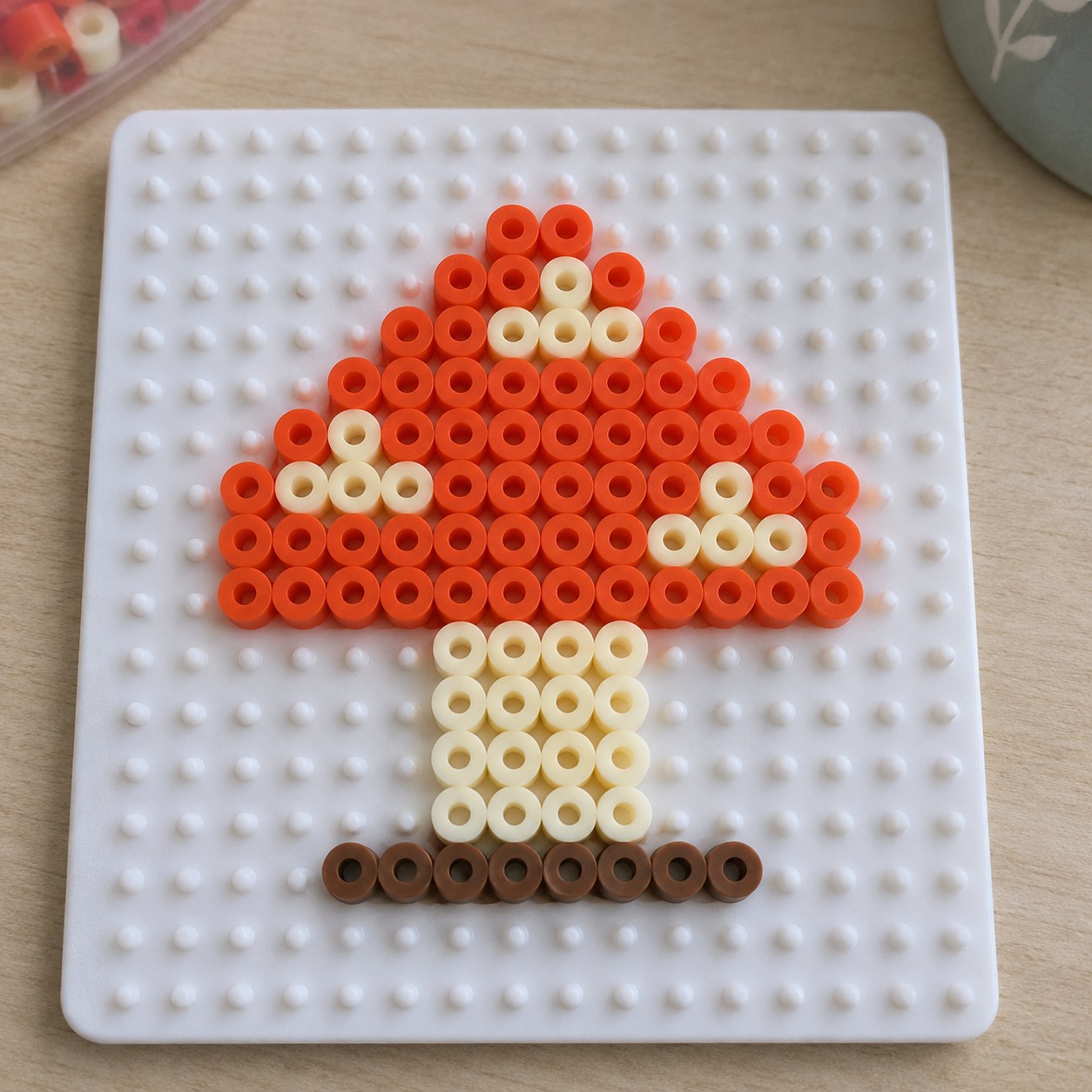
This flat fall apple pattern uses individual red-orange fuse beads to form a broad, stepped silhouette, with cream-colored beads marking the top indentation and a short stem area. The brown row at the bottom and pale inner sections create contrast that helps the apple shape read clearly on the pegboard.
The strong color blocks make the pattern easy to adapt: use green beads for a different apple variety or add a small green leaf near the top. Keep the cream accents for definition, or simplify the design to a single apple color with a contrasting stem.
Make a Sunflower Perler Bead Pattern with a Brown Center
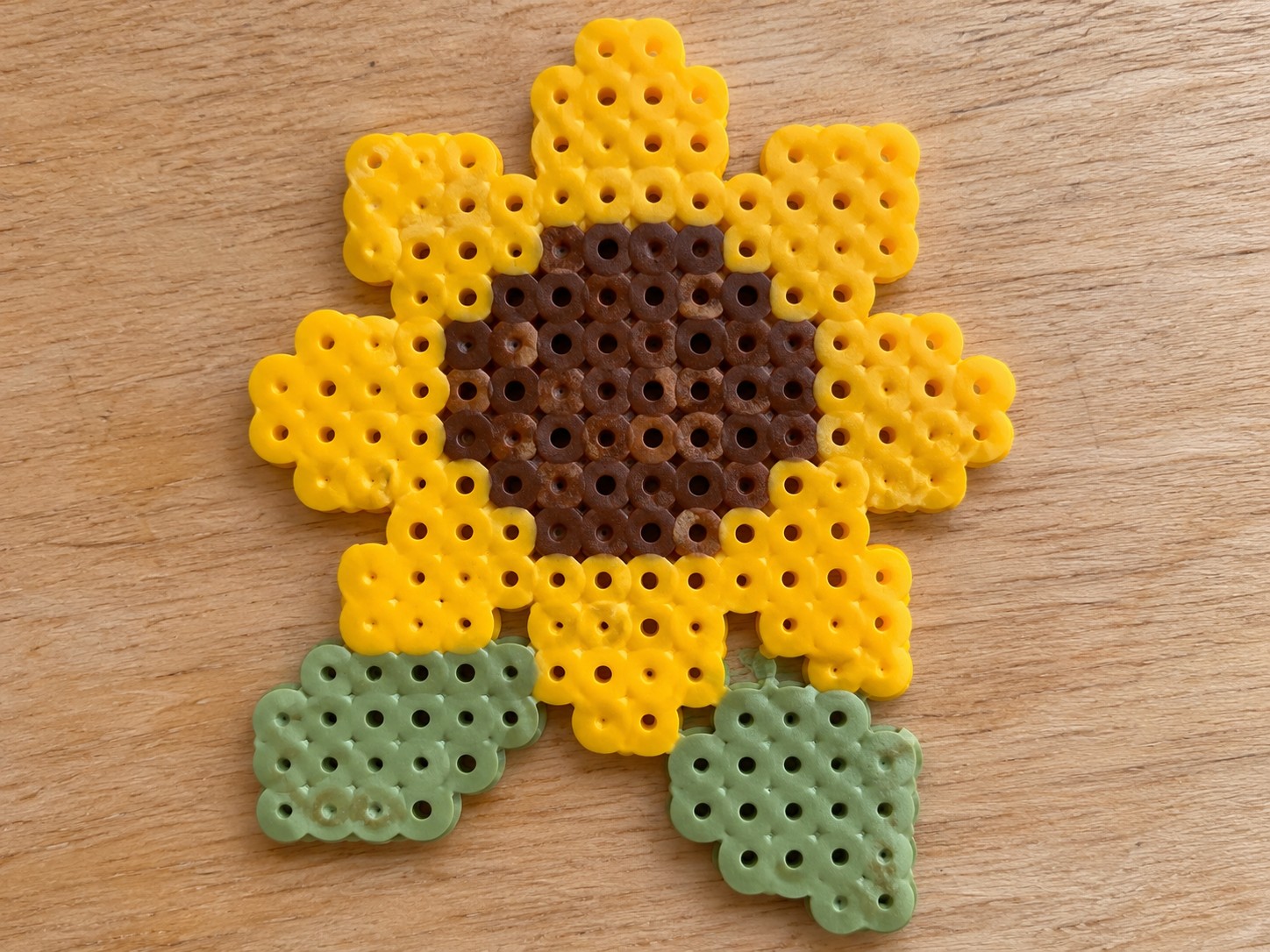
This flat sunflower pattern uses individual yellow Perler beads to form broad petals around a large brown center. The stepped, roughly symmetrical shape keeps the flower recognizable, while the dark center contrasts clearly with the bright outer ring; green bead clusters below suggest leaves or a short stem.
The bold color blocking makes the flower easy to adapt for a fall palette, such as deeper gold petals with a rust-brown center. You could also make a matching set by varying the petal colors or adding different green leaf shapes, keeping the central brown section as the shared feature.
Make a Round Red Apple Perler Bead Pattern
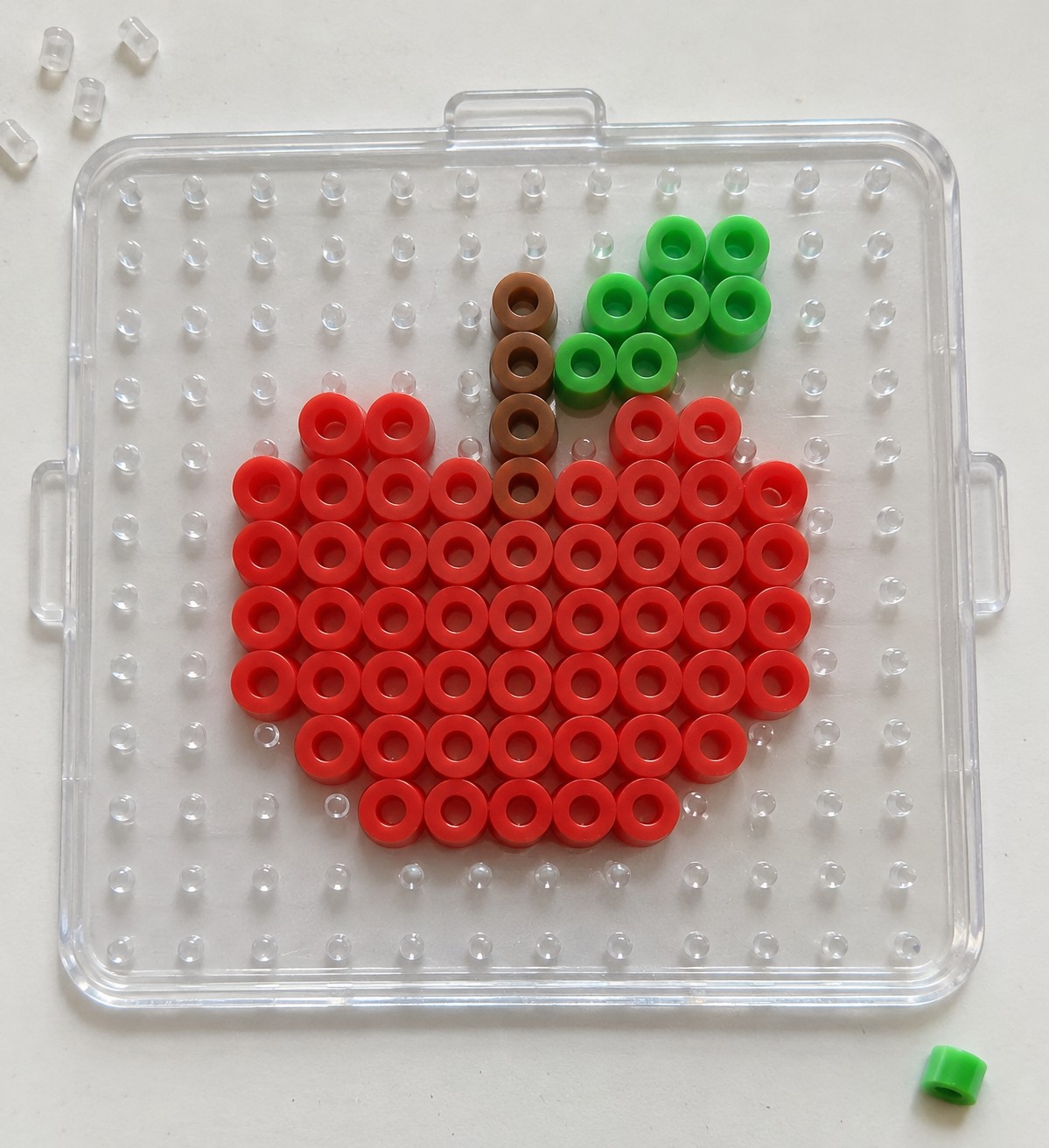
A red apple takes shape through rows of individual fuse beads arranged into a broad, stepped silhouette, with a short brown stem and a small green leaf cluster. The red body’s rounded outline stays easy to read against the green and brown details, making this a clear flat pattern to arrange on a pegboard before fusing.
The simple color blocking offers a useful starting point for a fall fruit set: keep the silhouette and swap in yellow or green beads for different apple varieties. To simplify the pattern, use fewer leaf beads, or add a second shade of red to give the body more contrast.
Make a Yellow Fall Leaf Perler Bead Pattern
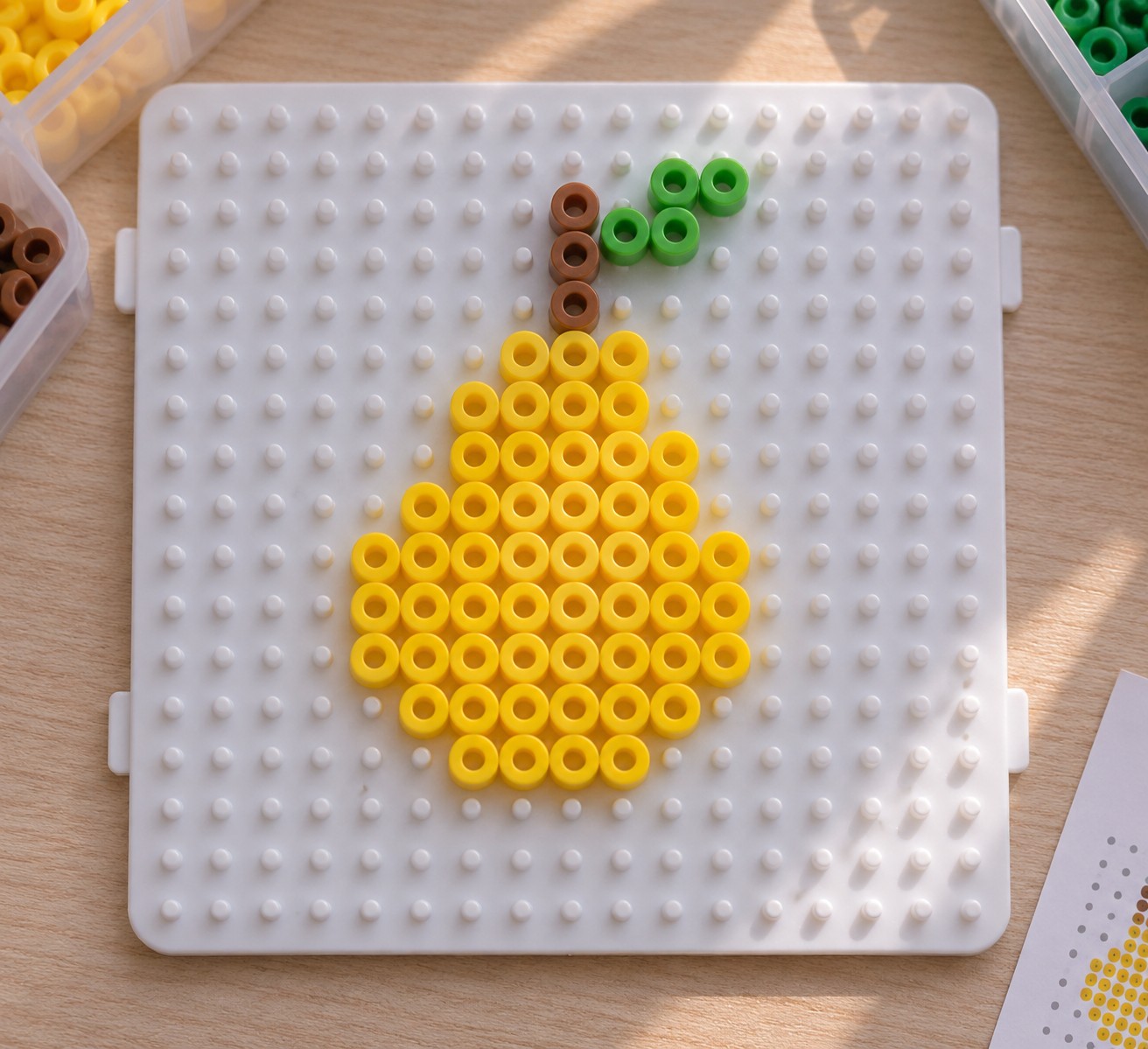
This flat fall leaf pattern uses individual yellow fuse beads arranged in a broad, stepped silhouette, with a small brown section and green beads forming the stem. The blocky edges make the leaf shape readable on the pegboard, while the contrasting colors help the stem stand out from the bright yellow body. The beads are still arranged on the board, not fused.
The limited palette and clear color blocks make this pattern straightforward to adapt: use orange, red, or mixed autumn colors for the leaf, and keep the stem darker for contrast. Try changing the leaf’s width or adding a few stepped edges to create a set of slightly different fall leaves. Once fused, a flat version could work as a seasonal display accent.
Make a Fall Sunflower Perler Bead Pattern
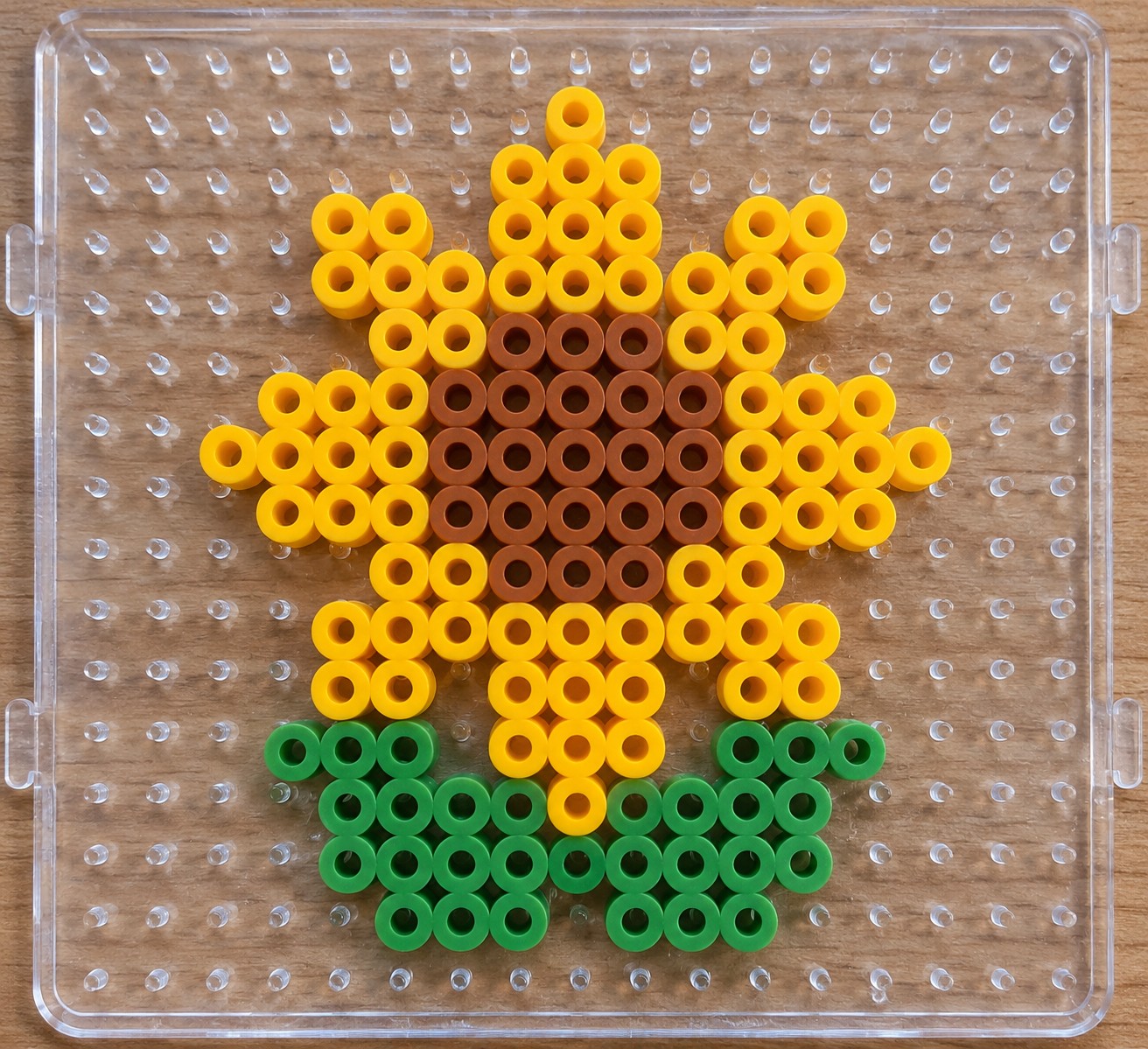
This flat sunflower pattern uses individual yellow and brown fuse beads arranged into a broad bloom around a dark center, with green beads forming the stem and leaves. The stepped outline gives the flower a recognizable shape, while the yellow petals contrast clearly with the brown center and green base. The beads are still arranged on a pegboard, so the design has not yet been fused.
The clear color blocks make this sunflower a useful pattern to adapt: change the petal color for a different flower, or simplify the outline by trimming some of the smaller steps. For a matching fall set, pair it with bead patterns of leaves, pumpkins, or acorns using the same green and golden-yellow palette.
Make an Orange Fox Face Perler Bead Pattern
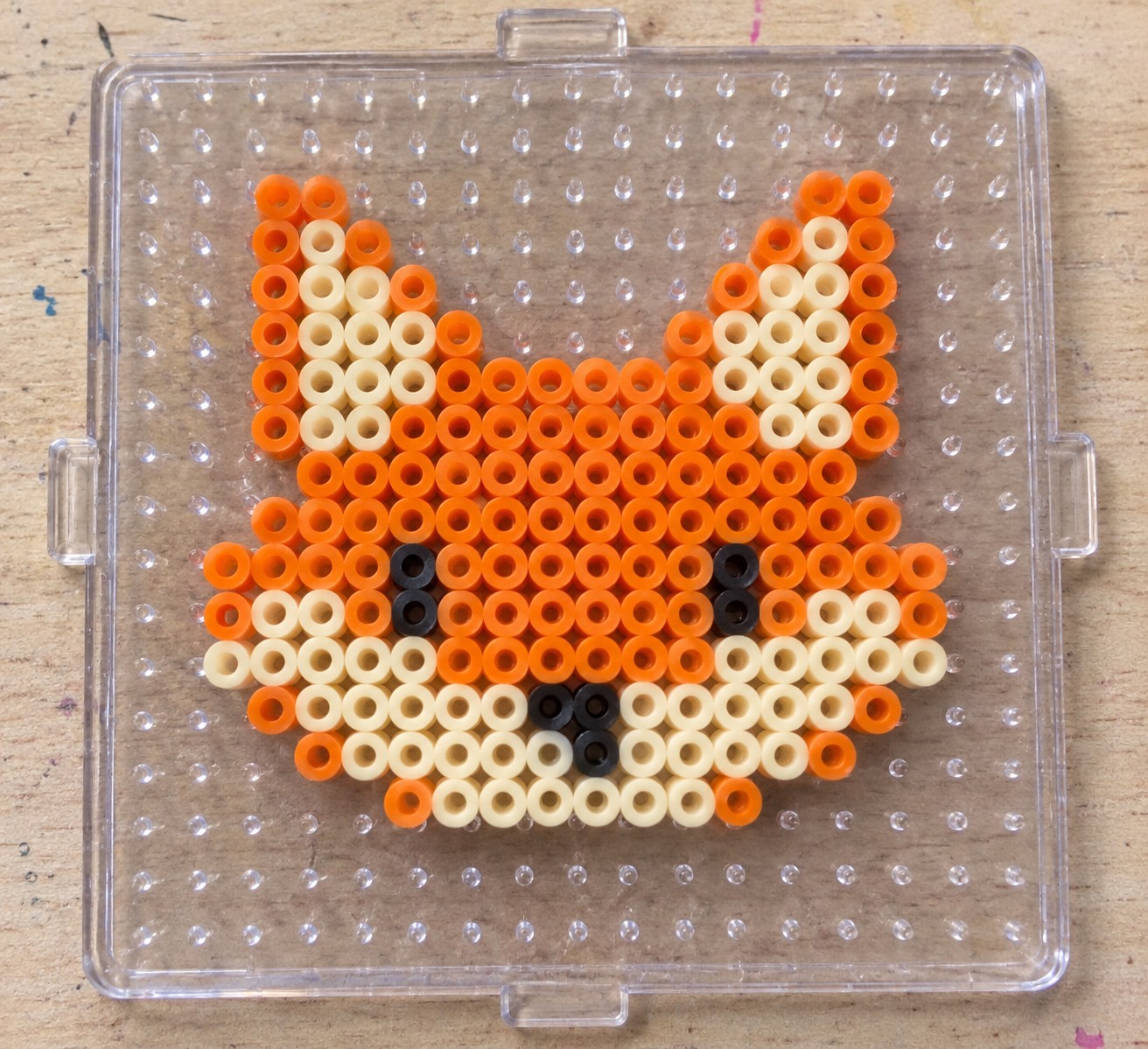
This flat fall fox pattern uses individual orange, cream, and black fuse beads to create a recognizable face. The pointed ears and broad orange outline give it a clear silhouette, while cream patches form the cheeks and forehead and black beads add the eyes and nose. Its stepped, mostly symmetrical arrangement makes the facial features easy to read on the pegboard.
The strong color blocking is useful inspiration for a small seasonal bead design, and changing the cream patches or adding another shade of orange can give the fox a different look. Simplify it by using fewer cream details, or make a matching set with adjusted ear shapes and facial markings. The beads are still arranged on the pegboard, so the pattern has not yet been fused.
Make a Brown Acorn Perler Bead Pattern
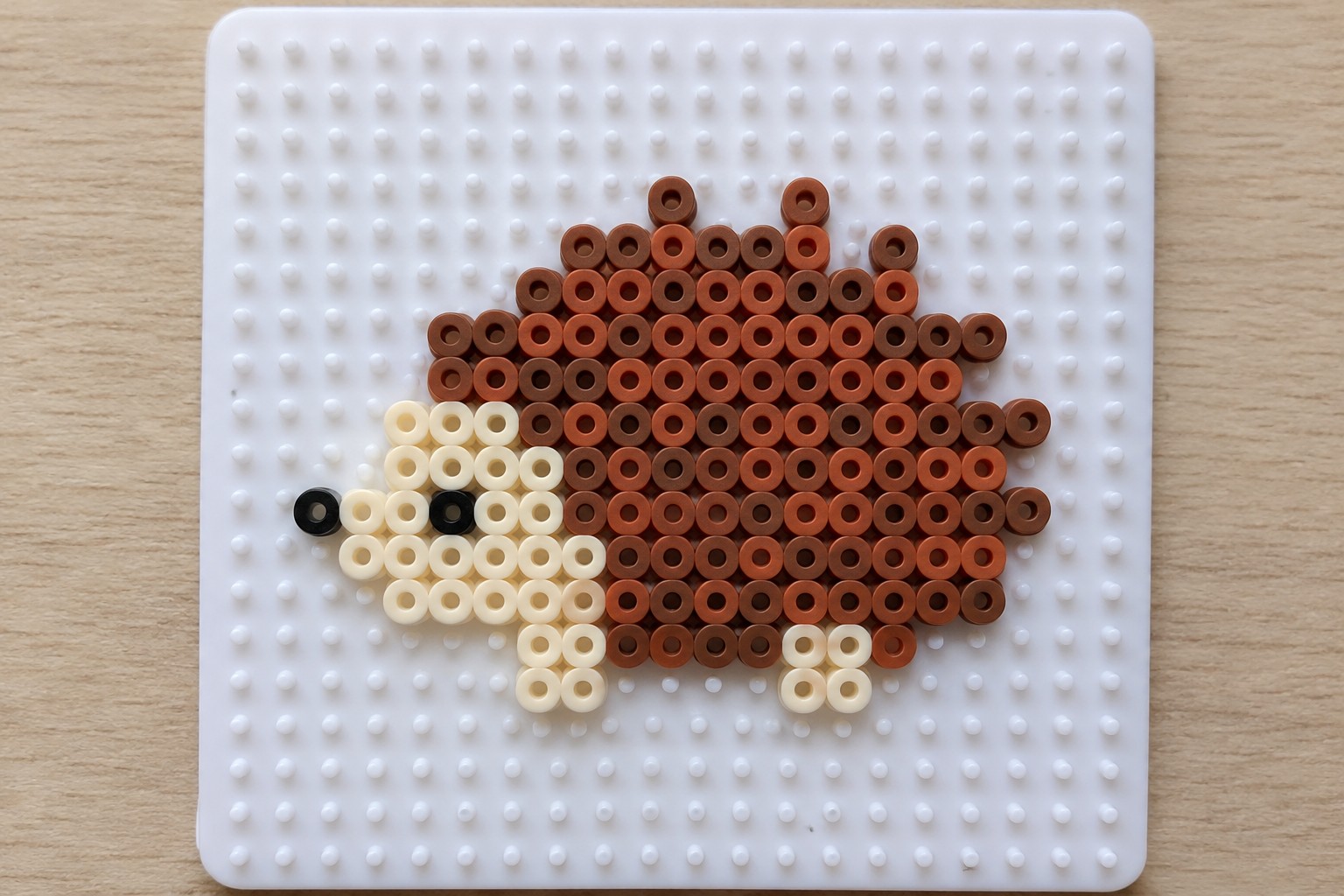
This physical fuse-bead pattern forms a large acorn, with a rounded brown body and a stepped cap that creates the recognizable outline. Several shades of brown add color-blocked detail, while the cream-colored base and small dark accents give the design extra contrast. The beads are arranged on a pegboard as a flat pattern, not yet fused.
The clear outline makes the acorn a useful starting point for a fall bead craft, though the many beads make it more involved than a tiny motif. For a simpler version, use fewer shades of brown and reduce the cream and dark details; a matching fall set could pair the acorn with leaf or pumpkin patterns. Keep it as a flat design, or consider a suitable attachment only after the beads are fused and the finished size and shape allow for it.
Make a Pixel-Style Fall Owl Perler Bead Pattern
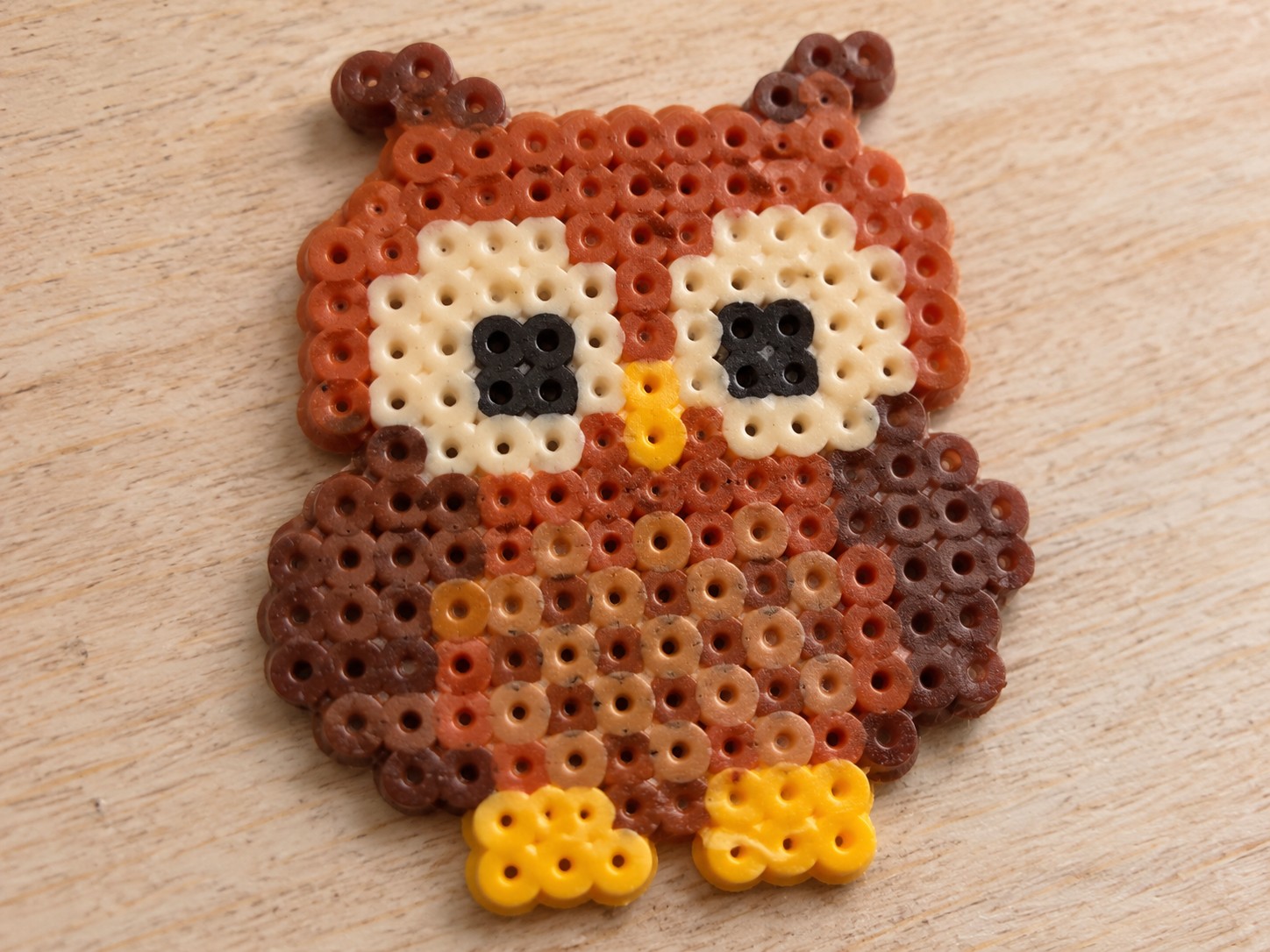
This flat fall owl pattern uses individual fuse beads to build a rounded brown body, rust-colored head, cream facial patches, and bright yellow feet and beak. Black bead clusters form large, readable eyes, while the stepped outline gives the owl its familiar shape without needing fine details.
The strong color blocks make the pattern easy to adapt: swap the browns for gray or white, or change the eye and beak colors to create a small set of different owls. A simpler version could use fewer shades in the body, while extra feather colors would add detail for a larger pattern.
Make a Three-Design Fall Fruit Perler Bead Set
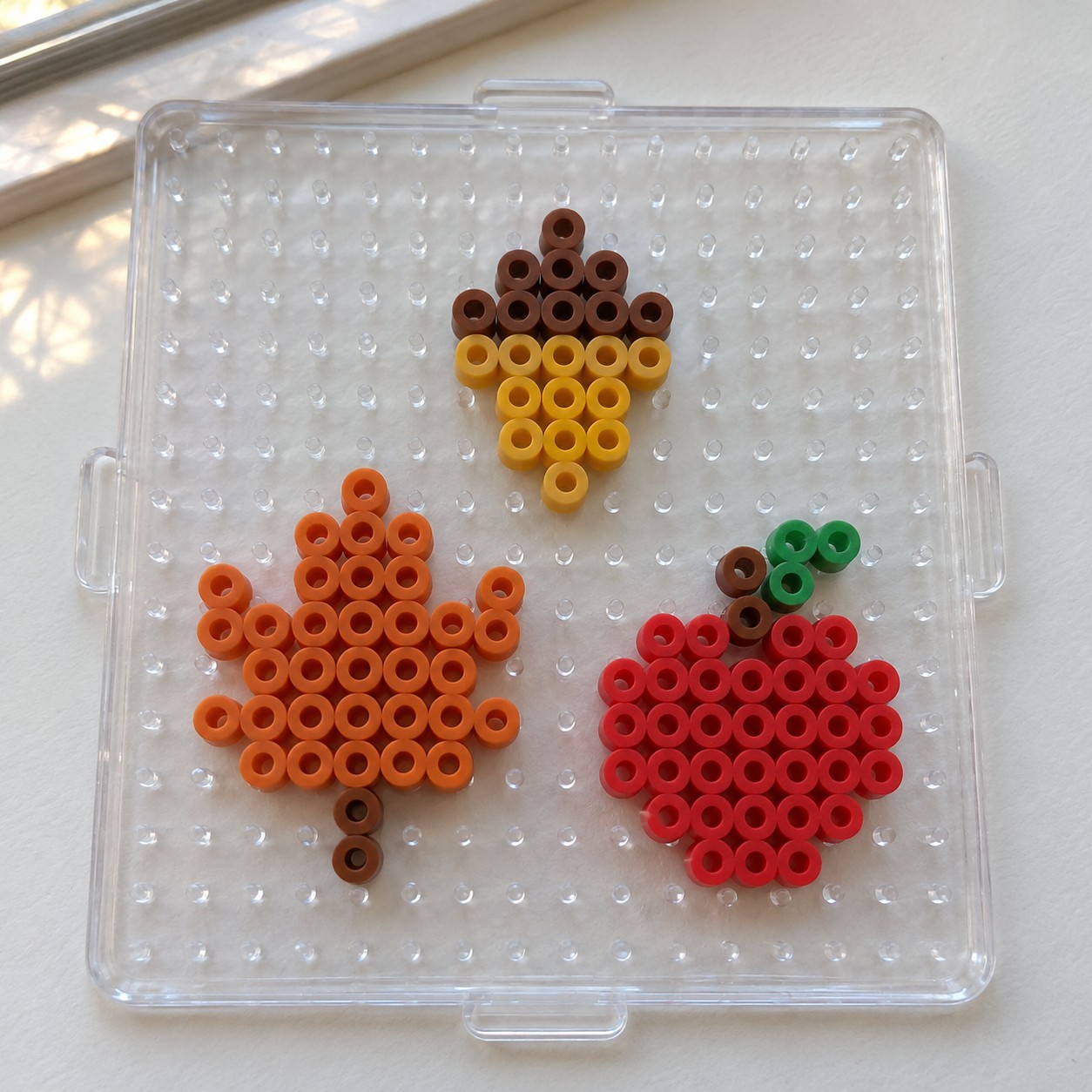
These unfused Perler bead patterns arrange a yellow acorn, an orange pumpkin, and a red apple as a coordinated fall set. Each fruit uses a stepped, pixel-like outline and solid color blocks to make its shape easy to recognize, with brown beads adding the acorn cap and pumpkin stem and green beads forming the apple leaf.
The shared layout makes these patterns easy to adapt into a larger harvest collection: try changing the apple color or adding different leaf shades while keeping the same basic silhouettes. Since the beads are still arranged on a pegboard, they’re patterns to fuse before using as decorations or craft gifts.
Make Three Fall Leaf Perler Bead Patterns
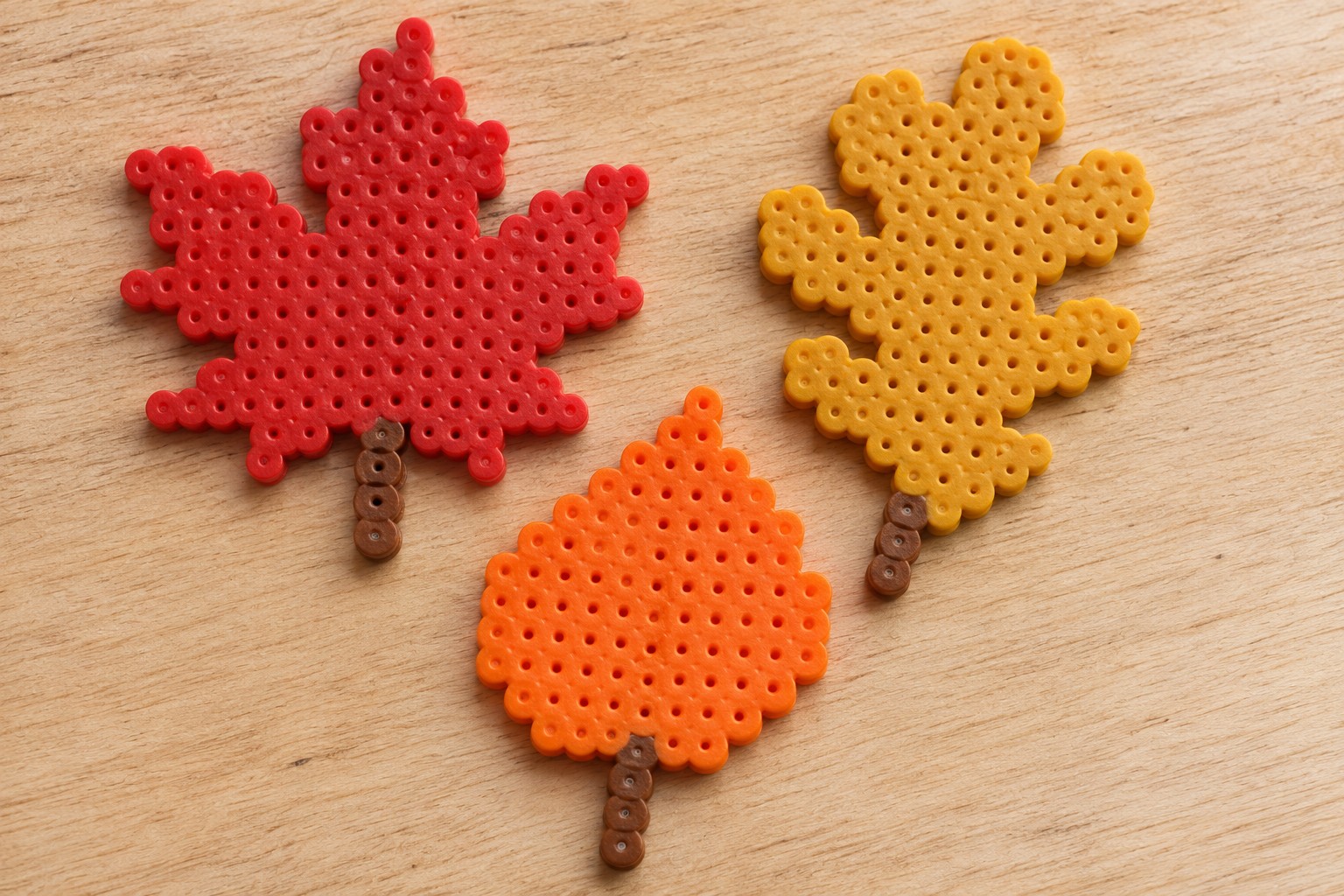
These flat fall leaf patterns use individual fuse beads arranged into three stepped silhouettes, with red, orange, and golden yellow color blocking to distinguish each design. The broad, branching outlines make them recognizable as leaves, while short brown bead sections form simple stems.
The coordinated set is useful for fall decorating because the same basic leaf shape can be varied with seasonal colors or adjusted to make the outlines fuller or more compact. Keep the palette limited for a simpler pattern, or add a few shades within each leaf to create more color variation.
Make a Fall Pear Perler Bead Pattern
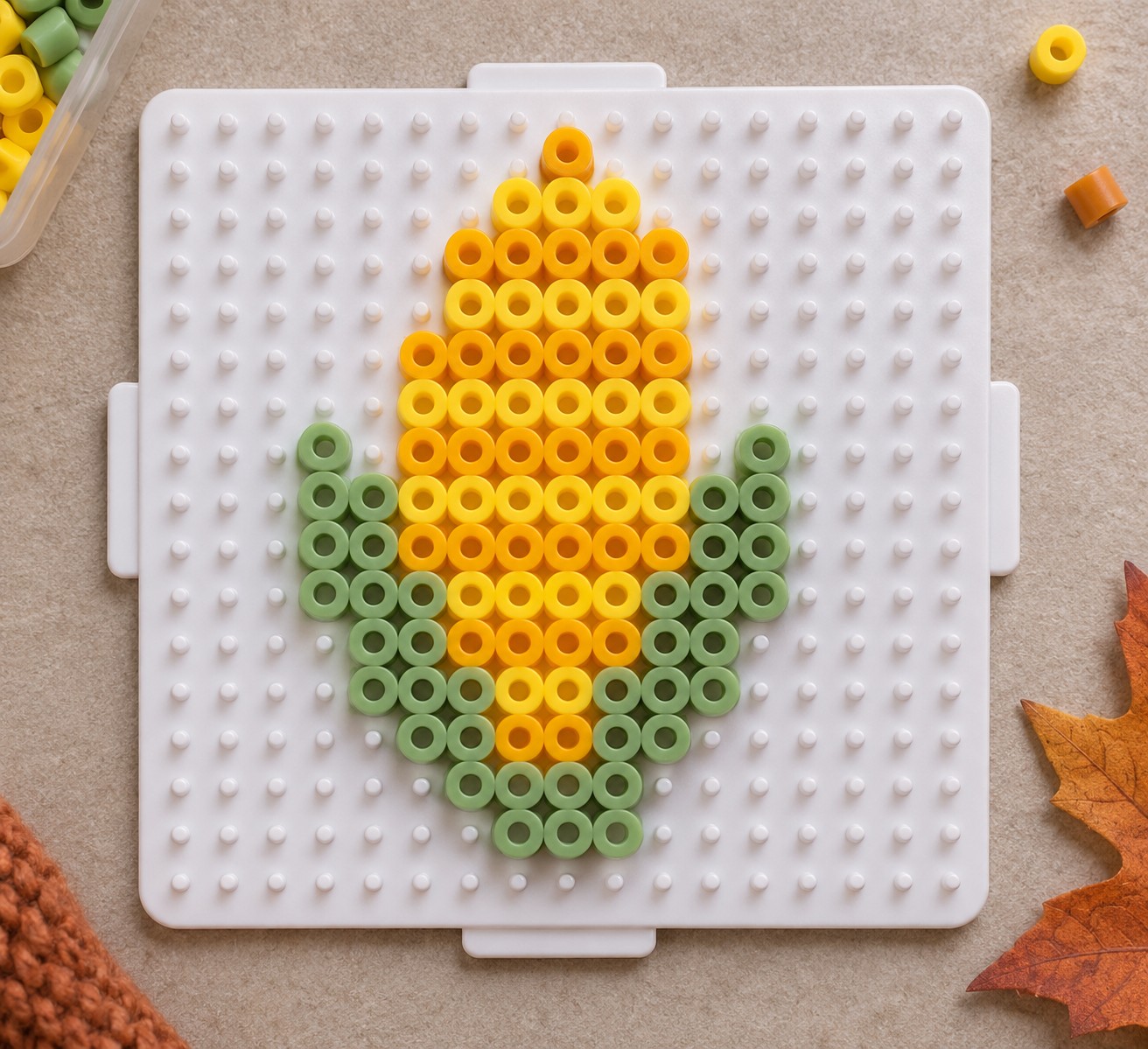
A pear-shaped fall design takes shape from individual orange and yellow fuse beads, with green beads forming leafy details around the lower sides. The stepped outline and warm color blocks make the fruit recognizable while keeping the arrangement a flat pattern on the pegboard, not a fused piece yet.
The simple fruit silhouette is easy to adapt by changing the orange and yellow sections to green or red for other pear varieties. For a matching fall set, pair it with bead patterns of apples, leaves, or acorns, using the same small palette of autumn colors.
Make a Fall Pumpkin Perler Bead Pattern with a Brown Stem
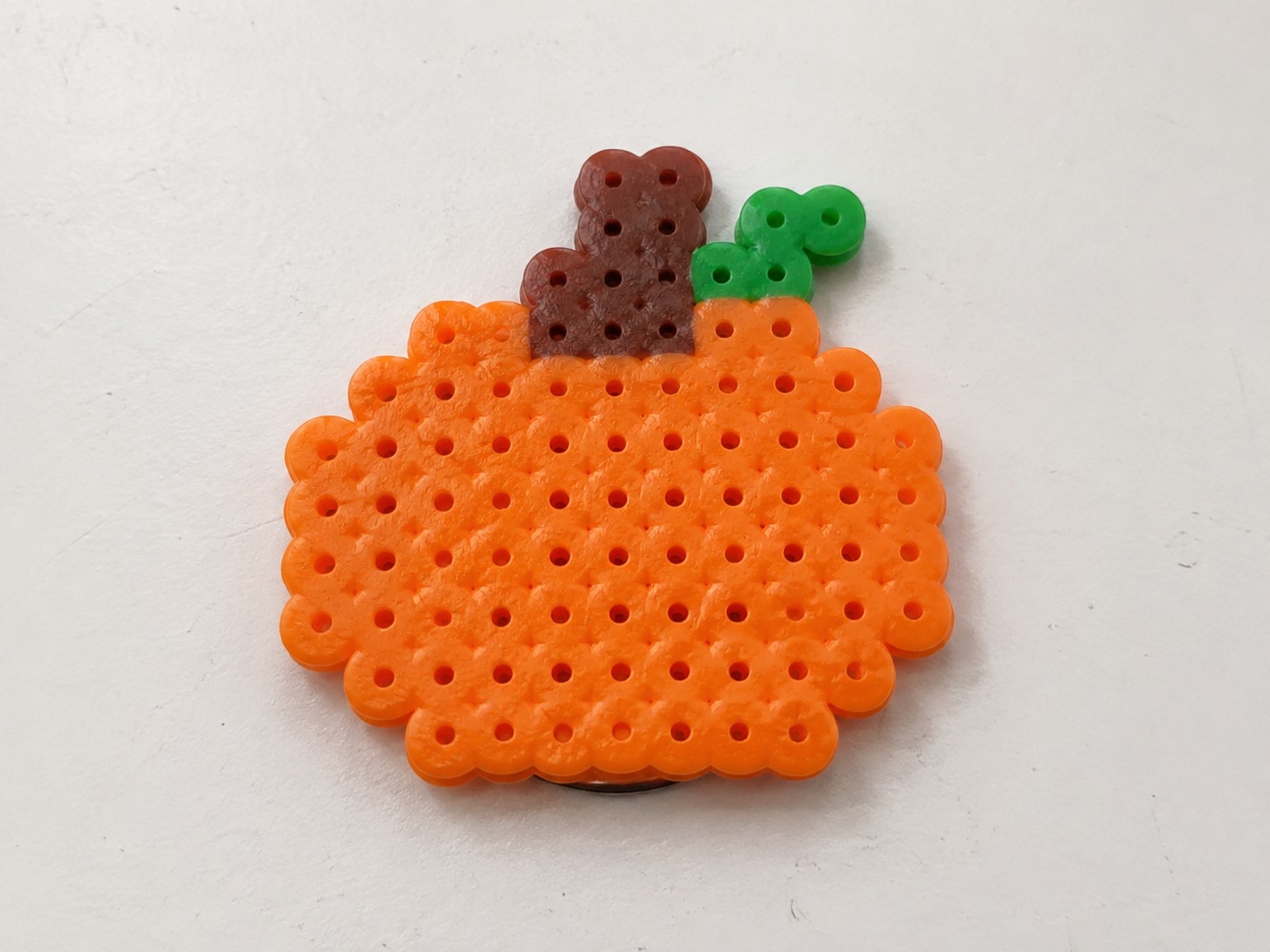
This flat pumpkin pattern uses individual orange fuse beads arranged in a broad, rounded silhouette, with a brown stem and small green leaves at the top. The stepped edges and rows of bead holes give the pumpkin a clear shape, while the contrasting stem and leaves add recognizable fall details. The beads are arranged on a pegboard and are not yet fused.
The simple color blocking makes the pattern easy to adapt: try a white or pale yellow pumpkin, or change the leaves to red and gold for a different autumn palette. For a coordinating fall set, use the same rounded shape with variations in pumpkin color and leaf placement.
Make a Three-Design Fall Fruit Perler Bead Set
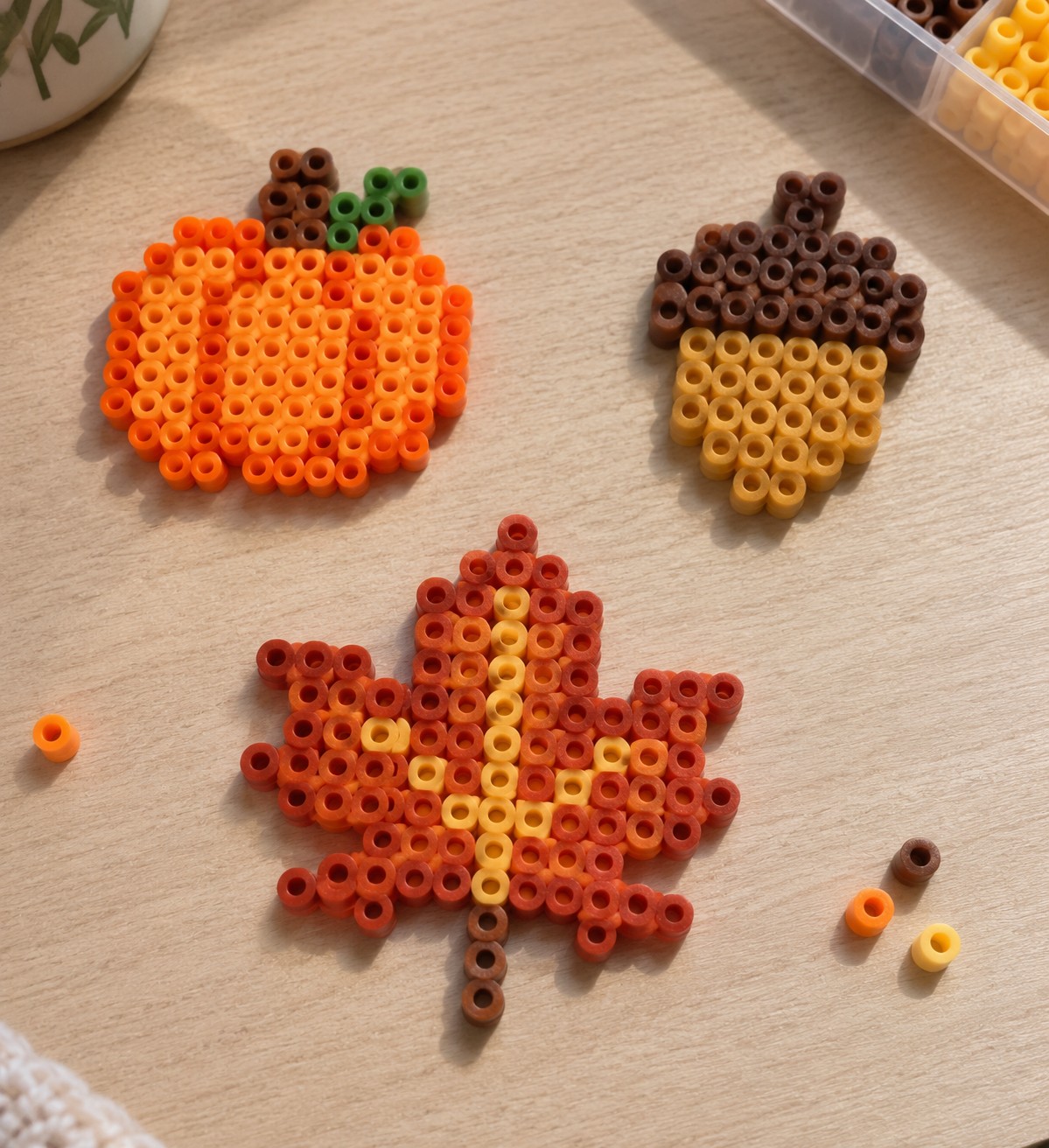
This fall Perler bead set pairs an orange pumpkin, a brown-and-gold acorn, and a red apple with a yellow center. Each motif is built from individual fuse beads in compact, stepped shapes, with contrasting colors separating the pumpkin’s green stem, the acorn’s cap and nut, and the apple’s center. The beads are arranged as flat patterns, not fused finished pieces.
The three recognizable silhouettes make a useful starting point for a small seasonal collection. Keep the same shapes and swap in different autumn colors, or simplify the apple’s center and the pumpkin’s stem for a more limited palette. Once fused, the designs could work as small fall display accents or be adapted for ornaments with suitable attachments.
Frequently Asked Questions
You’ll need Perler beads in autumn colors, a pegboard, ironing paper, and an iron. Tweezers can make it easier to place individual beads, especially in small designs. Common fall colors include orange, red, yellow, brown, green, black, and white. A flat work surface and a heat-safe ironing area are helpful, too.
Start with simple shapes that are easy to recognize, such as a pumpkin, leaf, acorn, apple, or small mushroom. Designs with a clear outline and few color changes are usually easiest to follow. If a pattern feels complicated, try making a smaller version or leaving out tiny details.
Set the pegboard on a flat, stable surface and avoid bumping it while you work. Place beads gently rather than pressing them down too hard. For larger designs, you can assemble the pattern on multiple interlocking pegboards, but make sure their edges line up before adding beads.
Ask an adult to help if you’re a child, and use the iron according to its manufacturer’s instructions. Cover the beads with ironing paper and move the iron in small, steady circles, checking often. Once the beads have fused, let the design cool before removing it from the board. If you want the other side fused, carefully flip the design, cover it again, and iron briefly.
Yes. You can swap colors to match your supplies or give a pumpkin, leaf, or acorn your own style. To make a design larger, follow the pattern on a bigger pegboard or add rows around the edges while keeping the shape balanced. Remember that changing the size also changes how long it may take to place and fuse the beads.
