


I like how acorn patterns bring together the warm browns and golden shades that feel right for fall.
These designs range from simple acorn shapes to patterns with a little extra detail.
I’ve gathered 16 ideas for anyone looking for a cozy seasonal Perler bead project.
You can browse them for color inspiration or choose a pattern that suits your next afternoon of crafting.
Acorn Perler Bead Pattern in Brown and Gold

This acorn Perler bead pattern uses individual brown and golden beads arranged in a clear, stepped silhouette. The dark brown upper section suggests the cap, while the rounded golden lower section forms the nut, making the seasonal motif readable through simple color blocking. The beads are arranged on a pegboard, so this is an unfused flat pattern rather than a finished ornament.
The contrast between the two sections gives the design a useful starting point for other fall bead patterns, such as changing the cap shape or trying different shades of brown and amber. For a coordinating set, keep the same basic acorn outline and vary the gold tones or cap colors. The simple silhouette can also be reduced or widened to suit a different pegboard layout.
Golden Acorn Perler Bead Pattern

This flat acorn pattern is arranged from individual Perler beads on a pegboard, with a broad, stepped cap in rich brown and a rounded body in golden orange. A short dark-brown stem and the clear boundary between the two color blocks make the acorn recognizable, while the rows of beads create a pixel-like silhouette.
The strong outline and simple color divisions make the pattern easy to adapt: use lighter browns for the cap or vary the gold tones in the body. For a coordinated fall set, keep the same acorn shape and try different cap colors or body shades.
Brown and Gold Acorn Perler Bead Pattern
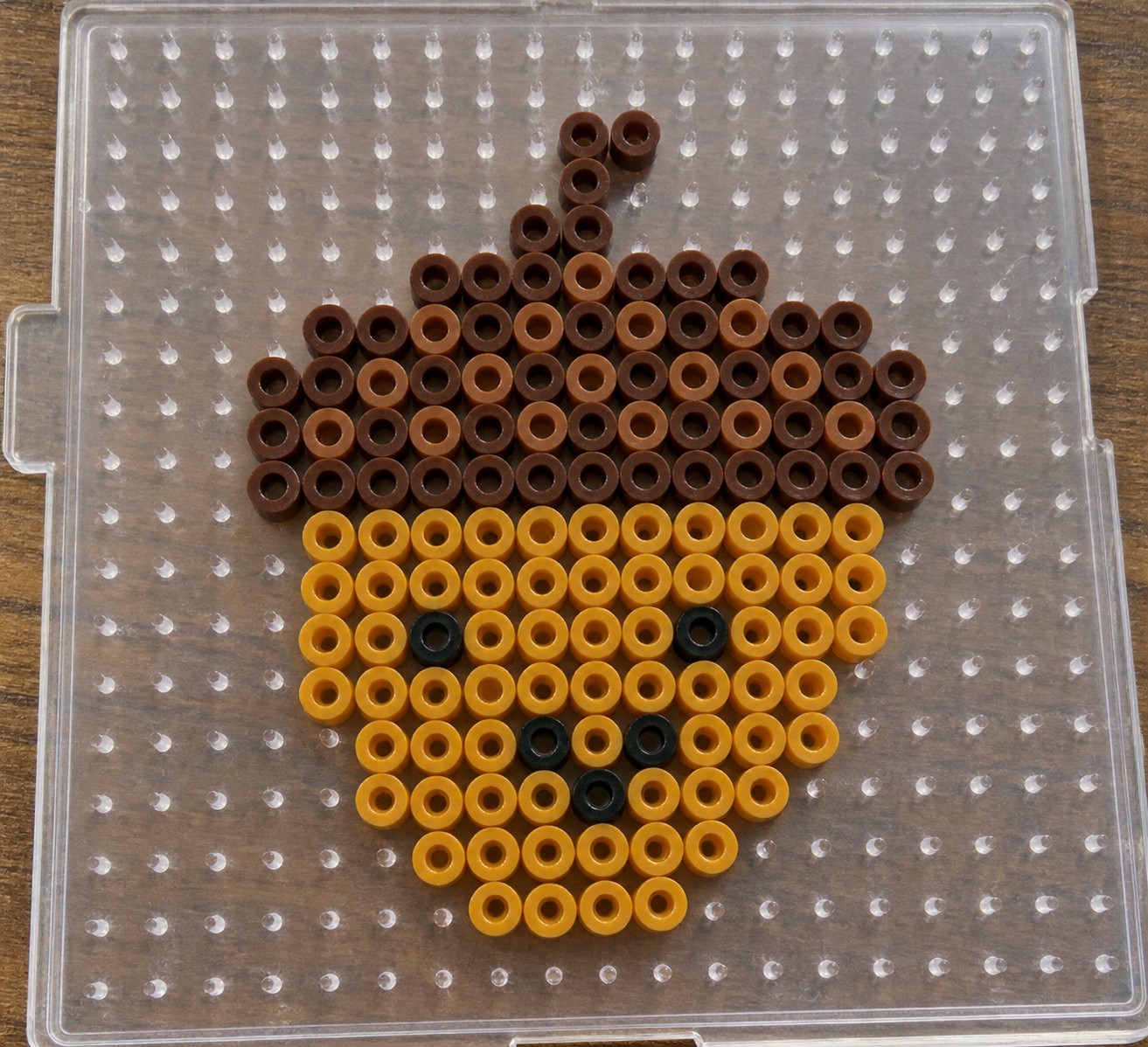
This flat acorn pattern uses individual physical fuse beads arranged on a pegboard, with a dark brown cap above a golden-brown body. Its stepped outline narrows toward the top and bottom to form a clear acorn silhouette, while a few black beads add small contrasting details within the body. The design’s distinct color blocks make the fall motif easy to recognize.
The strong outline and limited palette give you a useful starting point for making matching acorns in lighter tans, deeper browns, or a different shade of gold. For a simpler variation, leave out the black accent beads, or create a coordinated fall set by adapting the same colors for leaves and other seasonal shapes.
Golden Acorn Perler Bead Pattern with a Dark Stem
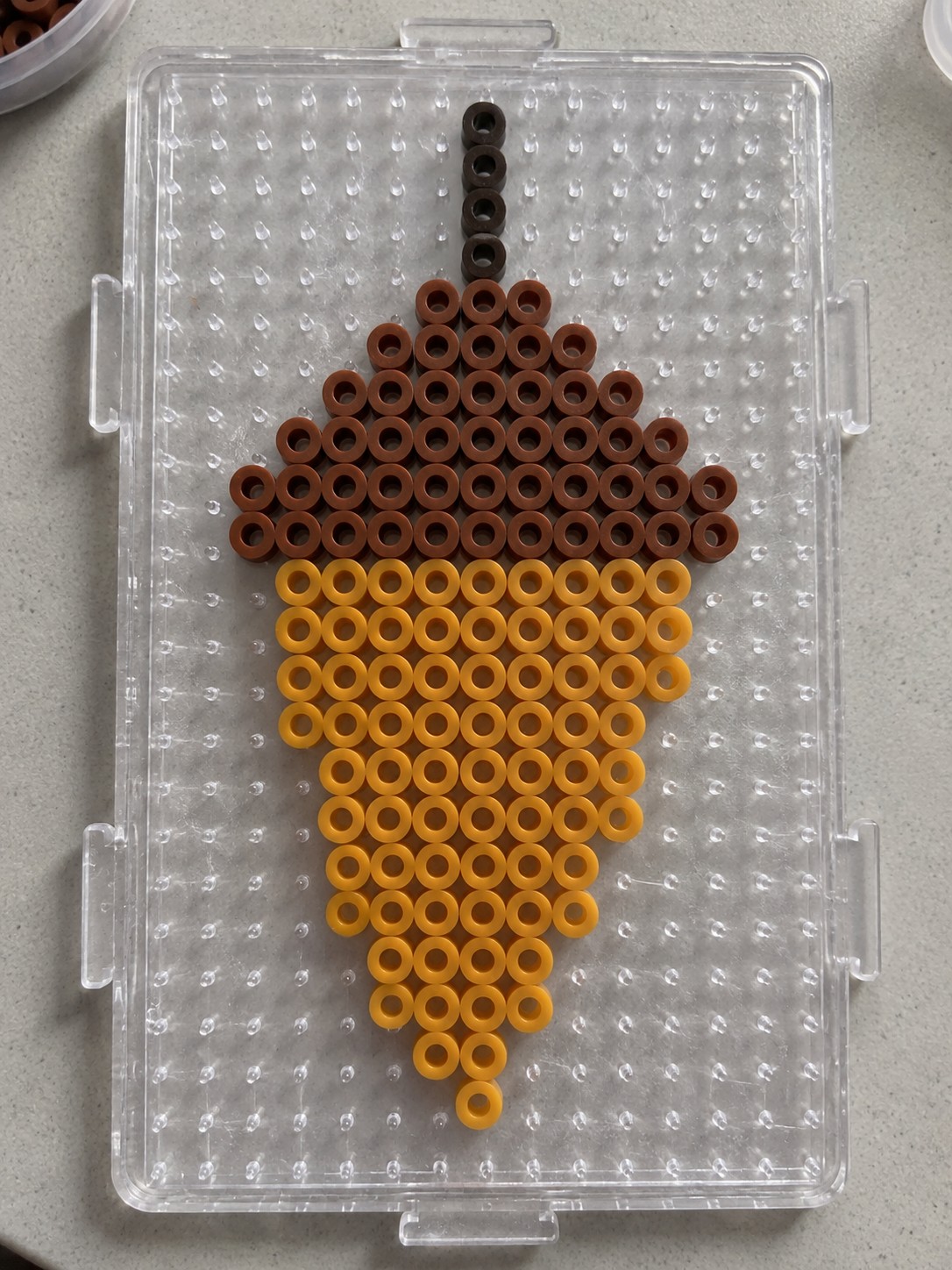
This flat acorn pattern uses individual fuse beads arranged on a pegboard, with a golden yellow body and a broad rust-brown cap. The stepped outline tapers toward the bottom to make the acorn shape easy to recognize, while four dark beads form a narrow stem that stands out against the lighter colors. The beads are still arranged on the board, so the design is a pattern ready for fusing rather than a finished piece.
The clear color blocks make this a useful starting point for a fall-themed bead set. Try shifting the golden body toward orange or amber, or vary the cap between reddish and dark brown while keeping the same outline; changing the bead arrangement around the cap can also give each acorn a slightly different shape.
Acorn Perler Bead Pattern with a Gold Cap

This acorn is arranged from individual physical fuse beads in a broad, rounded shape with a tapered tip. Dark brown beads form the cap, while golden yellow beads fill the lower section, making the two parts of the acorn easy to distinguish through simple color blocking. The pattern is still unfused, with the beads arranged together on a flat surface.
The clear division between cap and body makes this layout easy to adapt with different browns, tans, or autumn golds. For a matching set, keep the same stepped acorn outline and vary the cap colors, or add a few lighter beads to create a more detailed color pattern.
Three Acorn Perler Bead Patterns with Contrasting Caps

These flat acorn patterns use individual fuse beads to build stepped silhouettes, with dark brown caps set against golden and tan bodies. The center design adds a small bead trail above its cap, while the two side patterns use different cap shapes and body proportions to vary the familiar motif. The beads are arranged on a pegboard and have not yet been fused.
The clear color blocks make each acorn easy to distinguish, even as the shapes change across the set. Try swapping the body colors for copper, cream, or deeper brown, or adjust the cap outlines to make more variations for a coordinated fall display.
Golden Acorn Perler Bead Pattern with a Textured Cap

This flat acorn pattern uses individual Perler beads to build a rounded golden-orange body topped with a broad, dark brown cap and short stem. The stepped silhouette keeps the acorn recognizable, while the contrasting brown bead band and scattered lighter beads create texture across the cap.
The clear color blocks make this pattern easy to adapt for a fall-themed set: try a deeper amber body or vary the browns in the cap to change its look. The flat acorn shape could also work as a small seasonal display accent once fused, or inspire matching leaf and oak tree patterns.
Two Acorn Perler Bead Patterns with Layered Brown Caps
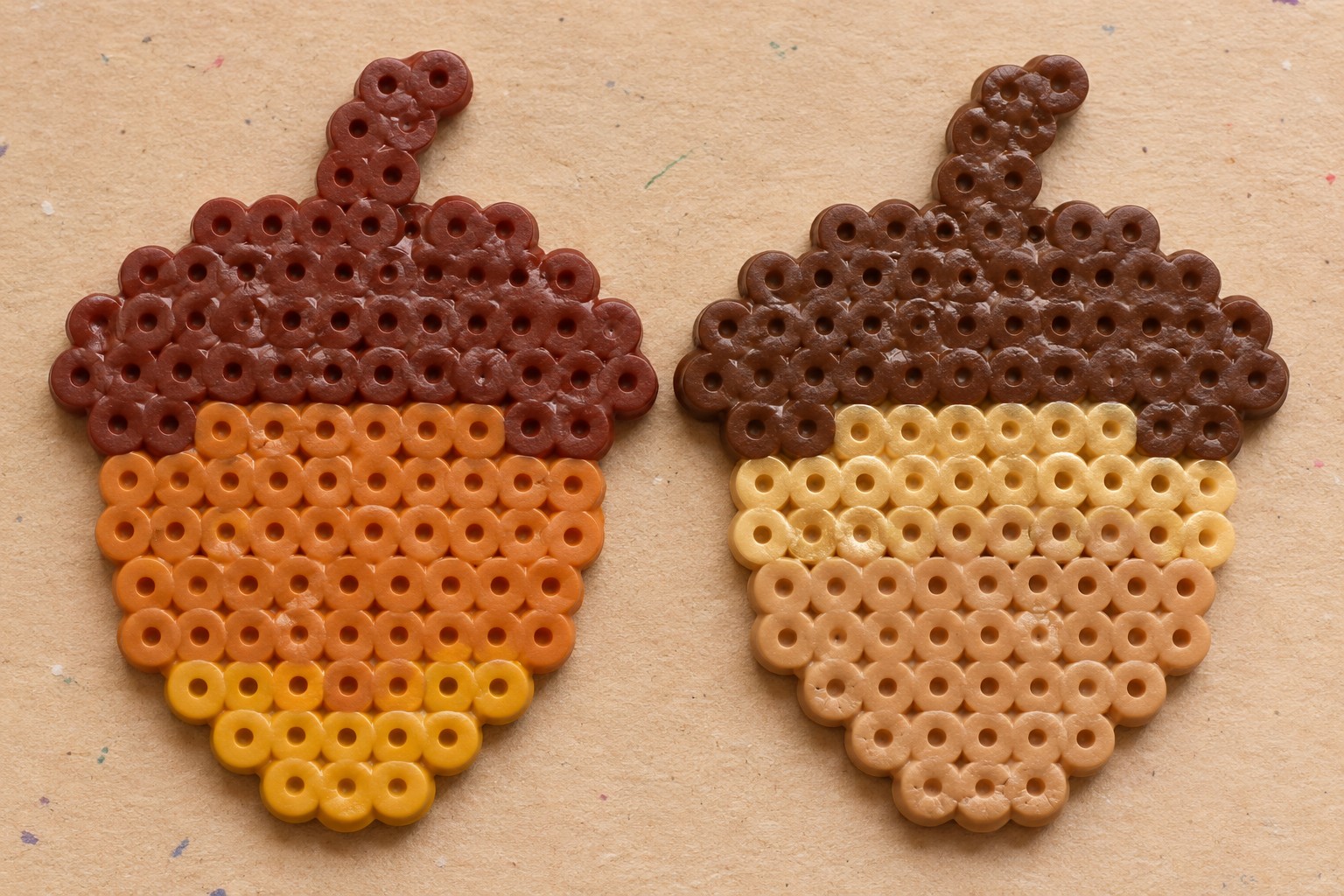
These flat acorn patterns use individual physical fuse beads to build a stepped silhouette, with rounded caps above tapered golden-brown bodies. The dark brown cap beads contrast with orange, tan, and yellow sections, making the familiar acorn shape easy to read while the small top stems add a clear finishing detail.
The paired designs offer a useful way to test different fall palettes: one uses brighter orange and gold, while the other leans toward softer tan and deeper brown. Keep the same outline and change the body colors for a coordinated set, or simplify the shading by using fewer colors while preserving the cap-to-nut contrast.
Acorn Perler Bead Pattern with a Brown Top

This flat acorn pattern uses individual brown and golden-tan fuse beads arranged in compact, stepped sections. The darker brown beads form a broad cap above the gold-toned body, making the acorn shape easy to recognize through simple color blocking rather than fine details. The beads are still arranged on the pegboard, so this is a pattern ready for fusing, not a finished piece.
The contrasting colors make the layout easy to adapt: try a lighter cap with a deeper gold body, or use several brown and tan combinations for a small set of fall motifs. Keeping the two sections distinct helps the acorn remain recognizable if you simplify or resize the pattern.
Dark-Capped Acorn Perler Bead Pattern
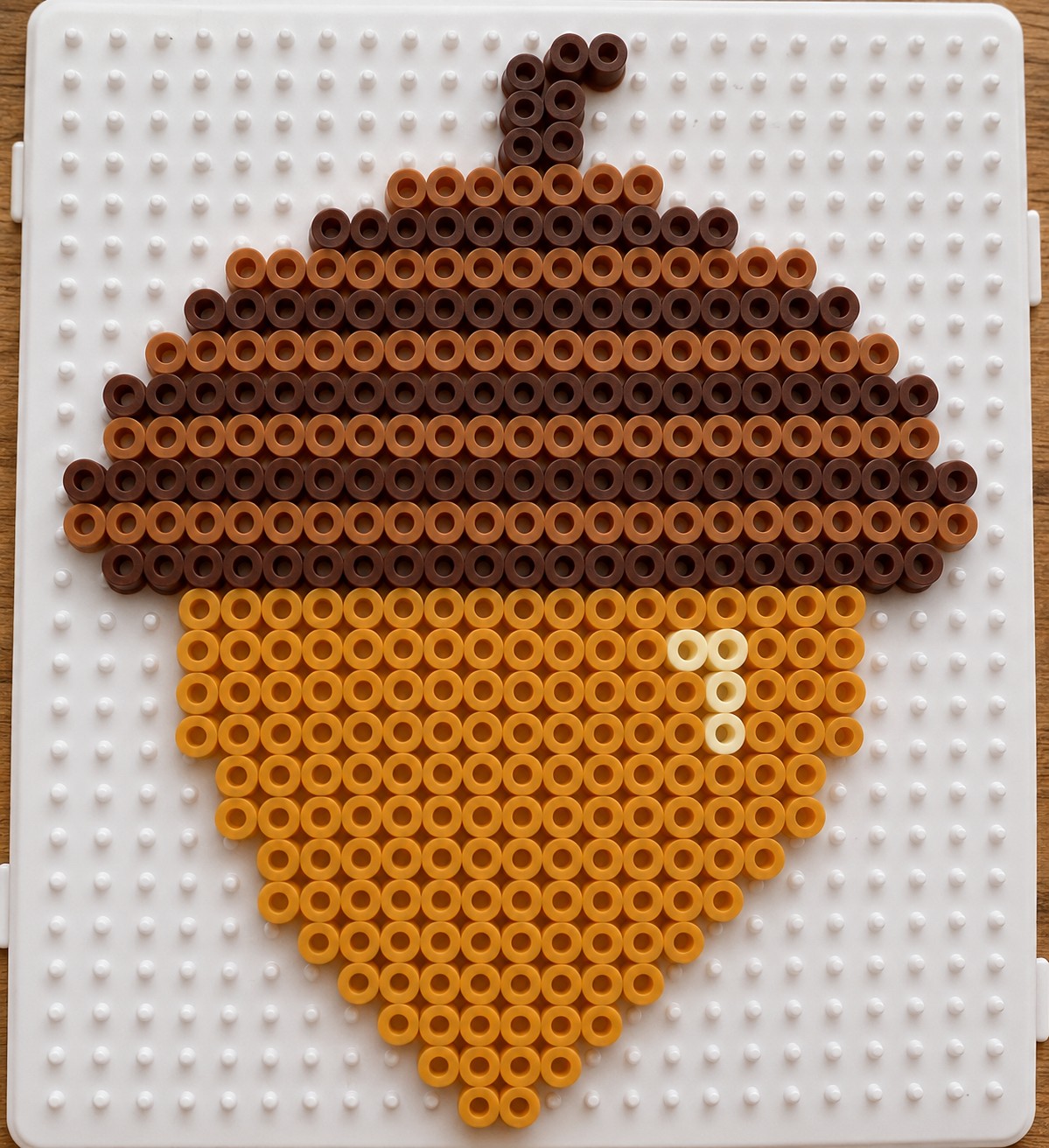
This flat acorn pattern uses individual fuse beads arranged on a pegboard, with a wide golden-orange body and a layered cap striped in warm brown shades. A narrow, dark stem and the stepped outline make the acorn recognizable, while the contrasting color blocks keep its shape clear across the larger design.
The alternating browns give the cap definition without adding many different colors, so they’re a useful detail to keep when adapting the pattern. Try changing the body to a deeper amber or adding a second golden shade for more variation, or simplify the cap to one brown for a less detailed version.
Two Acorn Perler Bead Patterns in Contrasting Colors

These flat acorn patterns use individual Perler beads to build stepped silhouettes with distinct caps and tapered golden-brown bodies. One has a broad dark brown cap over amber and yellow beads, while the smaller design pairs a green outline and cap with rust-colored sections, making the color blocking easy to read.
The strong contrast between cap and body gives each acorn a clear shape, even with the hole-centered beads creating a textured surface. Try swapping the greens for darker browns or adding another shade of gold to make a coordinated autumn set with subtle variations.
Fox-Shaped Acorn Perler Bead Pattern in Autumn Tones
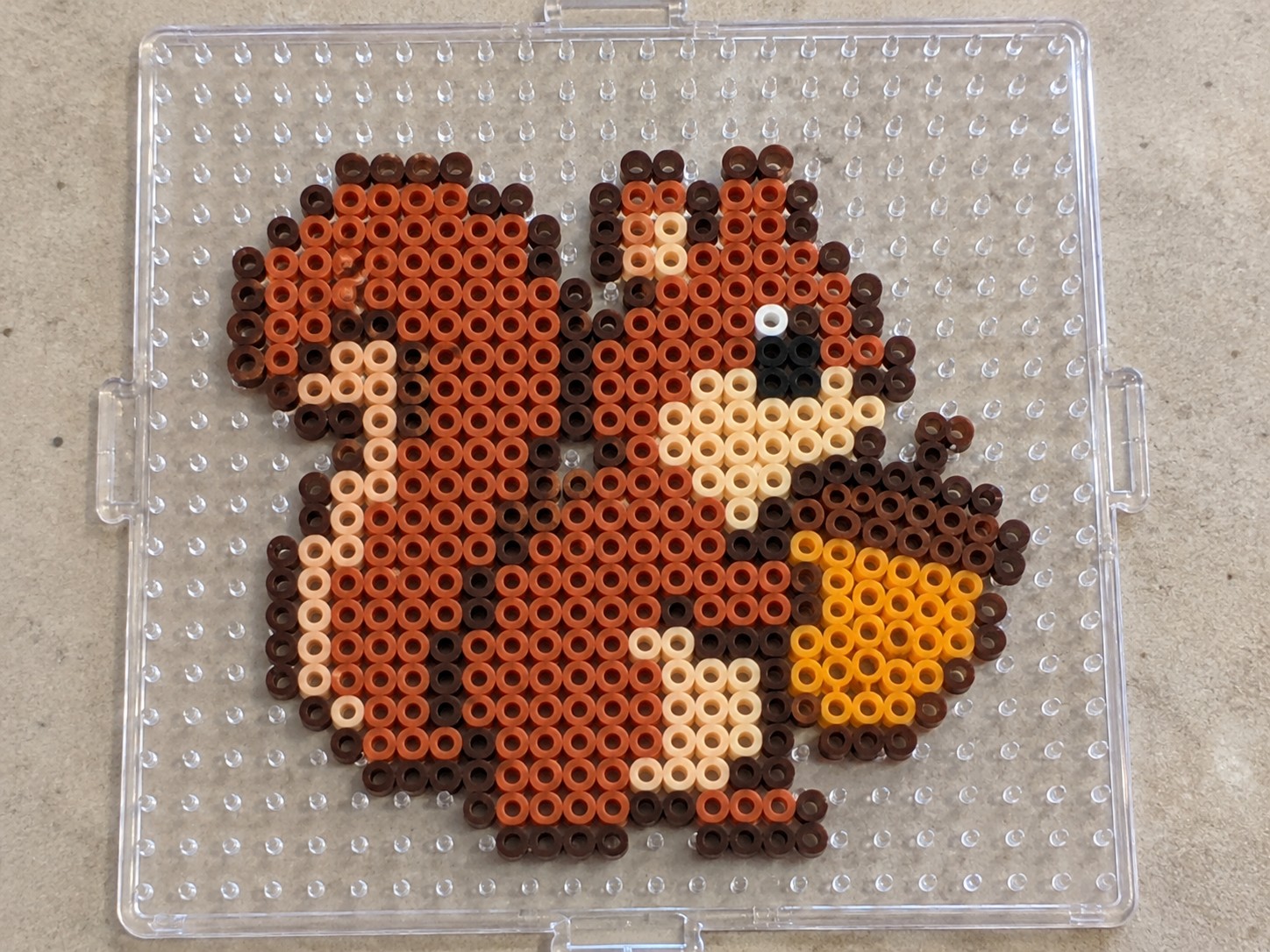
This flat Perler bead pattern combines an acorn-like brown and golden shape with a fox-like face, pointed ears, and a curled tail. Individual rust-orange, cream, dark brown, and gold beads form clear color blocks, while the dark outline helps the stepped silhouette stand out on the pegboard. The beads are still arranged on the board, so this is a pattern ready to be fused rather than a finished piece.
The mix of acorn colors and animal features makes the design a distinctive choice for an autumn-themed bead set. To adapt it, keep the cream facial patches and dark outline while changing the orange body to another fox-inspired shade, or simplify the pattern by reducing the smaller color patches.
Three Acorn Perler Bead Patterns in Autumn Tones
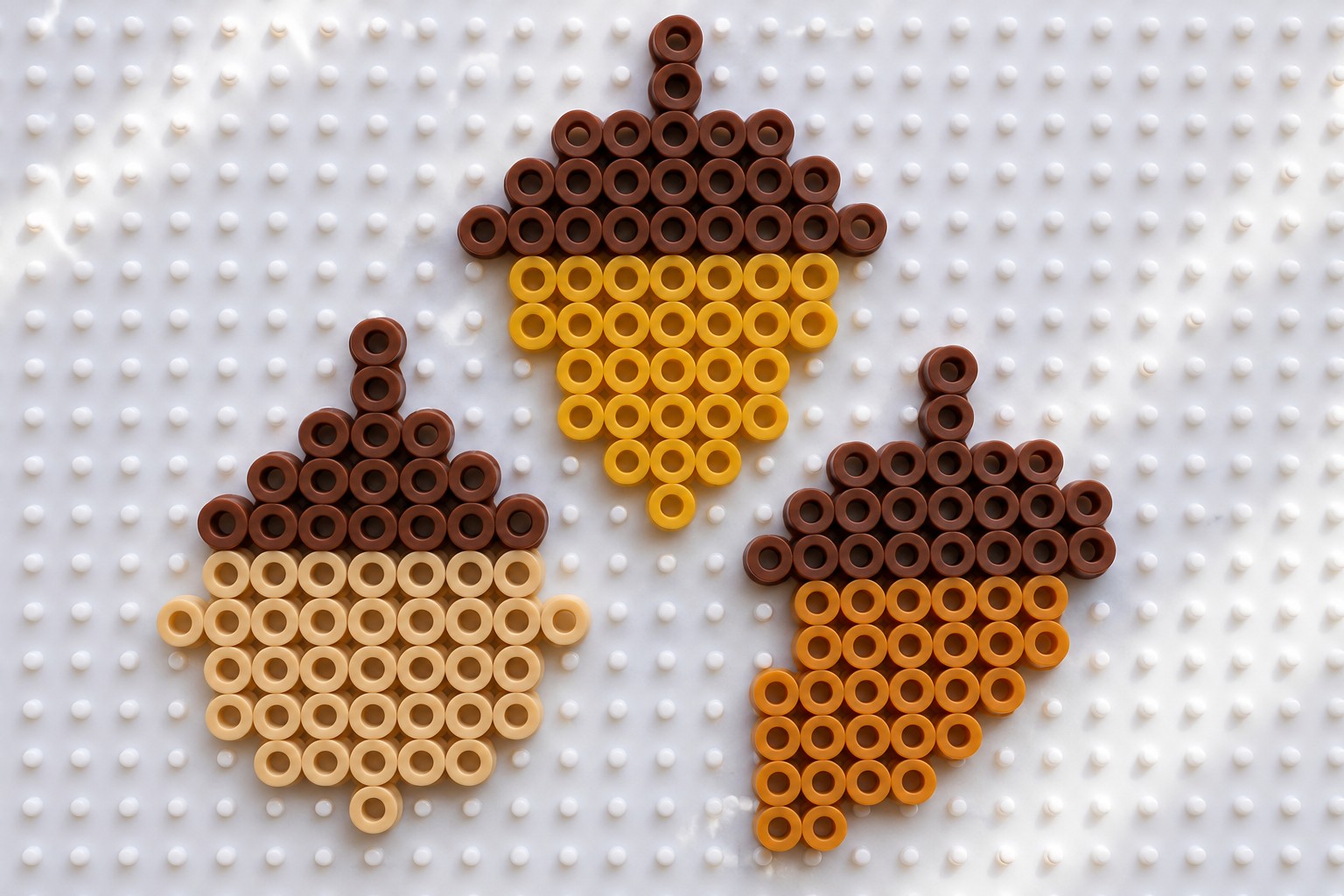
These three flat acorn patterns use individual Perler beads arranged on pegboards, with stepped outlines that make each silhouette easy to recognize. Brown beads form the caps, while golden yellow and lighter tan beads create contrasting bodies; small changes in the cap shape and body color give the coordinated set variety.
The repeated acorn shape makes these patterns useful for building a small fall-themed collection, and swapping the gold or tan beads for rust, cream, or another autumn shade can change the look without altering the basic layout. Since the beads are still arranged on pegboards, each design needs to be fused before it can be handled as a finished piece.
Acorn Perler Bead Ornament with a Brown Cap

This flat acorn ornament uses individual brown and golden-orange fuse beads to build a rounded nut with a broad, stepped cap. The dark brown beads form a textured upper section, while the warm gold beads create a clear block of color below; a loop of brown beads extends from the top for hanging. The repeated bead rows make the acorn silhouette easy to recognize.
The contrasting sections give this pattern a useful starting point for other fall designs, such as changing the cap to a lighter brown or making the nut a deeper amber. The beaded loop makes it suited to use as a small hanging ornament once the design is fused, and the same outline could be made in several autumn color combinations for a coordinated set.
Two Acorn Perler Bead Patterns in Autumn Colors

These two flat acorn patterns use individual Perler beads arranged on a pegboard, with stepped outlines that make each shape easy to recognize. Brown beads form the caps, while golden yellow and olive green create contrasting body sections and reddish accents add extra color to the larger design.
The clear color blocks make these patterns useful starting points for a fall-themed set. Try swapping the gold and green areas, or simplifying the larger acorn by removing some of its smaller color patches while keeping the outline intact.
Acorn Perler Bead Patterns in Brown and Golden Tones

These two flat acorn patterns are built from individual physical fuse beads arranged in stepped, rounded silhouettes. Each uses a contrasting cap and body: one pairs a warm brown cap with a golden body, while the other reverses the emphasis with a dark brown cap and an orange-gold body. The small brown bead stems and clear color blocks make both acorns easy to recognize.
The paired designs are useful inspiration for a coordinated fall set, since changing which color fills the cap or body creates a distinct variation without changing the basic outline. To simplify the pattern, use fewer shades within each section; adding extra browns or golds can create more texture while keeping the acorn shape readable.
Frequently Asked Questions
Rich browns and golden tones create a classic acorn look. Try combining dark brown for the cap, medium brown for the body, and tan or gold for highlights. Cream, amber, rust, and muted orange can add warmth, while a little green works well for a leaf or stem.
Use contrasting shades next to each other to suggest light and shadow. Place lighter beads along one side of the acorn and darker beads along the opposite edge. For the cap, a textured mix of browns can help it stand out from the smoother body.
You’ll need Perler beads in your chosen colors, a compatible pegboard, ironing paper, and an iron. Tweezers can make it easier to place individual beads, especially in small patterns. If you’re making several designs, sort your beads by color before you begin.
Check that every bead is placed securely on a peg before ironing, and follow the bead manufacturer’s instructions for heat and timing. Iron evenly, then let the design cool under a flat weight. If the pattern has narrow sections, take extra care to connect the beads well without overheating them.
Yes. Adjust the colors, add leaves, or combine several acorns into a garland, ornament, magnet, or gift tag. You can also add initials or a small seasonal motif. For projects that will be handled often, make sure the beads are fused securely and attach a suitable backing or hanging loop.
