

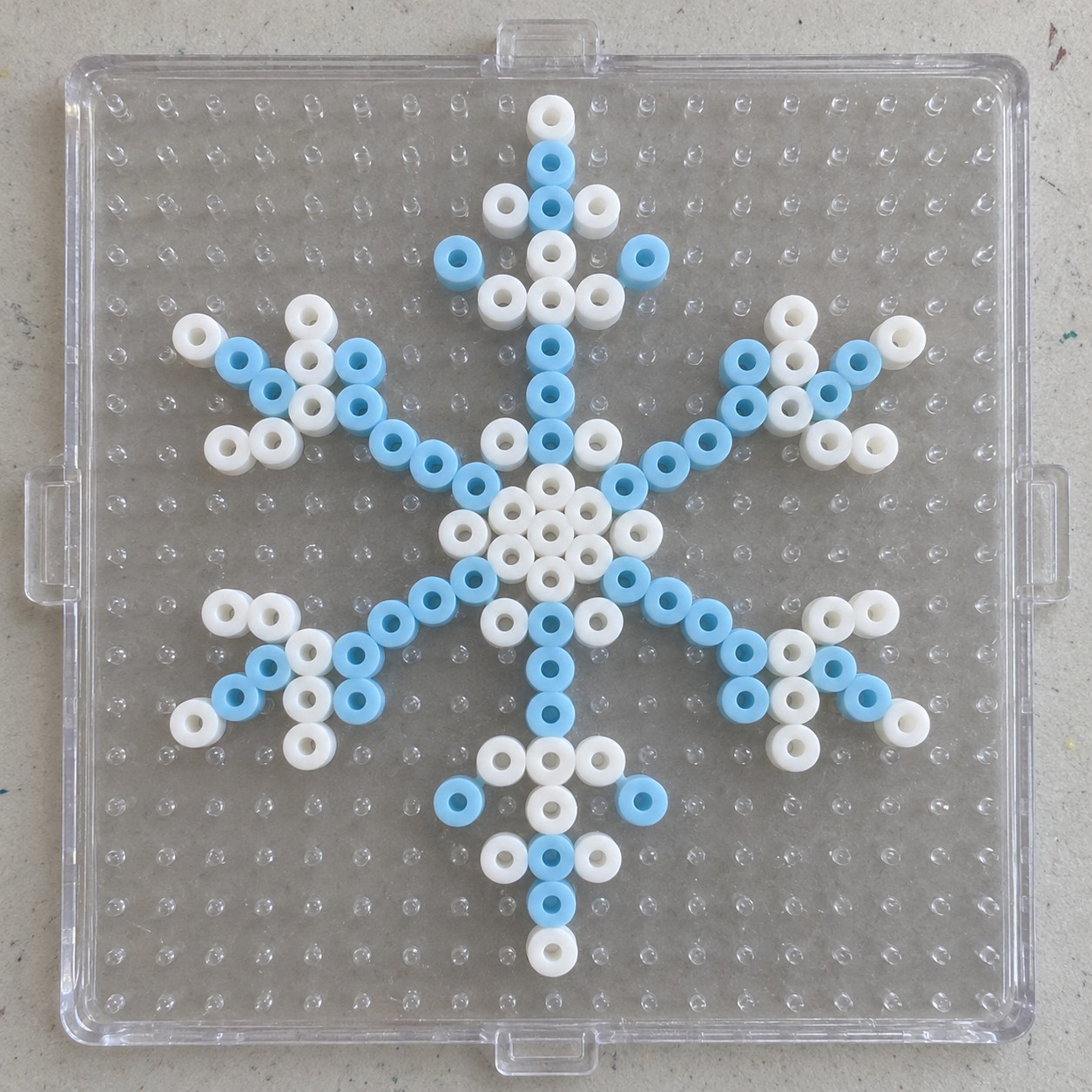
I like how symmetrical snowflakes turn simple Perler beads into crisp, detailed designs.
This collection includes 18 patterns with balanced shapes and wintery details to browse for your next project.
I’ve included a mix of looks, from classic six-sided snowflakes to designs with more intricate bead arrangements.
Use them as pegboard inspiration or as a starting point for your own color choices.
Symmetrical Blue and White Snowflake Perler Bead Pattern

This snowflake pattern uses individual blue and white fuse beads arranged in a flat, six-armed design on a pegboard. White beads define the branching arms and central connections, while blue sections create repeating bands that make the symmetry easy to follow. The stepped outline gives the snowflake a crisp, geometric look.
The repeating arrangement makes this pattern a useful starting point for a coordinated set: keep the same outline and swap in icy blues, purple, or holiday colors. For a simpler version, reduce the number of color changes while preserving the six matching arms. The arrangement can also be scaled or adjusted with extra branches for a more detailed snowflake.
Radial White and Blue Snowflake Perler Bead Pattern
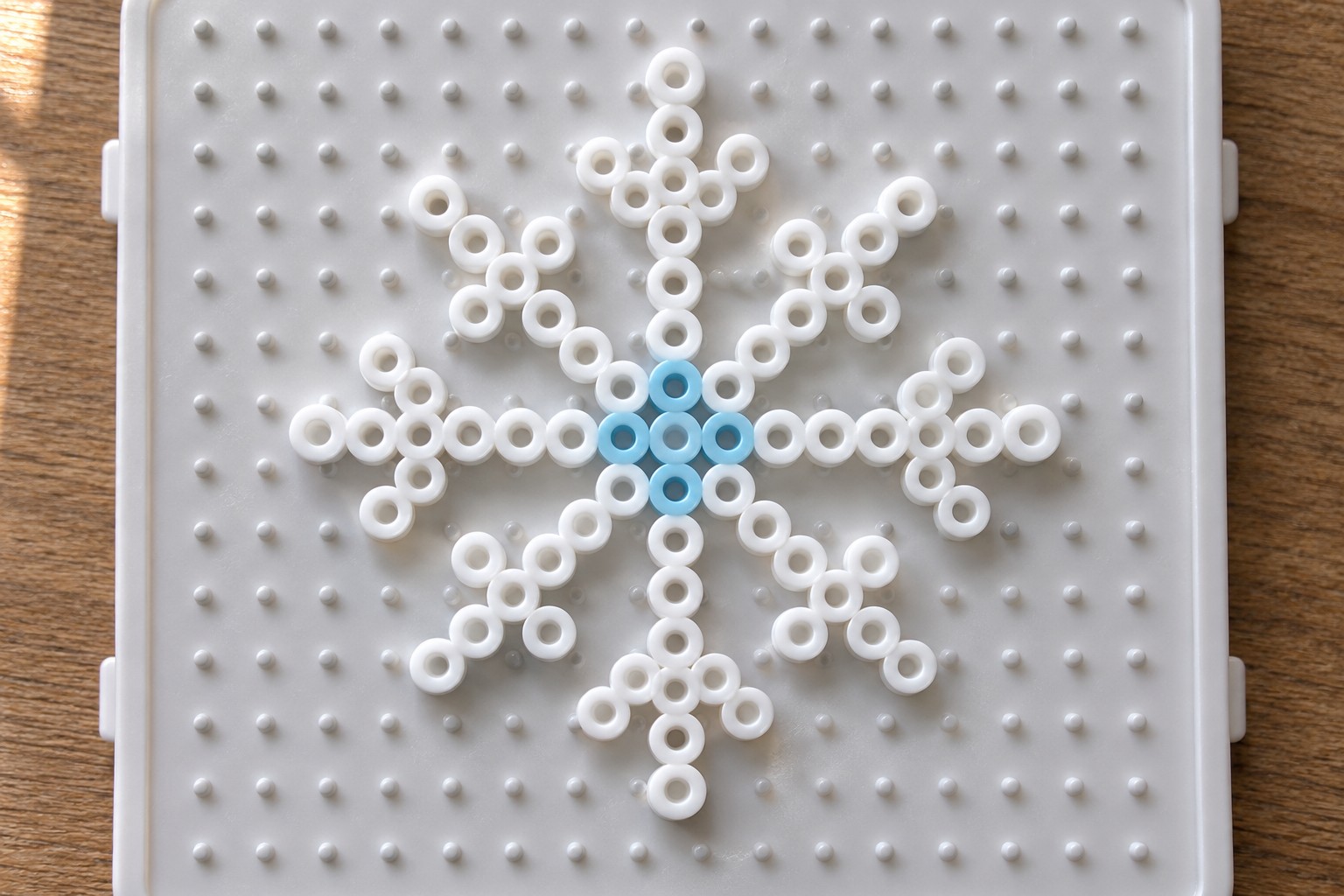
This snowflake pattern uses individual white fuse beads arranged in a flat, symmetrical design, with a small blue cluster marking the center. Long horizontal and vertical arms form a cross, while shorter diagonal branches create the familiar branching outline. The repeated bead placement keeps the snowflake balanced and easy to read on the pegboard.
The symmetrical layout gives you a clear pattern to recreate, and changing the blue center or adding a second accent color can make a coordinated set of snowflakes look varied without changing the shape. For a simpler version, omit some of the shorter branch beads; for a more detailed pattern, extend the branches or use alternating colors along each arm.
Symmetrical Snowflake Perler Bead Pattern with Blue Tips
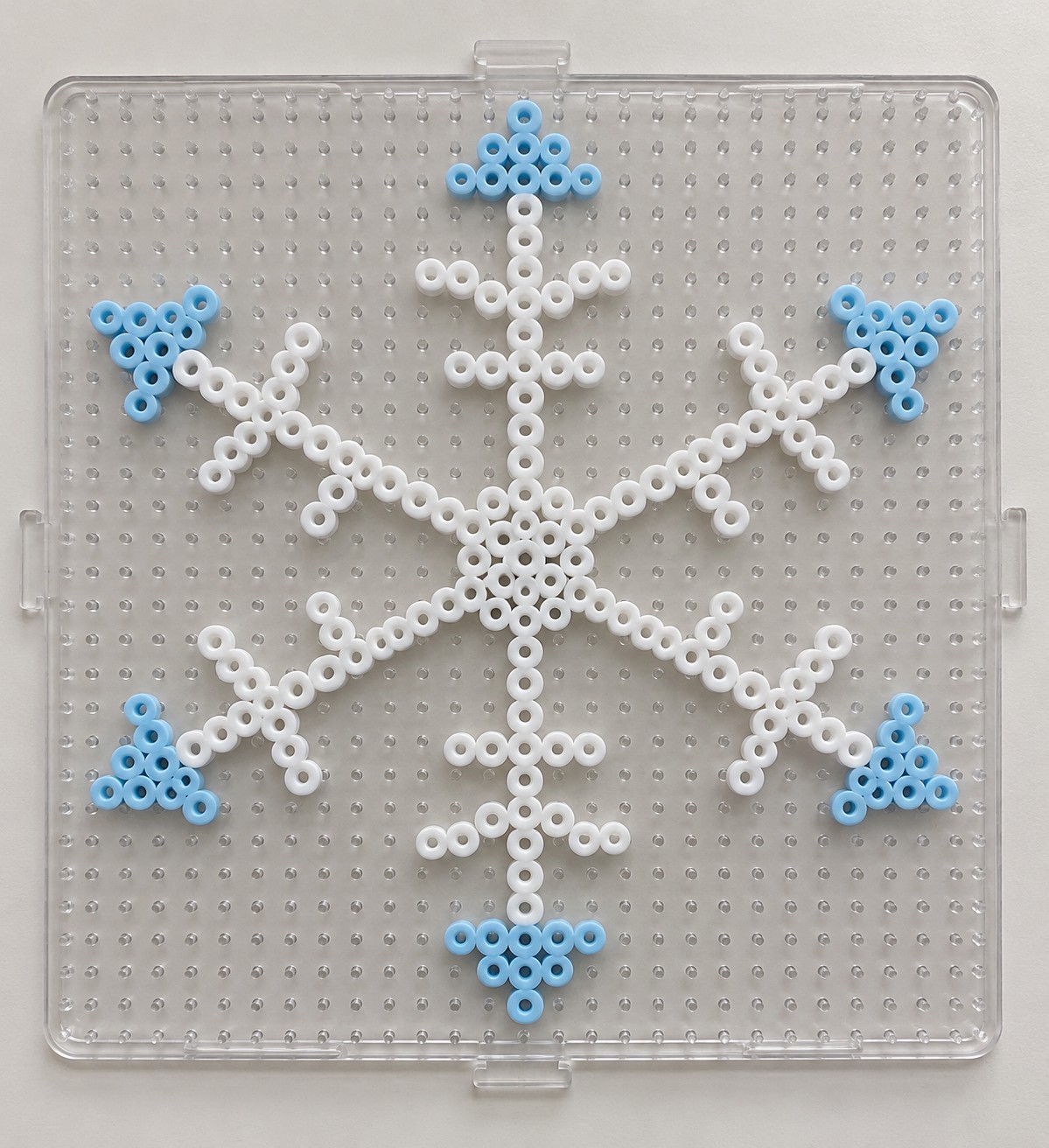
This snowflake pattern uses individual white and blue Perler beads arranged in a six-armed, symmetrical design on a pegboard. White bead lines form the branching arms, while blue clusters at the tips create clear color accents and help define the snowflake’s balanced outline. The branching details make this a more intricate flat pattern than a basic six-point snowflake.
The symmetrical layout gives you a useful guide for recreating or adapting the pattern, with matching branches radiating from the center. Try changing the blue tips to icy purple or adding a second accent color, while keeping the white branches consistent so the snowflake remains easy to read. For a simpler version, remove some of the smaller side branches and keep the main six arms.
Symmetrical Purple and White Snowflake Perler Bead Pattern

This snowflake pattern uses individual purple and white fuse beads arranged in a flat, six-armed design on a pegboard. White bead clusters form the main branching arms, while purple accents outline the tips and gather around the center, making the radial symmetry easy to read. The stepped, repeating shapes give the snowflake a detailed look without relying on a complicated color palette.
The symmetrical layout makes a useful template for creating matching snowflakes in different winter colors, such as blue and white or silver-toned and purple. For a simpler variation, reduce the small accent clusters while keeping the six arms balanced; adding extra color bands can make a more detailed version. The beads are still arranged on the pegboard, so the pattern needs to be fused before it can be handled as a finished craft.
Blue and White Snowflake Perler Bead Pattern with Stepped Arms

This physical fuse-bead snowflake uses a deep blue center and long, branching arms, with white beads forming small accents beside the branches. The repeated radial layout keeps the shape balanced, while the contrast between blue lines and white details makes each arm easy to follow. The beads are arranged on a pegboard, so this is a pattern in progress rather than a fused piece.
The symmetrical layout is a useful starting point for making a coordinated set: keep the branching structure and switch the blue and white, or try icy shades such as light blue and pale gray. For a simpler variation, reduce the white accents; adding more color changes along each arm can create a more detailed snowflake pattern.
Turquoise and White Symmetrical Snowflake Perler Bead Pattern
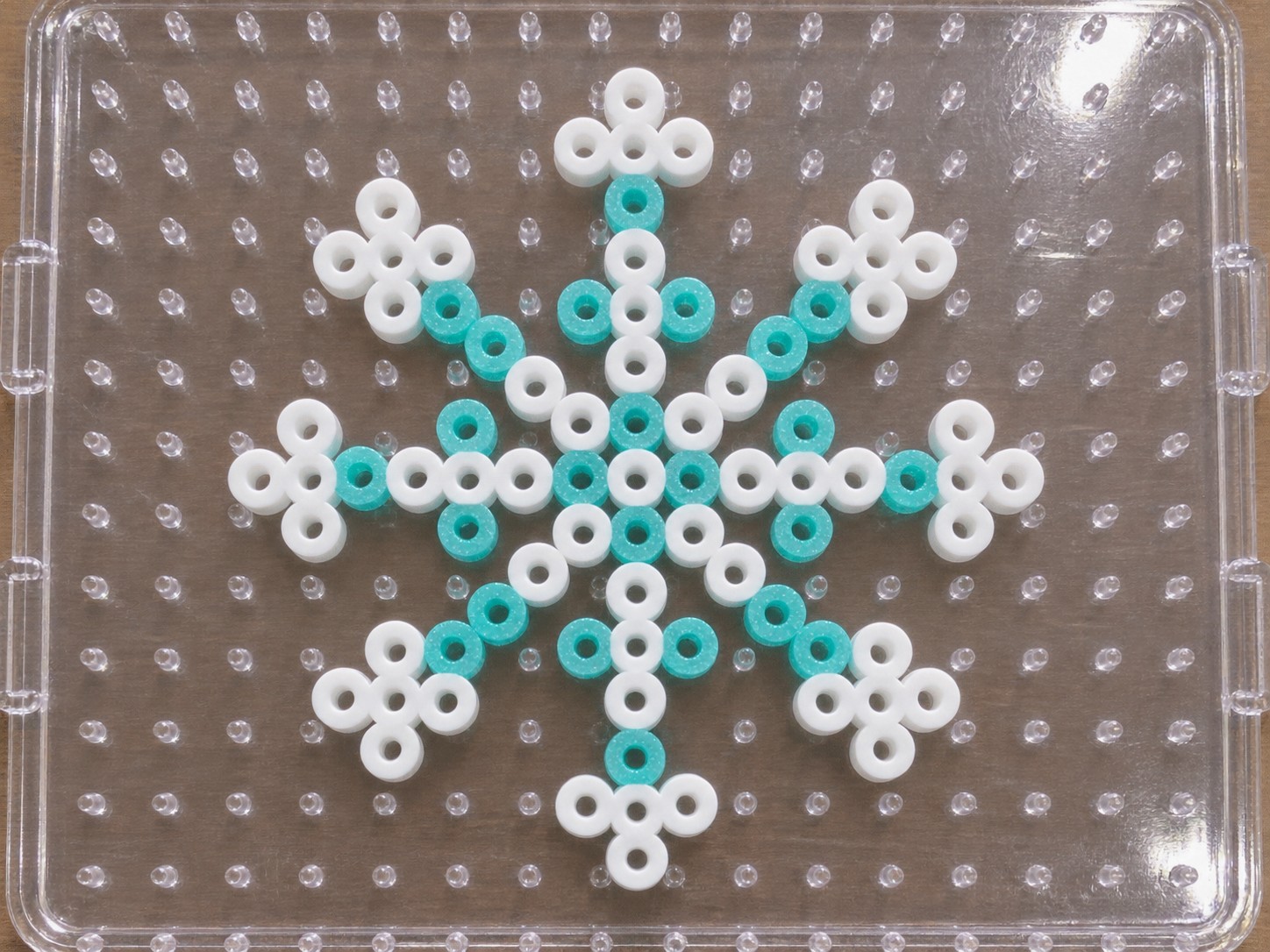
This snowflake pattern uses individual white and turquoise fuse beads arranged in a flat, six-armed design on a pegboard. The arms repeat around a central cluster, with turquoise beads forming the inner lines and white beads shaping the tips and connecting sections. That repeated color blocking and balanced layout make the snowflake recognizable without needing extra details.
The clear radial structure makes this pattern useful to save as a guide for creating other snowflake variations. Swap the turquoise for icy blue, silver-toned beads, or seasonal colors while keeping the repeating arms consistent, or simplify the inner sections for a less detailed design. Once fused, the flat shape can work as a seasonal display accent or ornament if its size and finished structure suit that use.
Six-Arm Blue and White Snowflake Perler Bead Pattern
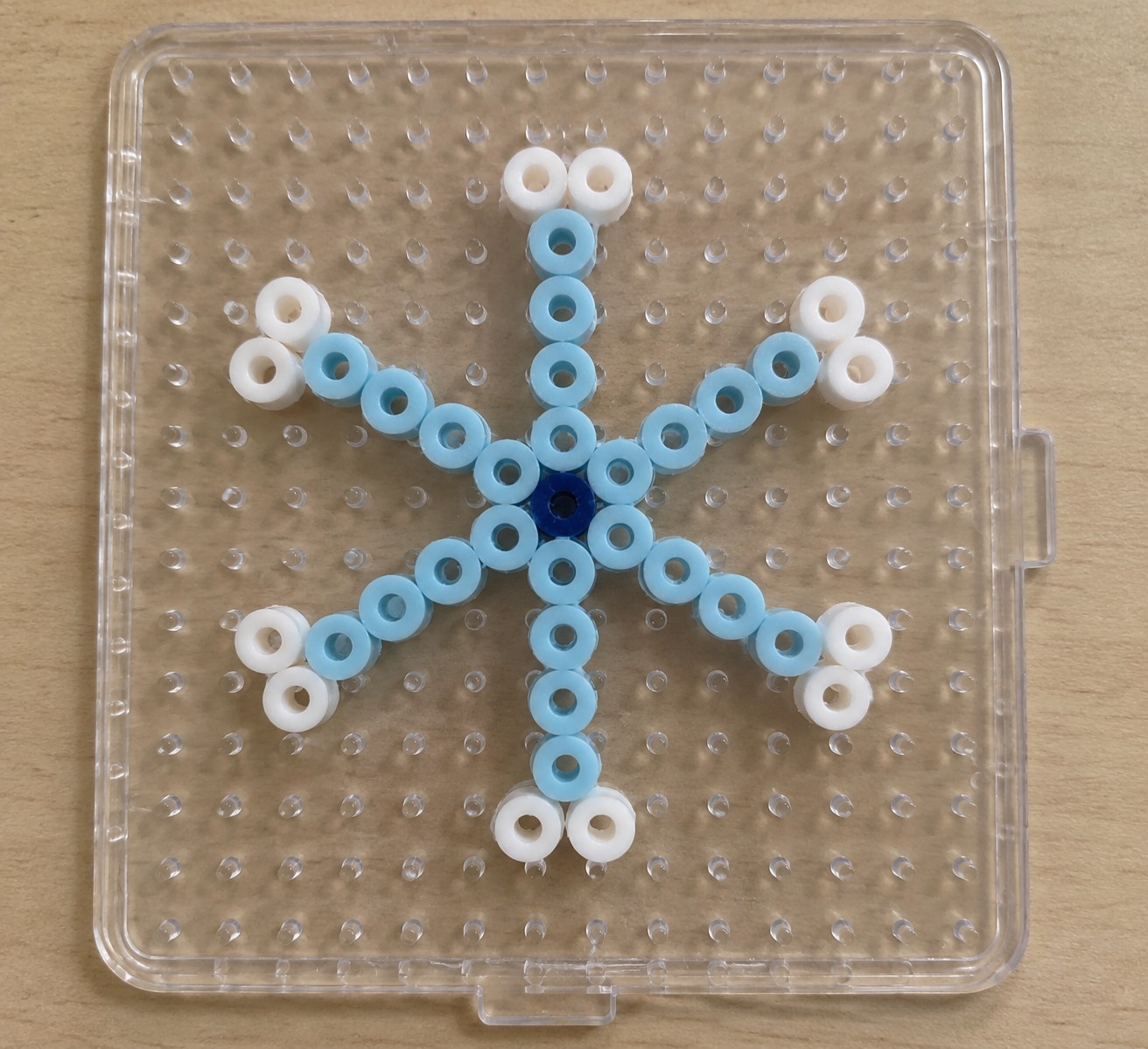
This snowflake pattern uses six evenly spaced arms radiating from a dark blue center, with light blue beads forming the branches and white beads marking each tip. The repeated, balanced layout makes the snowflake recognizable while the contrast between the center, arms, and endpoints keeps its shape clear. The individual fuse beads are arranged on a pegboard and have not yet been fused.
The symmetrical layout makes this pattern a useful starting point for creating a coordinated set: keep the six-arm structure and change the colors for different winter palettes. For a simpler variation, use fewer shades of blue, or make the branches more detailed by extending them with additional beads while keeping each arm matched. Once fused, the flat design could work as a seasonal display accent.
Layered Blue and White Snowflake Perler Bead Pattern

This detailed snowflake pattern uses individual white and blue fuse beads arranged in a flat, symmetrical design on a pegboard. A branching white center forms the main six-sided structure, while blue bead clusters mark the center and several branch tips, making the radial layout easy to read. The repeating arms and small stepped branches give the snowflake its crisp, geometric outline.
The balanced arrangement makes this a useful pattern to adapt: keep the branching structure and swap the blue accents for silver, pale purple, or another winter color. For a simpler version, reduce the number of small side branches while keeping the six main arms evenly spaced. The unfused pegboard arrangement can also inspire a coordinated set of snowflakes with different accent colors or branch details.
Lavender and White Symmetrical Snowflake Perler Bead Pattern
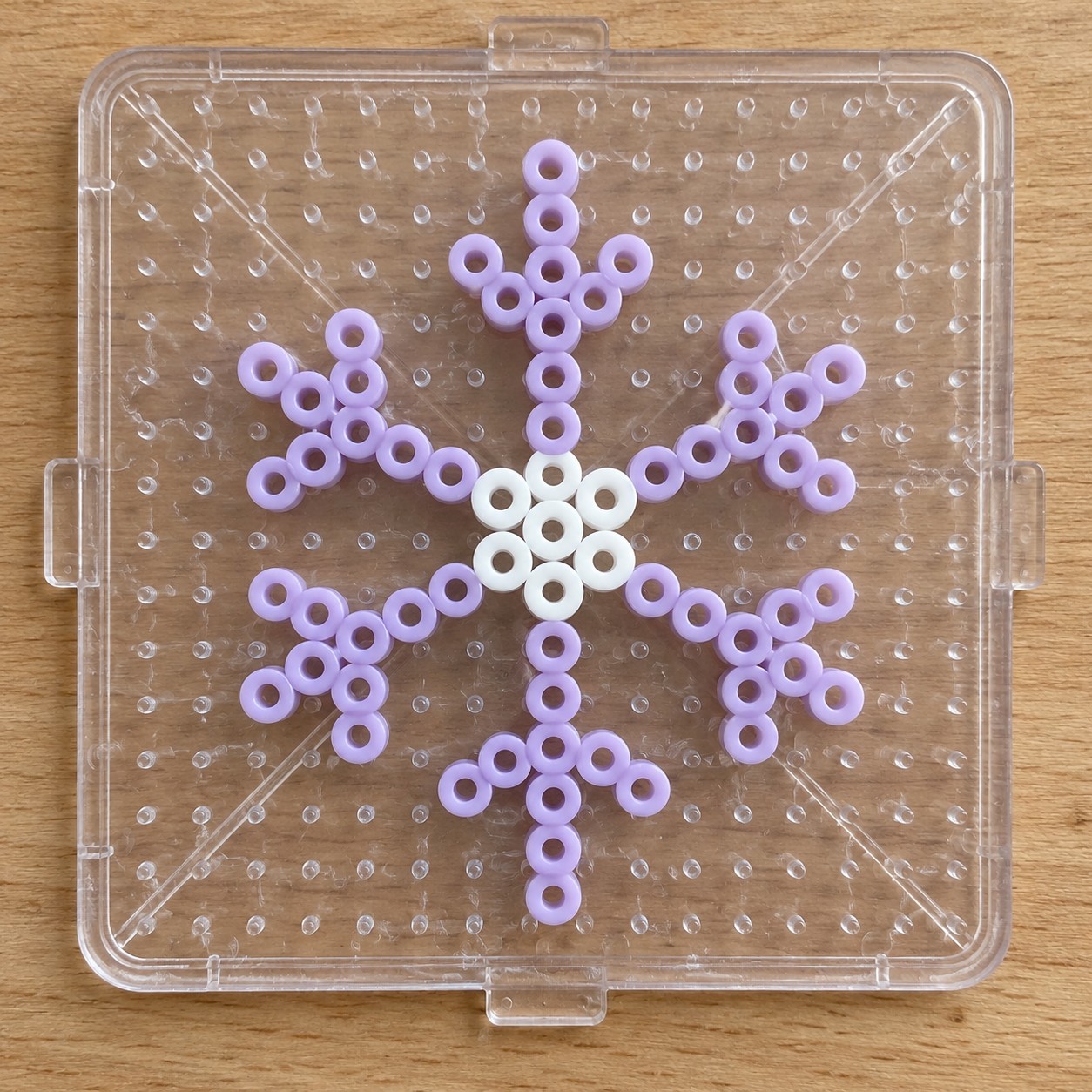
This physical Perler bead pattern forms a six-armed snowflake, with white beads clustered at the center and lavender beads extending into balanced, branching arms. The repeated bead placements create clear radial symmetry, while the stepped branches give the flat design a recognizable snowflake silhouette. The beads are still arranged on a pegboard, so the pattern is ready to be fused rather than already finished.
The symmetrical layout makes the pattern useful for planning other snowflakes: keep the central white cluster and change the arm colors, or simplify the branches for a more compact version. Adding a second shade of purple could help separate the center from the arms while preserving the same repeating structure.
Blue and White Snowflake Perler Bead Pattern with Branched Arms

This physical Perler bead pattern forms a six-armed snowflake from individual blue, light-blue, and white beads arranged on a pegboard. Each arm extends from a white-centered cluster, with smaller branches and stepped bead placements creating a balanced radial shape. The contrast between the darker blue accents and pale blue sections helps the snowflake’s repeating structure stand out.
The symmetrical layout gives you a clear starting point for making a matching set, with color swaps such as icy blue and silver-toned beads or a winter palette of blue and white. To simplify the design, reduce the small branches or use fewer colors, while keeping the same six-arm arrangement so the snowflake remains recognizable.
Intricate White and Mint Green Symmetrical Snowflake Perler Bead Pattern
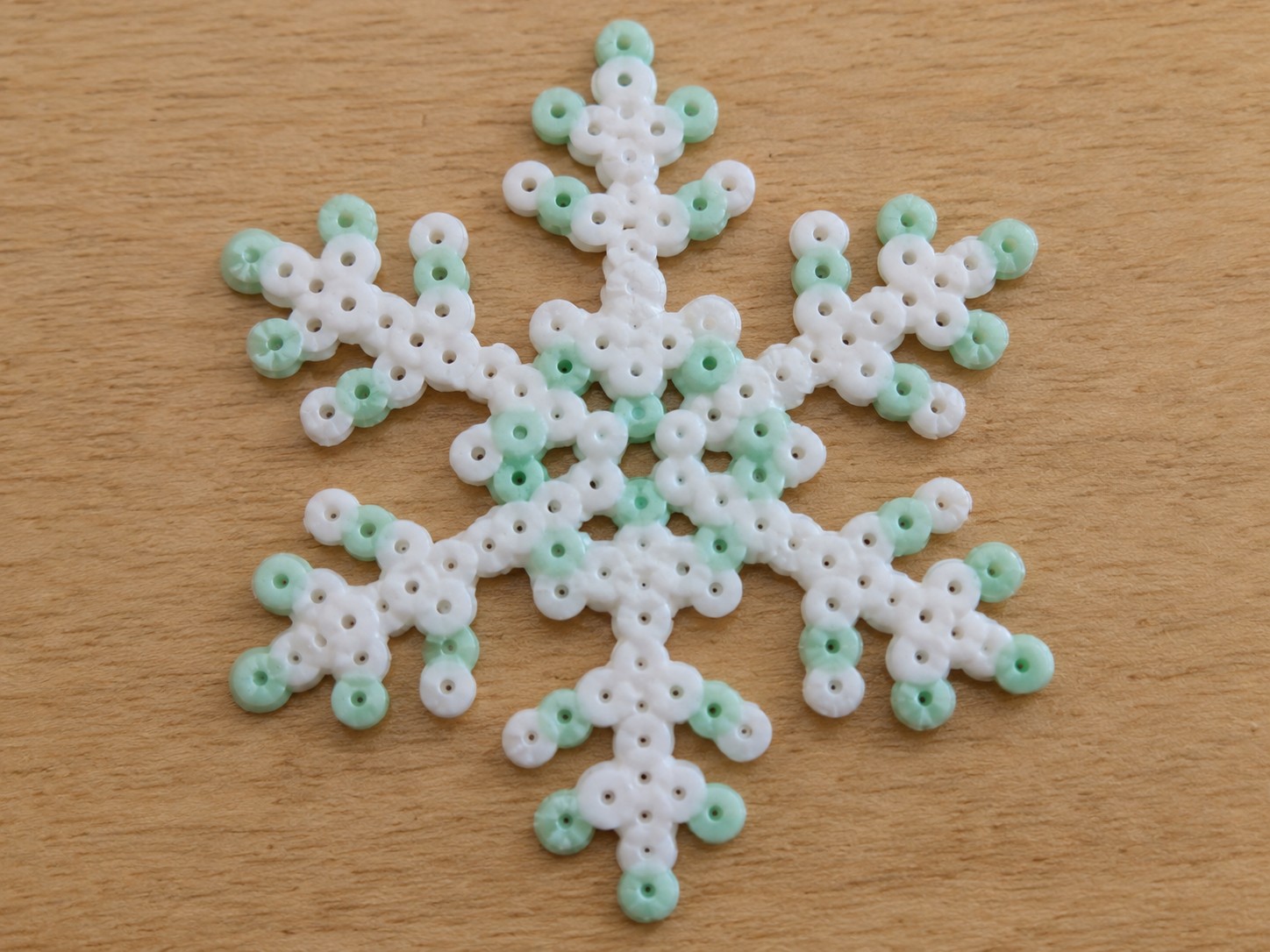
This physical Perler bead snowflake pattern uses a branching, six-point layout, with smaller stepped shapes extending from the center and along each arm. White beads form most of the design, while mint green beads mark outer tips and selected points closer to the middle, making the repeating structure easy to follow. The unfused beads are arranged on a pegboard as a detailed, flat seasonal pattern.
The symmetrical layout is a useful starting point for experimenting with snowflake shapes: keep the bead placement consistent across the arms, then change the accent colors for a different winter palette. For a simpler version, reduce some of the smaller branches or use fewer green accents, while a larger pattern could add more detail to each arm.
Pink-Centered Blue and White Symmetrical Snowflake Perler Bead Pattern
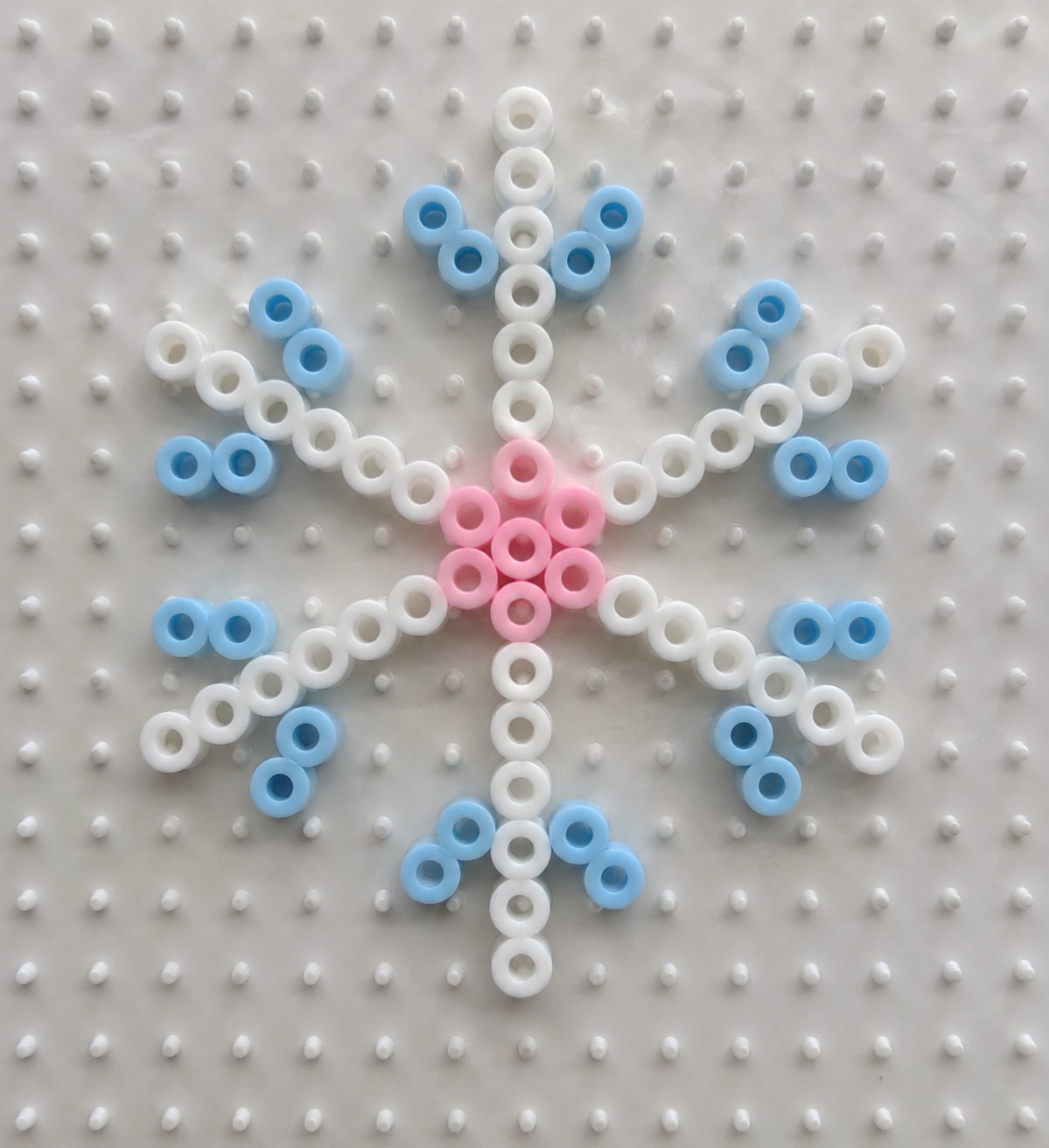
This physical fuse-bead snowflake pattern has six white arms radiating from a pink center, with blue beads forming small accents near the outer branches. The evenly repeated arms and contrasting colors make the snowflake shape easy to read, while the arrangement’s stepped edges give each branch a crisp, geometric look. The individual beads are still arranged on a pegboard, so this is a pattern ready to be fused rather than a finished ornament.
The symmetrical layout is a useful starting point for making a coordinated set: keep the six-arm structure and switch the center or tip colors for different versions. For a simpler variation, use only white and one accent color, or add more color changes along the branches to build a more detailed pattern.
Turquoise and White Twelve-Point Snowflake Perler Bead Pattern
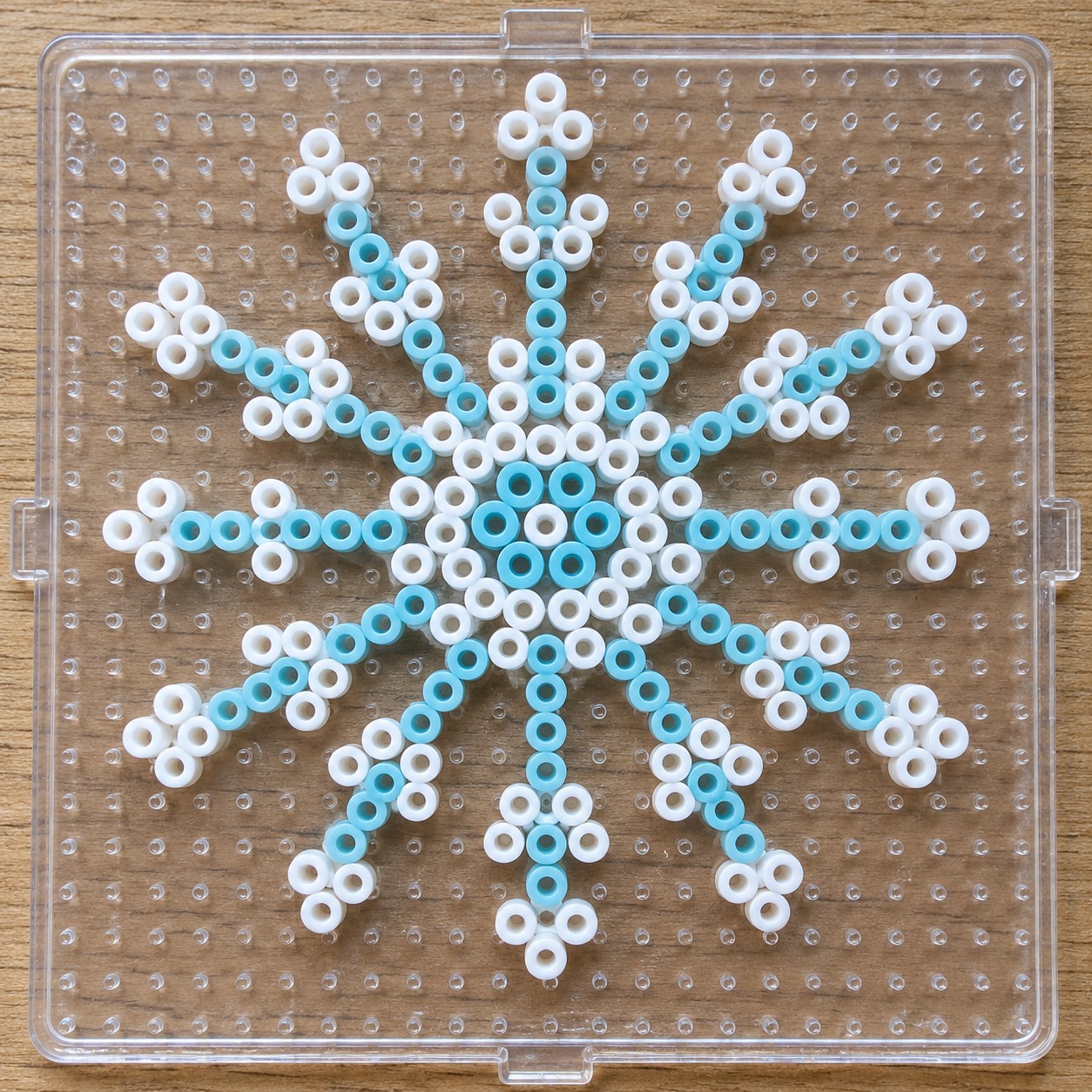
This flat snowflake pattern uses individual turquoise and white fuse beads to form a dense center with twelve long, evenly spaced arms. Turquoise runs along the arms and through parts of the center, while white beads create small branching tips and accents that keep the radial design easy to read. The arrangement is still on the pegboard, ready to be fused.
The repeating arms make this pattern a useful reference for building a balanced snowflake, though the branched ends and layered center take more placement detail than a very basic design. Try swapping turquoise for icy blue or lavender, or use fewer white accents for a simpler version while keeping the same radial layout. Making several variations in coordinated winter colors could create a matching set of flat seasonal decorations.
Detailed Symmetrical Snowflake Perler Bead Patterns with Branched Arms

This pair of physical Perler bead snowflake patterns uses a clear six-armed layout, with each arm branching into smaller stepped sections. The left design combines white beads with dark-blue tips, while the right uses light blue with a white center, making the repeating shapes easy to distinguish on the pegboard. Both arrangements are still unfused bead patterns rather than finished decorations.
The repeated branches give these snowflakes more detail than a basic spoke design while keeping the overall pattern balanced. To adapt them, keep the same arm shapes and try different shades of blue, or simplify the branches for a more open silhouette; making a coordinated pair in contrasting palettes is another way to use the same layout.

This detailed snowflake pattern uses individual white, turquoise, and navy fuse beads arranged in a flat, six-armed design. A navy-and-white center anchors the pattern, while repeated turquoise sections and branched white tips extend along each arm. The mirrored layout and contrasting color blocks keep the intricate shape easy to read.
The repeated branches make this pattern a useful starting point for creating a coordinated set of snowflakes with different accent colors. To simplify the arrangement, reduce the small details around the center or use fewer colors, while keeping the six arms balanced for a recognizable snowflake shape.
Purple-Centered Snowflake Perler Bead Pattern with Branched Arms

This unfused snowflake pattern uses white fuse beads to form six spokes, with small blue branches at the outer ends and a compact purple cluster at the center. The repeating arms create a balanced radial shape, while the blue accents make each branch easy to distinguish against the white outline. Individual beads are arranged on a clear pegboard, so the pattern can be adjusted before fusing.
The clear six-spoke layout is a useful starting point for making a coordinated set of snowflakes with different center colors or branch shapes. To simplify it, reduce the purple center cluster or use one accent color; for more variation, change the blue tips to another winter palette while keeping the repeated arm structure.
Coordinated Blue, Purple, and Green Snowflake Perler Bead Patterns

These three flat snowflake patterns use individual fuse beads arranged on pegboards, with white beads forming the central branches and contrasting blue, purple, or green beads defining the arms. Their repeated, balanced layouts create recognizable six-pointed snowflakes, while the stepped branches and color blocks give each version a distinct look.
Save the trio as a starting point for a coordinated winter set, or change the accent colors to suit another holiday palette. For a simpler variation, reduce the smaller branch details and keep the white centers with one accent color. The patterns are still unfused on their pegboards, so they can be adjusted before fusing.
Detailed Blue and White Snowflake Perler Bead Pattern with Branched Arms

This physical fuse-bead snowflake uses a symmetrical six-armed layout, with white beads forming the outer branches and light blue beads tracing paths through the center and arms. Repeating stepped clusters give the flat pattern a detailed, crystalline shape while keeping its radial structure easy to follow.
The contrasting colors make the snowflake’s branching layout clear, and the same arrangement could be adapted with icy mint, lavender, or a darker blue accent. For a simpler version, reduce some of the smaller white branches while keeping the six-arm symmetry intact.
Frequently Asked Questions
You’ll need Perler beads in your chosen colors, a pegboard, ironing paper or parchment paper, and an iron. Tweezers can make it easier to place individual beads, especially in small or detailed sections. A square pegboard works well for compact snowflakes, while a larger or interlocking board gives you more room for bigger designs.
Start by finding the pattern’s center, then build outward one section at a time. Snowflakes commonly have six repeating arms, so complete one arm and use it as a reference for the other five. If your pattern is arranged on a grid, count the spaces from the center and compare matching sections before ironing.
Yes. You can swap colors to suit a holiday theme, make the snowflakes monochrome, or use translucent beads for a frosty look. To enlarge a pattern, increase its dimensions while keeping each arm consistent with the others. Smaller designs are often easier for beginners, while larger patterns provide more space for intricate details.
Place ironing paper over the beads and use a medium heat setting, following the instructions for your bead brand. Move the iron gently and evenly rather than pressing hard in one spot. Check the bead tops as they begin to fuse, then let the design cool before carefully removing it from the board. For a sturdy snowflake, you can iron the reverse side as well after it has cooled.
Turn them into ornaments by adding a ribbon or thread through an open space near one arm. You can also use them as gift toppers, window decorations, magnets, or pieces in a winter garland. For a garland, make several snowflakes in coordinated colors and attach them to a string with small loops or clips.
