


I like how cream, tan, and brown give fall Perler bead designs a softer, more natural look.
This collection includes seasonal patterns inspired by cozy autumn details, from leaves and acorns to pumpkins and other familiar shapes.
I’ve gathered a mix of ideas, so you can browse for a simple design or a pattern with a little more detail.
The neutral colors make these projects easy to enjoy throughout the season and simple to pair with other fall crafts.
Cream and Tan Pumpkin Perler Bead Pattern

This flat fall Perler bead pattern forms a pumpkin with a stepped silhouette and a short brown stem. Individual cream and tan beads fill the body, while darker brown rows define the stem and add vertical accents that help the pumpkin’s shape read clearly. The beads are arranged on a pegboard and have not yet been fused.
The limited palette makes this pumpkin easy to adapt for a coordinated autumn set: try deeper rust or caramel shades for the body, or keep the cream center and vary the tan outline. You could also simplify the brown accents or make the body wider to create a different pumpkin shape. Once fused, the flat design can work as a small seasonal display accent.
A Neutral Fall Leaf Made from Brown and Tan Perler Beads

This flat fall leaf pattern uses individual Perler beads arranged in a broad, stepped silhouette with a pointed tip at each end. Dark brown beads fill the upper section, while warm tan beads form the lower section, creating clear color blocking that makes the leaf shape easy to recognize.
The two-color layout is a useful starting point for making a coordinated set of autumn leaves in cream, rust, or deeper brown. Keep the stepped outline and swap the color bands to change the look, or add another shade for more detail while keeping the shape readable.
Autumn Leaf Perler Bead Pattern in Warm Neutrals

This flat fall leaf pattern uses individual Perler beads in cream, tan, rust, orange, and dark brown to build a broad, branching silhouette. The stepped edges and dark-brown outlines separate the warm color blocks, while the central stem helps the leaf shape read clearly. The beads are arranged on a pegboard and have not yet been fused.
The mix of neutral and autumn shades makes this a useful starting point for a seasonal bead collection. Try swapping the orange areas for more cream and tan for a quieter palette, or make several leaves with different rust and brown combinations to create a coordinated set.
A Fall Tree Made from Neutral Perler Beads

This flat Perler bead pattern forms a broad autumn tree canopy above a cream-colored trunk, with a dark brown base. Individual tan beads create the stepped outer shape, while darker brown patches add leaf-like color blocking that makes the canopy read as a fall tree without needing tiny details.
The neutral palette is easy to adapt: swap in more cream or light tan for a softer canopy, or add rust and muted gold beads for a warmer fall version. The same arrangement could also inspire a small set of seasonal trees by changing the canopy colors while keeping the trunk and silhouette consistent.
A Brown Bear Perler Bead Pattern in Fall Neutrals

This flat Perler bead pattern forms a seated brown bear, with rounded ears, a wide body, and a cream muzzle and belly. Individual brown, dark brown, tan, and cream beads create pixel-like color blocks, while the dark details help define the face and paws.
The stepped outline and contrasting cream patches make the bear easy to recognize, even with a neutral palette. To adapt the pattern, shift the brown shades or change the cream patches, or make a coordinating set with different bear poses and facial details.
Neutral Perler Bead Leaves in Three Autumn Shapes

This coordinated fall Perler bead set uses individual cream, tan, rust, and brown fuse beads to form three flat leaf patterns. Each leaf has a stepped outline and a dark brown border, while lighter sections and warm color blocks suggest the veins and changing colors of autumn leaves. The beads are arranged on a pegboard and are not yet fused.
The shared palette makes the three different leaf silhouettes feel like a matching set, and the same layout could be recolored with muted gold or deeper red beads for another fall variation. Keep the dark outlines and simplify the interior patches if you want a less detailed pattern, or add more shades to build up the leaf color changes.
A Brown Squirrel Perler Bead Pattern for Fall

A flat squirrel pattern made from individual Perler beads uses warm tan and brown color blocks to define its rounded body, curled tail, and pointed ears. Dark brown beads create a contrasting outline, while small black-and-white facial details and cream patches help the animal’s shape read clearly.
The large curled tail gives this design a distinctive silhouette, so it can be adapted into a coordinated fall animal set by changing the pose or adding a fox or chipmunk pattern. For a simpler version, reduce the shading and use fewer shades of brown, keeping the cream patches and dark outline to preserve the squirrel’s recognizable features.
A Brown Bear Perler Bead Pattern in Fall Neutrals

This flat brown bear Perler bead pattern uses individual fuse beads arranged on a pegboard to form a stepped silhouette. Dark brown beads outline the head and ears, while lighter brown fills the body and cream beads mark the muzzle and lower edge. The layered color blocks make the bear recognizable without relying on small facial details.
The limited palette keeps the shape clear and fits a neutral fall color scheme. To adapt the pattern, shift the browns toward reddish chestnut or add a few tan beads for more shading, while keeping the darker outline to define the silhouette. Once fused, the flat design could work as a seasonal display accent or a small craft gift.
Brown and Tan Acorn Perler Bead Keychains

These finished Perler bead acorns use stepped, rounded silhouettes to define the cap and nut, with small holes in the fused beads creating a dotted texture. Dark brown outlines and caps contrast with tan and cream centers, making the two coordinated fall designs easy to distinguish as acorns. Metal rings turn the flat bead shapes into keychains.
The clear color blocks make this motif easy to adapt: use a lighter tan body, a darker cap, or alternate brown shades for a matching set. The small, compact outline suits a keychain or bag charm, and changing the body color could create several variations while keeping the recognizable acorn shape.
A Neutral Fall Acorn Perler Bead Pattern

This acorn pattern uses individual cream, tan, and brown fuse beads arranged on a pegboard to create a flat, pixel-style fall motif. A dark brown outline defines the rounded nut and cap, while cream and warm orange-brown sections add contrast and make the shape easy to recognize.
The neutral palette makes this acorn easy to coordinate with other autumn bead designs, such as leaves, pumpkins, or small woodland animals. For a simpler variation, use fewer colors in the nut, or change the cap to a lighter tan while keeping the dark border to preserve the stepped silhouette.
A Cream and Brown Owl Perler Bead Pattern
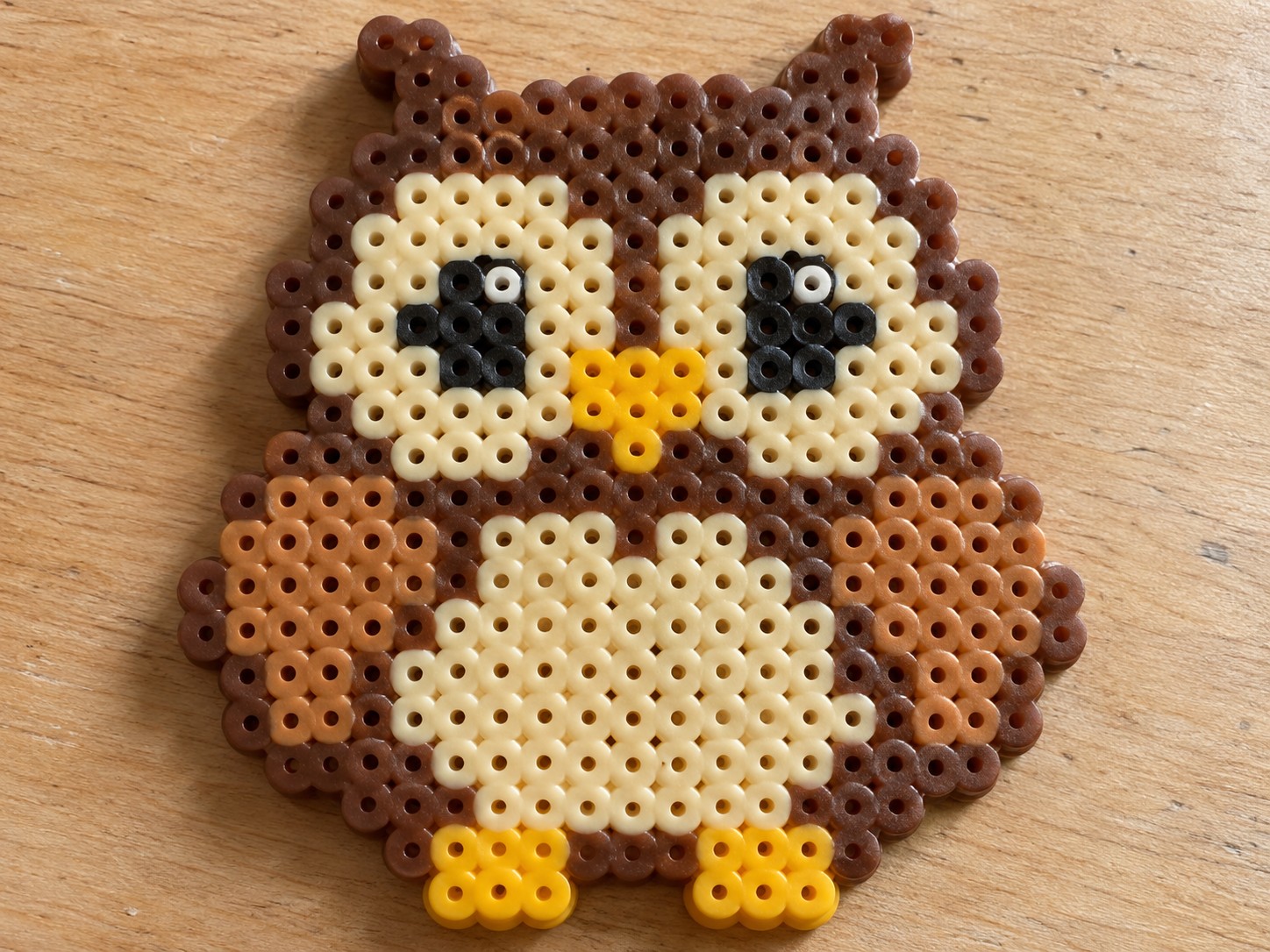
This flat Perler bead pattern makes an owl with a stepped brown outline, cream-colored face and belly, dark eyes, a yellow beak, and yellow feet. Individual beads create the owl’s rounded shape and symmetrical features, while the warm neutral palette fits a fall craft collection.
The contrasting face and eye colors keep the owl recognizable without relying on many small details. For a coordinated set, keep the same outline and change the face or body colors, or add small leaf shapes in matching autumn tones.
A Warm Brown Acorn Perler Bead Pattern

This flat acorn pattern uses individual Perler beads to build a rounded, stepped silhouette, with a dark brown stem and a small cluster of green leaves above it. Rust-brown beads outline the cap and lower edge, while tan and cream color blocks give the nut a clear center and add contrast.
The limited fall palette makes the acorn easy to adapt: swap the leaf beads for orange or gold, or use different shades of brown for a more muted version. The recognizable outline also makes it a useful motif to pair with other autumn bead patterns, such as leaves or pumpkins.
Neutral Fall Mushrooms in Cream and Brown Perler Beads

These flat Perler bead mushroom patterns use stepped caps and narrow stems to create three recognizable autumn designs. Cream, tan, and brown beads form the main color blocks, while the larger cap on the left adds a few rust-colored spots for contrast. The individual plastic beads are arranged as pixel-like shapes on a surface, making the different cap outlines easy to compare.
For a coordinating set, keep the stem colors consistent and vary the cap shapes or add small spots in rust, tan, or cream. The limited fall palette also makes these patterns easy to adapt to other seasonal colors without losing the mushroom silhouettes.
A Cream and Brown Mushroom Perler Bead Pattern for Fall

A large mushroom takes shape from individual cream, tan, and brown fuse beads arranged in a flat, stepped pattern on a pegboard. The rounded cap is defined by alternating light and dark bands, while the narrower brown stem gives the silhouette a clear focal point. The earthy palette fits a neutral fall bead collection without relying on bright seasonal colors.
The repeating stripes make this pattern easy to adapt: swap the cream beads for rust or muted gold, or adjust the brown bands to create a different cap design. A smaller version could keep the stepped outline and simplify the interior stripes, while matching mushrooms in varied neutral shades would make a cohesive autumn set.
Neutral Fall Wreath Perler Bead Pattern

A round fall wreath made from individual Perler beads combines a cream-and-tan base with dark brown outlines and small autumn leaves in red, orange, and yellow. The curved band of connected bead sections leaves an open center, while the contrasting leaf colors make each seasonal accent easy to pick out. The beads are arranged on a pegboard, so this is a pattern to fuse rather than a finished wreath.
The repeating wreath shape is a useful starting point for a coordinated fall set: keep the cream, tan, and brown base, then swap the leaf colors or change their positions. For a simpler version, use fewer leaves or reduce the shades in the base; adding more color changes to the border can create a more detailed pattern.
A Brown and Cream Fox Perler Bead Pattern for Fall

A fox-shaped Perler bead pattern uses warm brown, rust, cream, and golden yellow to define its pointed ears, broad face, and small feet. Dark beads outline the body and mark the eyes, while lighter patches create the fox’s muzzle and chest, making the pixel-like silhouette easy to recognize. The individual fuse beads are arranged on a pegboard and have not yet been fused.
The color blocking gives this detailed animal pattern a clear shape, and the same layout could be adapted with more cream for a lighter fox or deeper browns for a darker coat. A simpler version could reduce the number of shades while keeping the pointed ears and contrasting face, or a matching autumn set could pair the fox with other woodland animals.
Frequently Asked Questions
You’ll need Perler beads in cream, ivory, tan, caramel, light brown, and dark brown, plus pegboards, ironing paper, and an iron. Tweezers can help with tiny details, while a bead organizer makes it easier to sort similar shades. If you’re making pumpkins, leaves, acorns, or other fall shapes, a square pegboard is usually enough for small designs.
Pair a light shade with a medium and a dark shade to give each design definition. For example, use cream, warm tan, and chocolate brown, or ivory, caramel, and walnut brown. A small amount of black can sharpen facial features or outlines, but keeping most of the palette warm and earthy helps preserve the soft neutral look.
Use the bead pattern to create shape and contrast rather than adding lots of colors. For a pumpkin, arrange darker beads in the grooves and lighter beads across the rounded sections. For a leaf, use a darker outline or central vein, then fill the sections with alternating cream, tan, and brown. Small color changes can suggest shading without making the design complicated.
Place ironing paper over the beads and use a dry iron on a medium setting, moving it gently in circles. Check the design frequently and stop when the beads have fused enough to hold together while their holes remain visible. Let the piece cool under a flat weight to help it keep its shape. Adult supervision is recommended when children are crafting.
Use them as seasonal decorations, drink coasters, gift tags, magnets, or ornaments. Add a small adhesive magnet to the back for a refrigerator decoration, or attach a ribbon or jump ring to turn a design into a hanging ornament. You can also make several matching pieces, such as leaves and acorns, for a coordinated fall display.
