


I like using small fall-themed fuse bead patterns when I want a seasonal craft that fits into a short afternoon.
These designs include familiar fall shapes and colors, from leaves and pumpkins to other cozy seasonal details.
I’ve gathered ideas that are compact and approachable, so it’s easy to choose one for a quick project.
Some patterns can also work as simple decorations or little handmade gifts.
Fall Pumpkin Perler Bead Pattern

This small fall Perler bead pattern forms a pumpkin with a bright orange body, a dark brown stepped outline, and a short green stem. The individual beads create a rounded, pixel-like silhouette, while the contrasting border keeps the shape clear on the pegboard. The arrangement is still unfused, so it reads as a flat bead design rather than a finished ornament.
The limited palette and clear outline make the pumpkin easy to adapt for a matching fall set: try different shades of orange, or make a smaller variation with fewer rows of body beads. A few green beads can change the stem shape, while the brown border can stay consistent to keep the pumpkins recognizable together.
Fall Maple Leaf Perler Bead Pattern

This flat fall leaf pattern uses individual fuse beads to build a broad, stepped maple-leaf shape on a pegboard. Orange, rust, yellow, and burgundy blocks create the changing autumn colors, while a short green stem makes the leaf easy to recognize.
The layered color sections give the pattern a clear shape without relying on a single outline color. For a smaller version, simplify the color changes, or make a coordinating set by shifting the same leaf pattern toward brighter orange, deeper red, or golden yellow.
Fall Leaf Perler Bead Pattern

This flat fall leaf pattern uses individual fuse beads to create a compact, stepped silhouette on a pegboard. Rust and brown beads fill the center, cream beads form the lower section, and black beads outline the uneven edges, making the leaf shape easy to read through contrasting color blocks.
The limited palette gives the pattern a clear seasonal look, and swapping the cream for gold or deep orange would create another autumn variation. Keep the same outline for a coordinating set, or simplify the color blocks if you want a smaller, less detailed leaf design.
Perler Bead Fall Apple Pattern
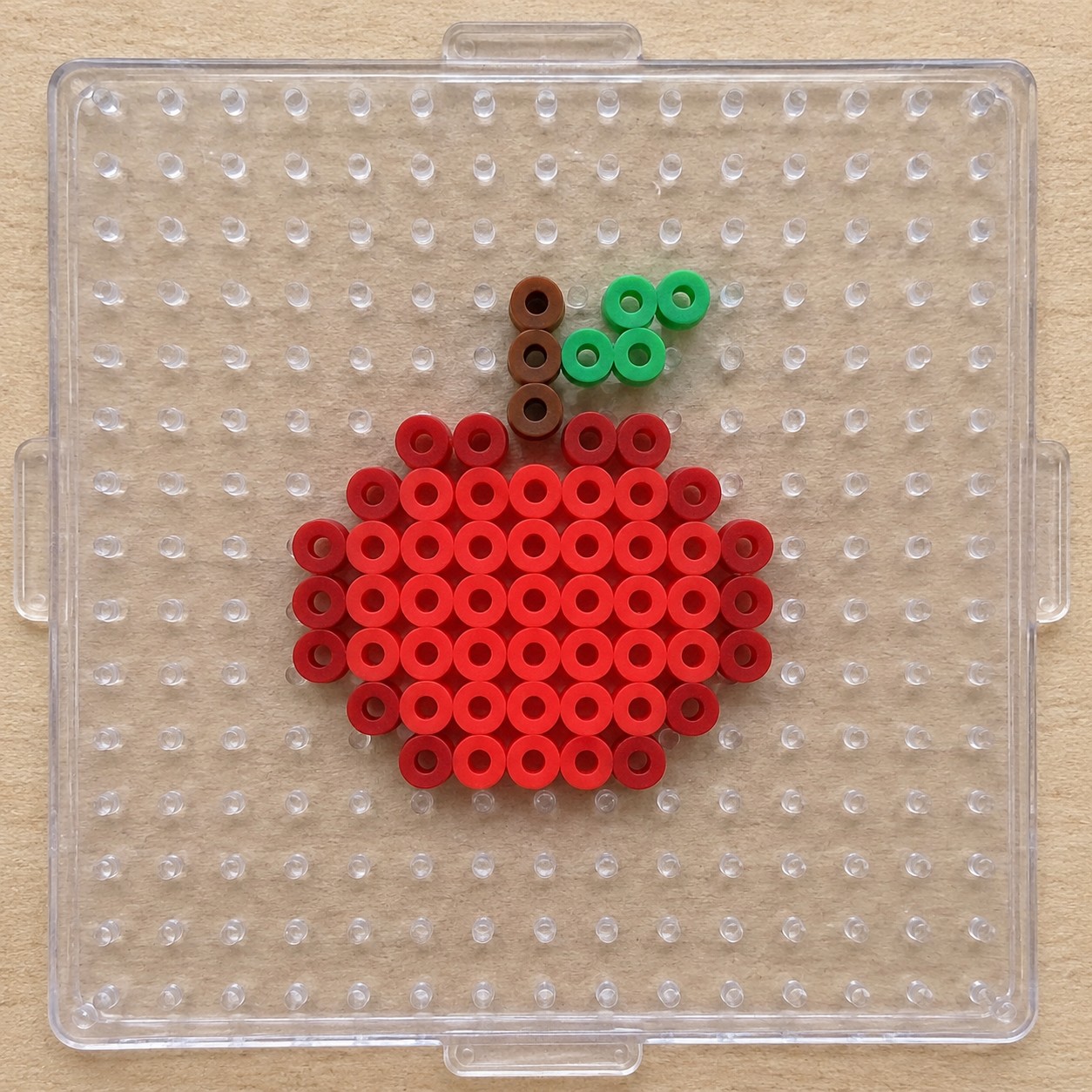
A flat apple pattern made from individual Perler beads is a recognizable choice for a small fall craft. Red beads build a broad, stepped silhouette, while a short brown stem and green leaf details add contrast and define the shape; the beads are still arranged on the pegboard, not fused.
The strong outline and limited color blocks make the apple easy to adapt into a set of fall fruit by changing the colors or adjusting the top and leaf details. Keep the red body and simplify the green accents for a pared-back version, or add another shade of red to create more variation within the shape.
Fall Acorn Perler Bead Pattern

A large acorn takes shape from individual Perler beads arranged on a pegboard, with a rounded red-orange body, a dark brown stepped outline, and a short brown stem. Cream-colored patches add contrast across the cap and body, making the acorn’s sections easy to distinguish in the grid-based pattern. The beads are still arranged on the board, so this is an unfused flat design.
The clear outline and blocks of autumn color make the acorn a useful starting point for a small fall bead project. Swap the red-orange for golden yellow or rust, or make a matching set with different cap colors while keeping the brown border to preserve the silhouette.
Orange Pumpkin Perler Bead Pattern with a Green Stem

This fall pumpkin is a flat Perler bead pattern arranged from individual orange beads, with a blocky green stem and a few dark beads adding face-like details. The stepped outline gives the pumpkin a rounded, recognizable shape, while the green color blocking separates the stem from the orange body. The beads are still on the pegboard, so this is an unfused pattern rather than a finished ornament.
The contrast between the orange body, green stem, and dark details helps the design read clearly without needing many colors. To make a simpler version, leave out the dark features; for a matching fall set, keep the pumpkin outline and try different expressions or stem shapes.
Two-Tone Fall Maple Leaf Perler Bead Patterns

These flat fall leaf patterns use individual fuse beads to create stepped maple-like silhouettes, with brown bead stems and color-blocked centers. One combines bright orange with yellow, while the other layers rust orange with deep red, making the leaf shape easy to read through contrast rather than fine detail.
The clear outlines make these patterns useful starting points for a small seasonal set: try changing the center colors to gold, burgundy, or brown while keeping the stepped leaf shape. The paired designs could also be adapted as fall display accents or ornaments once fused, with simpler color blocks if you want a less detailed arrangement.
Fall Sunflower Perler Bead Pattern

This flat sunflower pattern uses individual fuse beads arranged on a pegboard, with a dark brown center, stepped yellow petals, and orange accents around the edge. The layered rows make the flower’s shape easy to recognize, while the green beads below form a short stem and leaves.
The contrasting brown center and warm petals keep the design readable in a compact pattern, and the green base gives it a clear finish. For a fall variation, swap in deeper gold, rust, or burgundy beads, or make a coordinating set with different petal colors while keeping the same sunflower layout.
Fall Fox Perler Bead Pattern

This fall-themed Perler bead pattern forms a fox with a stepped orange outline, a cream-colored face and chest, one black eye, and dark brown paws. The individual beads are arranged on a pegboard in connected blocks of color, making the fox’s head and upright ears easy to recognize in a compact, flat design.
The orange-and-cream contrast does much of the work, so the pattern could be adapted with fewer colors while keeping the fox silhouette clear. For a matching fall set, use the same blocky shape with different expressions or small color changes, and fuse the beads before using the piece as a display accent.
Small Fall Acorn Perler Bead Pattern

This small fall acorn pattern uses individual brown, golden-yellow, and green fuse beads arranged on a pegboard. The rounded brown body and stepped yellow cap make the acorn easy to recognize, while the green beads at the top add a simple leaf-like accent. Its compact, pixel-style silhouette suits a quick seasonal bead project.
The clear color blocks make the pattern easy to adapt: try a darker cap, add a second shade of brown, or change the green detail for a different fall palette. Make a few versions with varied cap colors to create a coordinating set of small seasonal designs.
Fall Mushroom Perler Bead Pattern

This small mushroom pattern uses individual fuse beads arranged on a pegboard, with a rounded golden-orange cap, cream spots, and a pale tan stem finished with a dark brown base. The stepped outline and simple blocks of contrasting color make the mushroom shape easy to recognize without adding tiny details.
The limited palette keeps the pattern readable at a compact scale, while the cream spots give the cap a clear focal point. Try changing the cap to rust or deep red for another fall color variation, or make a matching set with different cap colors and spot arrangements.
Perler Bead Fall Harvest Trio

This coordinated set of flat Perler bead patterns pairs an orange pumpkin with a red-and-gold apple and a brown-and-tan acorn. The stepped outlines and contrasting color blocks make each fall shape easy to distinguish, while the apple’s gold center stripe and the acorn’s darker cap add useful pattern details. The individual fuse beads are arranged on a pegboard and are not yet fused.
The shared fall palette makes these patterns easy to adapt as a group: try different shades of orange for the pumpkin or red and yellow beads for a brighter apple. You could simplify a design by reducing its color changes, or build a larger matching set with other seasonal shapes. Once fused, the flat designs could serve as small display accents or, if their size and structure suit, be adapted with hardware as charms.
Small Fall Strawberry Perler Bead Keychain

This fused Perler bead keychain turns a strawberry into a compact seasonal charm, using a stepped red outline, rows of individual red beads, and a small green leafy top to make the fruit easy to recognize. A brown stem section connects the berry to the metal ring, while the repeated bead holes give the surface a distinct grid pattern.
The red-and-green color blocking keeps the shape clear at a small scale, and switching the red to orange or deep gold could give it a fall harvest look. The same basic fruit shape could also inspire a set of bead charms in different colors, with the attached ring making this one suitable as a bag charm or keychain.
Small Fall Fox Perler Bead Pattern

This flat fall fox pattern uses individual orange, cream, brown, and black fuse beads to create a seated character with pointed ears and a curled tail. Stepped edges shape the fox’s head and body, while cream patches and dark facial details separate its features from the orange outline. The curled tail has a white tip that adds a clear contrast to the silhouette.
The limited color blocks make this pattern easy to recognize and offer a useful starting point for variations, such as changing the fox’s body shade or tail tip. For a simpler version, reduce some of the cream and dark details while keeping the ears, face, and tail shape distinct. Once fused, the compact flat design could be displayed as a seasonal accent or adapted with an appropriate attachment as a bag charm.
Three Small Fall Leaf Perler Bead Patterns

These physical Perler bead patterns make a coordinated set of autumn leaves in yellow, orange, and deep red. Each flat design uses a stepped outline and a brown bead stem, while scattered brown beads suggest the veins and keep each leaf recognizable without adding a lot of colors.
The repeated leaf shape makes the set easy to adapt: swap in different fall shades, or simplify the vein details for a more compact pattern. After the beads are fused, the flat leaves can work as small seasonal display accents or be made into ornaments with a suitable hanging attachment.
Small Fall Squirrel Perler Bead Pattern

A small squirrel motif takes shape from individual brown, rust-orange, tan, and black fuse beads arranged on a pegboard. The stepped outline and color-blocked body suggest a curled-up squirrel, while the tan section gives the design contrast against its darker brown areas. It is a flat bead pattern, not a fused or dimensional figure.
The warm palette makes this pattern easy to adapt for a fall animal set: try changing the body colors or making matching versions with different tail shapes. Keeping the darker beads around the outline helps the silhouette stay readable if you simplify the interior colors.
Small Fall Carrot Perler Bead Pattern

This small Perler bead pattern turns a carrot into a clear, stepped silhouette using rows of orange beads for the tapered root, pale tan beads at the base, and a cluster of green beads for the leafy top. The individual fuse beads are arranged on a pegboard, with the contrasting colors making the vegetable easy to recognize even at a compact scale.
The limited color blocking makes the pattern easy to adapt: adjust the orange shades for more variation or simplify the green top for a smaller version. It could also inspire a matching fall harvest set with other produce shapes, keeping the same compact, pixel-like style.
Small Fall Turkey Perler Bead Pattern

This fall turkey pattern uses individual fuse beads arranged on a pegboard, with a brown body, orange feet and beak, and a broad fan of rust-red and cream tail feathers. The stepped outline and contrasting feather patches make the turkey recognizable, while the large blocks of color keep the flat design easy to read.
The clear color sections make this a useful motif to adapt: swap the tail colors for a brighter autumn palette or simplify the feather patches for a less detailed version. A finished turkey could work as a seasonal display accent, and changing the tail shape or colors could create a small set of different birds.
Small Fall Turkey Perler Bead Pattern

This fall turkey pattern uses individual fuse beads arranged on a pegboard to form a compact, flat bird. Rust-orange beads create the rounded, stepped body and tail, while cream and brown color blocks define the belly and wings; a dark bead marks the eye, and yellow beads form the beak. The contrasting sections make the turkey recognizable without relying on a detailed outline.
The clear color blocks make this pattern easy to adapt into a matching set of fall birds by changing the body or tail colors. For a simpler version, reduce the cream and brown sections, or keep the main silhouette and add a few accent beads for different feather colors.
Small Fall Flower Perler Bead Pattern

This flat Perler bead flower uses a yellow-orange bloom with a dark brown center, two red-orange side blossoms, and a green stem with leaves. The individual beads create clear, rounded flower shapes, while the contrasting centers and connected green sections keep the design easy to read as a small fall bouquet.
The grouped blossoms make a useful pattern to adapt: change the petal colors for a different autumn palette, or simplify the arrangement by making a single flower with fewer color changes. The green stem and leaves also provide a starting point for a matching set of seasonal blooms.
Frequently Asked Questions
You’ll need fall-colored fuse beads, a pegboard, ironing paper or parchment paper, and an iron. Tweezers can make it easier to place individual beads, especially in tiny designs. Choose colors such as orange, rust, yellow, brown, red, green, and black, and check that your beads and pegboard are made for the same bead size.
Most small patterns take about 10 to 30 minutes to assemble, depending on their detail and your experience. Ironing usually takes only a few minutes, but allow extra time for the design to cool completely before removing it from the pegboard. A simple leaf, pumpkin, or acorn is a good choice when you want a quick project.
Make sure the beads are connected by enough melted surface before lifting the design. Iron both sides if the pattern needs extra strength, letting it cool before flipping it. Use a flat, heat-safe surface, and avoid bending the piece while it’s warm. Follow the bead manufacturer’s ironing instructions, since too much heat can distort the design.
Yes, these projects can work well for kids, especially with simple designs and adult supervision. Younger children can arrange beads while an adult handles the iron, which gets very hot. Use tweezers only if they’re comfortable with them, and keep loose beads away from toddlers and pets.
Turn them into seasonal decorations, magnets, ornaments, coasters, gift tags, or small garlands. For magnets, attach a magnet to the cooled design with strong craft glue. For ornaments, add a ribbon or string through a gap in the pattern, or carefully make a small opening before ironing.
