


I like using traditional autumn colors like rust, gold, brown, and deep red in fall Perler bead projects.
These patterns include familiar seasonal shapes such as leaves, pumpkins, and acorns, with designs that are easy to browse for inspiration.
Some can be arranged on a pegboard as they are, while others can be fused into finished pieces.
I’ve gathered a mix of ideas for cozy afternoons of simple crafting at home.
Pumpkin Perler Bead Pattern With a Leafy Stem

This fall Perler bead pattern forms a round pumpkin from individual orange and rust-colored fuse beads arranged in stepped rows on a pegboard. Darker beads create subtle vertical sections, while the brown stem and small green leaves make the pumpkin shape easy to recognize.
The orange-and-rust color blocking gives the pumpkin definition without relying on a separate outline, so the same layout can be adapted with fewer shades for a simpler version or more colors for added shading. Try changing the leaf colors or making a few pumpkins in different orange tones to create a coordinated autumn set.
Autumn Leaf Perler Bead Pattern

This flat autumn leaf pattern uses individual fuse beads arranged on a pegboard, with a stepped outline that gives the leaf its broad, lobed shape and short brown stem. Red beads define the edges, while orange and yellow blocks create warm bands and a central vein that help the motif read clearly.
The contrasting colors make this a useful pattern to adapt for fall decorations or a coordinated set of leaves. Try shifting the red toward burgundy, adding more yellow, or simplifying the inner color blocks while keeping the outline and stem recognizable.
Fall Acorn Perler Bead Pattern

This flat acorn pattern uses individual physical fuse beads arranged on a pegboard, with a dark brown cap and a warm golden-tan base. The stepped outline and clear color blocks create a recognizable autumn shape without needing extra details.
The traditional fall colors make this a useful starting point for a seasonal bead set, such as coordinating leaf, pumpkin, or oak-leaf designs. Try changing the cap to a lighter brown or adding a few shades of tan to give the acorn more color variation while keeping its silhouette clear.
Autumn Fox Perler Bead Pattern

This flat fox pattern uses individual fuse beads in traditional fall colors, with orange defining its pointed ears and body and brown and cream creating the face and tail details. A small dark bead marks the eye, while the stepped outline and contrasting color blocks make the fox recognizable on the pegboard before it is fused.
The clear color sections make this pattern a useful starting point for a fall animal set: try changing the brown and cream patches to create different fox markings, or adapt the pointed ears and bushy tail for another woodland creature. Keep the orange outline and reduce some of the smaller color details for a simpler version, or add more shades of brown to give the fur pattern greater depth.
Red Apple Perler Bead Pattern With a Green Leaf

This fall Perler bead pattern forms a rounded red apple with a brown stem and a small cluster of green leaves. Individual fuse beads create a stepped silhouette, while the dark red outline separates the bright red center from the white pegboard and helps the shape read clearly.
The contrasting border makes the apple easy to recognize, and the same layout could be recolored for a green or golden apple. For a matching fall fruit set, keep the outline and stem consistent while changing the center colors, or add a few more green beads to make the leafy top fuller.
Sunflower Perler Bead Pattern in Autumn Colors

This flat sunflower Perler bead pattern uses individual yellow, gold, and orange fuse beads to form layered petals around a large brown center. The stepped outline and contrasting color blocks make the flower easy to recognize, while green leaves extend from the base to complete the seasonal motif. The beads are arranged on a pegboard, so the design is a pattern ready to be fused rather than a finished piece.
The bold center and broad petals give the pattern a clear shape that can be adapted with lighter yellows or deeper orange and brown beads. For a coordinated fall set, use the same petal arrangement with different center colors or pair the flower with other autumn motifs. Once fused, the flat design could work as a small seasonal display accent.
Red and Tan Mushroom Perler Bead Pattern
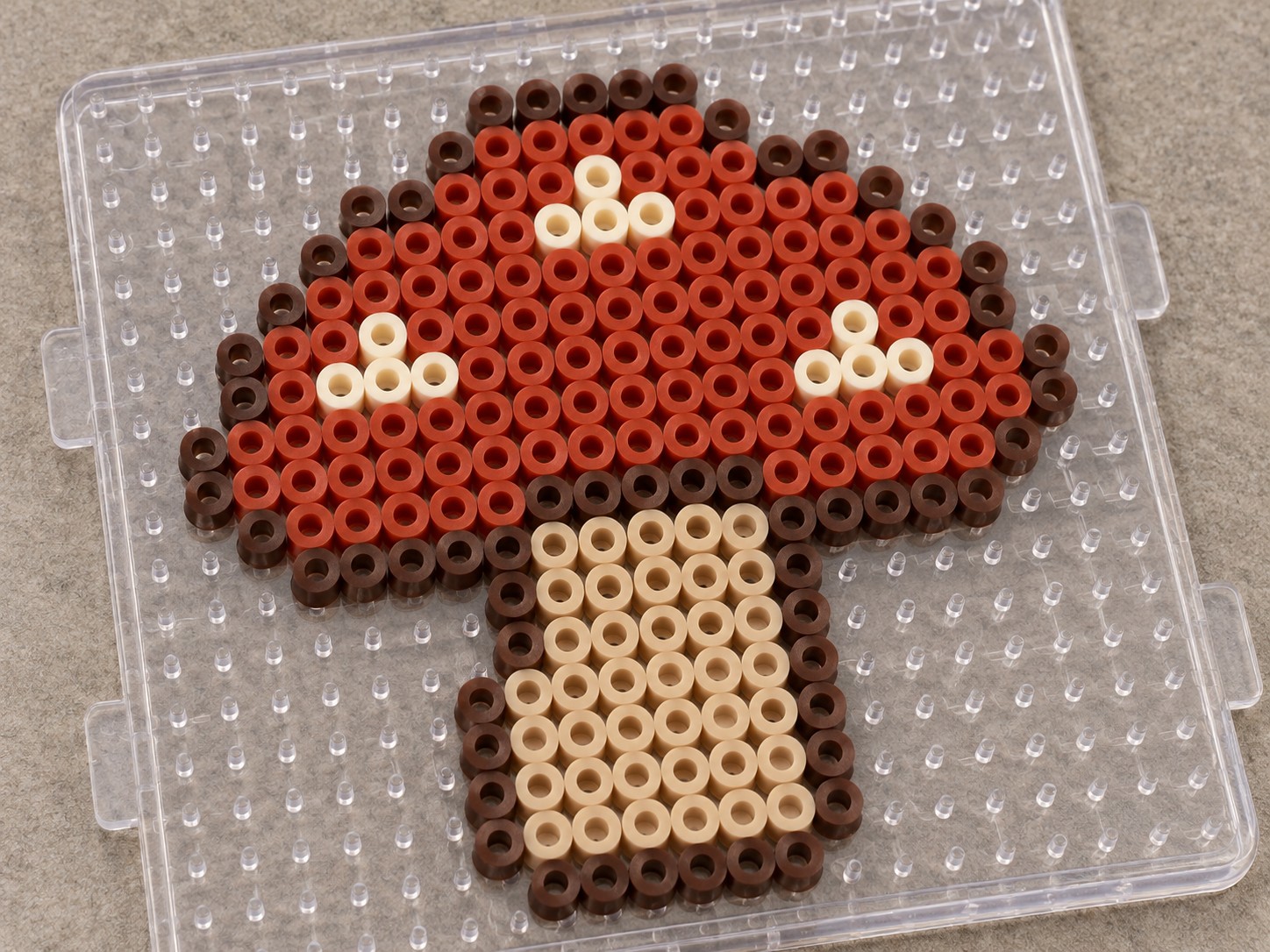
This fall Perler bead pattern forms a large red-capped mushroom with a tan stem, using individual fuse beads arranged on a pegboard. Dark brown beads create a stepped outline around the cap and stem, while small cream accents add spots to the red cap. The broad cap and narrower stem make the mushroom recognizable through clear blocks of traditional autumn colors.
The contrasting border helps keep the shape readable, so the pattern could also be adapted into a smaller mushroom by simplifying the spots and outline. Try changing the cap to golden yellow or burnt orange to make a coordinated fall set, or vary the spot placement for each mushroom.
Fall Tree Perler Bead Pattern

This flat fall tree pattern uses individual fuse beads to form a tapered golden-yellow canopy, with brown beads making a narrow trunk and two green beads suggesting the top of the tree. The repeated yellow rings create a clear, stepped silhouette against the pegboard, while the contrasting trunk keeps the design recognizable.
The blocky outline makes the pattern easy to adapt into a fuller or narrower tree by changing the rows of yellow beads. Try replacing some of the yellow with orange or red for a richer autumn canopy, or keep the green accents for a hint of lingering leaves.
Three Fall Leaves Perler Bead Pattern

This coordinated Perler bead set uses individual fuse beads to form three flat fall leaves, each with a stepped outline and a short brown stem. Yellow and orange beads create the leaf on the left, while the other two use red, orange, and brown color blocking to suggest changing autumn foliage. The different silhouettes keep the patterns distinct while making them read clearly as a seasonal set.
For a matching display, try making more leaves with different mixes of gold, rust, red, and brown while keeping the same stepped shape. You could also simplify one pattern by using fewer colors, or add contrasting beads through the center to suggest leaf veins. The arrangements are still on the pegboard, so they’ll need to be fused before they can be displayed.
Orange Fox Perler Bead Pattern With a White-Tipped Tail
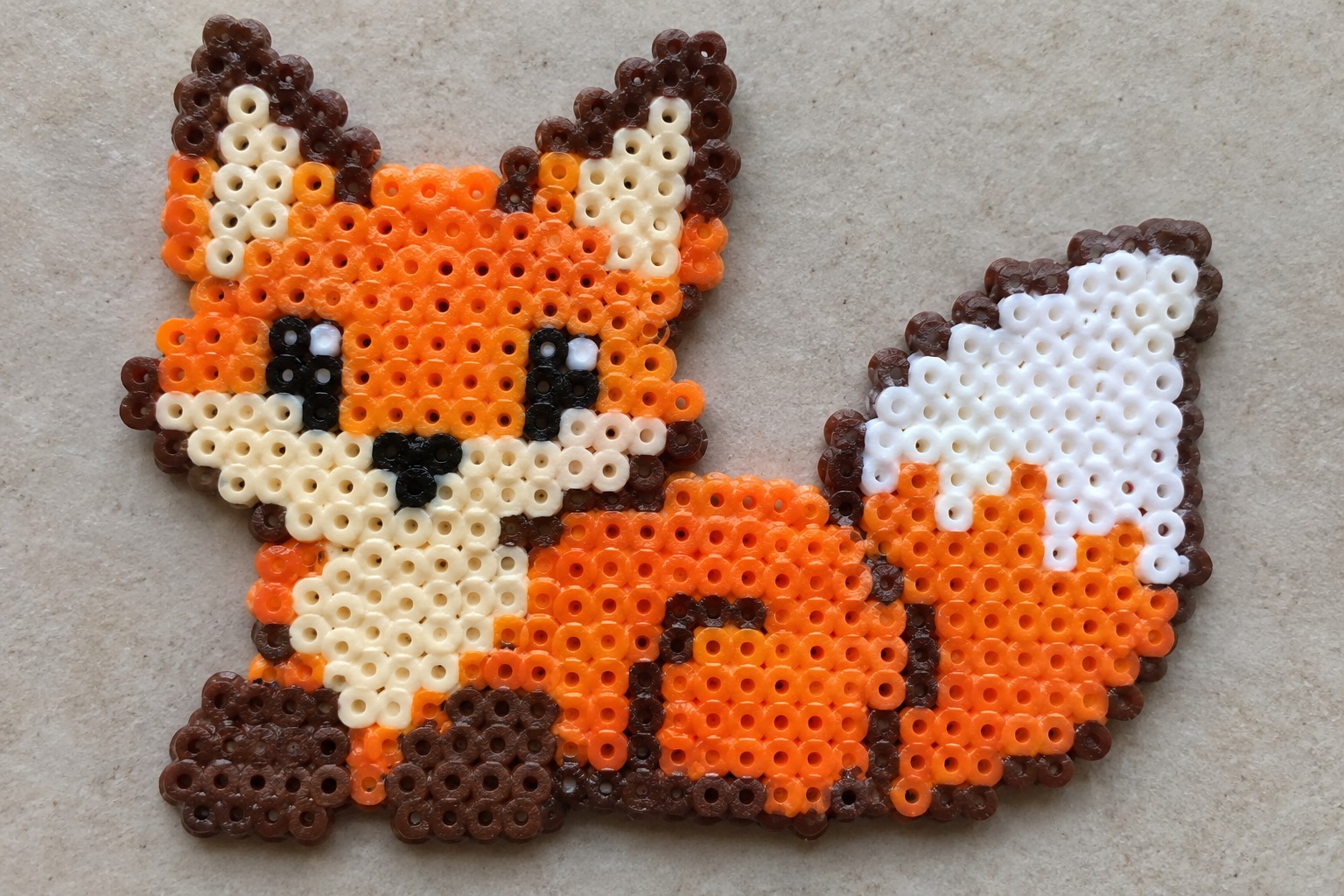
This flat fox pattern uses individual fuse beads to build a seated character with pointed ears, dark paws, and a curled tail with a white tip. Orange bead blocks define the body, while brown outlines and cream accents separate the face, chest, and tail; small black-and-white features make the expression readable.
The clear color sections make this a useful pattern to adapt into other fox poses or expressions, or to create a matching woodland-animal set. For a simpler version, reduce the cream markings and facial details, while keeping the brown outline to preserve the fox’s shape.
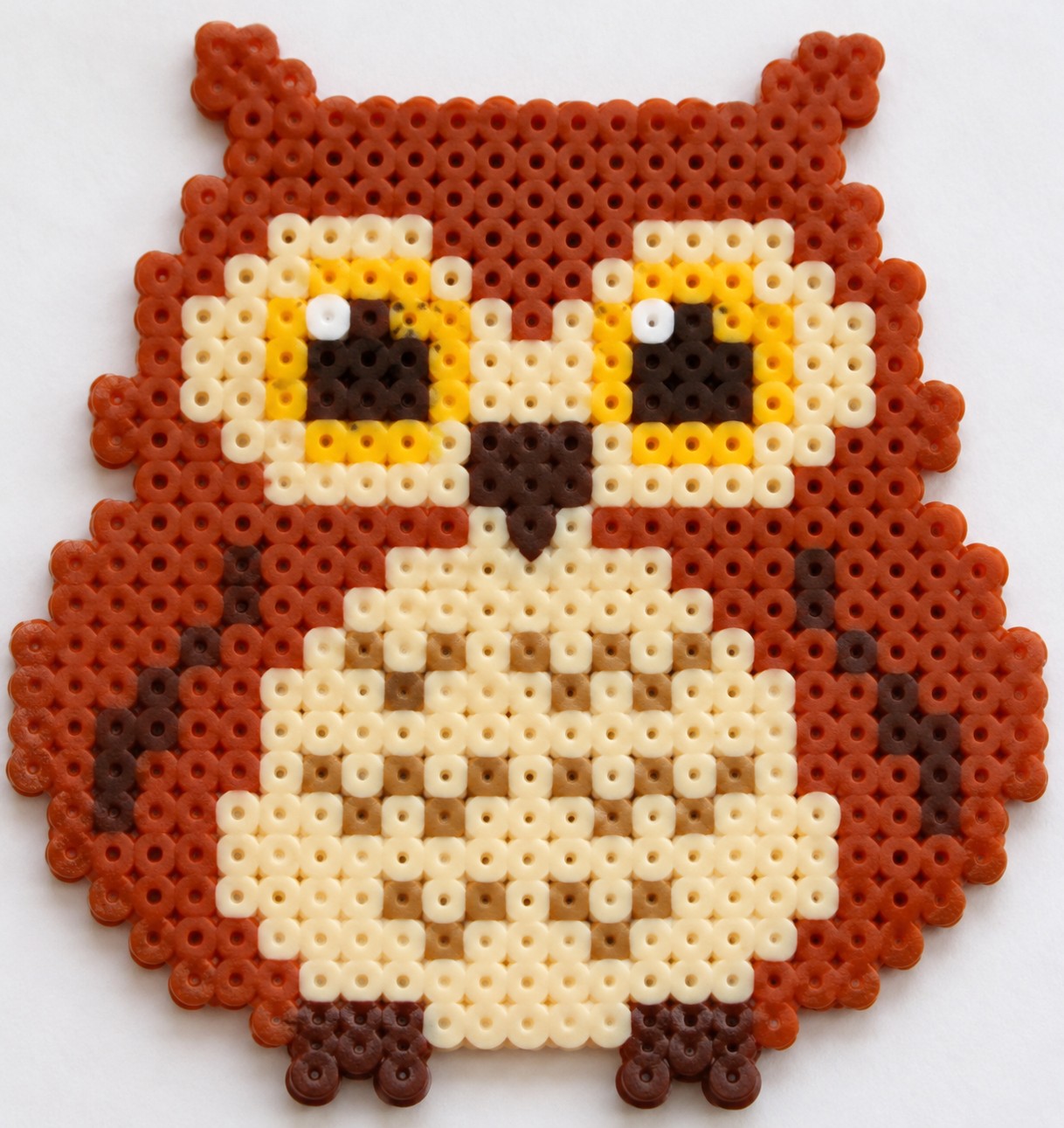
Autumn Owl Perler Bead Pattern in Traditional Colors

This flat owl pattern uses individual fuse beads arranged on a pegboard, with a dark brown outline and golden tan sections that define its rounded body and pointed ear tufts. The contrasting colors and stepped silhouette keep the owl recognizable while giving the design a clear, pixel-like shape.
The limited autumn palette is easy to adapt: use lighter browns for a softer look or add a few cream beads for chest markings. For a matching seasonal set, keep the same owl outline and vary the color blocks or add small leaf details.
Black and Gray Crow Perler Bead Pattern

This flat crow pattern uses individual black and gray fuse beads to define a rounded body, stepped wings, and a long orange beak. The gray patches create feather-like color blocking against the dark outline, while orange feet connect the bird to a brown branch and make its perched pose easy to read. The beads are arranged on a pegboard and are not yet fused.
The contrasting beak and feet help the crow stand out, so the same layout could be recolored for other fall birds or adapted with different branch details. To simplify the pattern, reduce the gray feather patches; for more definition, use extra shades of gray to separate the wing and body.
Pumpkin Perler Bead Pattern With a Brown Stem

This flat pumpkin Perler bead pattern uses rows of orange beads to build a broad, rounded shape, with darker orange and brown beads creating vertical divisions that suggest the pumpkin’s ridges. A small brown stem and two green leafy sections make the seasonal silhouette easy to recognize. The individual beads are arranged on a pegboard and have not yet been fused.
The contrasting ridge colors help define the pumpkin without needing a detailed outline, so the pattern could be adapted with fewer shades for a simpler version or more orange tones for extra depth. Try changing the leaves to red, yellow, or muted green to fit a different autumn palette, or pair the pumpkin with other fall motifs for a coordinated set.
Brown Hedgehog Perler Bead Pattern
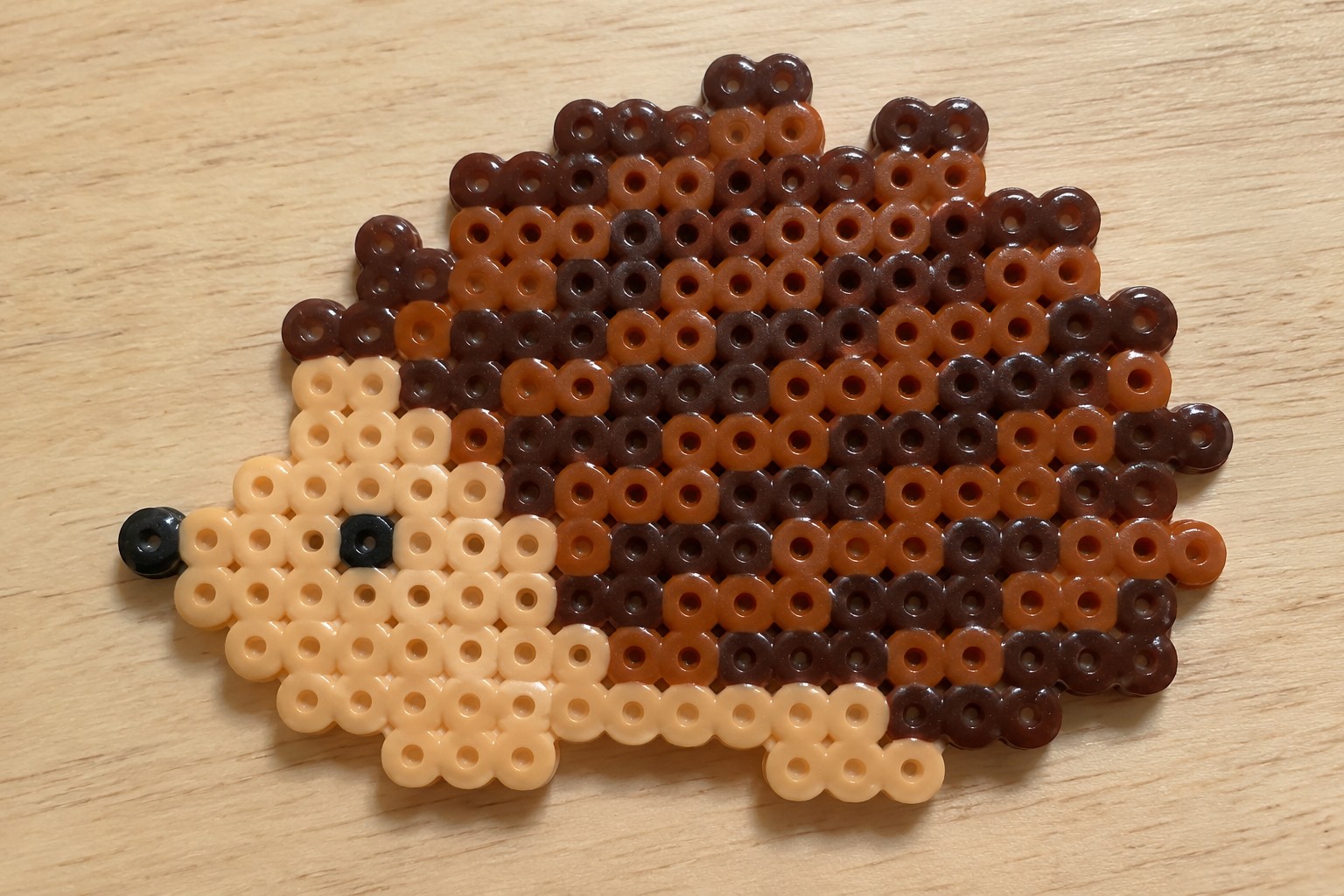
This flat hedgehog pattern uses individual fuse beads to build a rounded body with a distinctive band of dark brown, rust, and orange-brown spines. Cream beads form the face and underside, while two black beads mark the eye and nose, making the animal recognizable through clear color blocking and a stepped silhouette.
The contrasting face and spiny back give the pattern an easy-to-read shape that can be adapted with lighter or darker autumn colors. For a related set, keep the cream face and black features, then vary the brown and orange beads to create hedgehogs with different-looking backs.
Pair of Fall Fruit Perler Bead Patterns
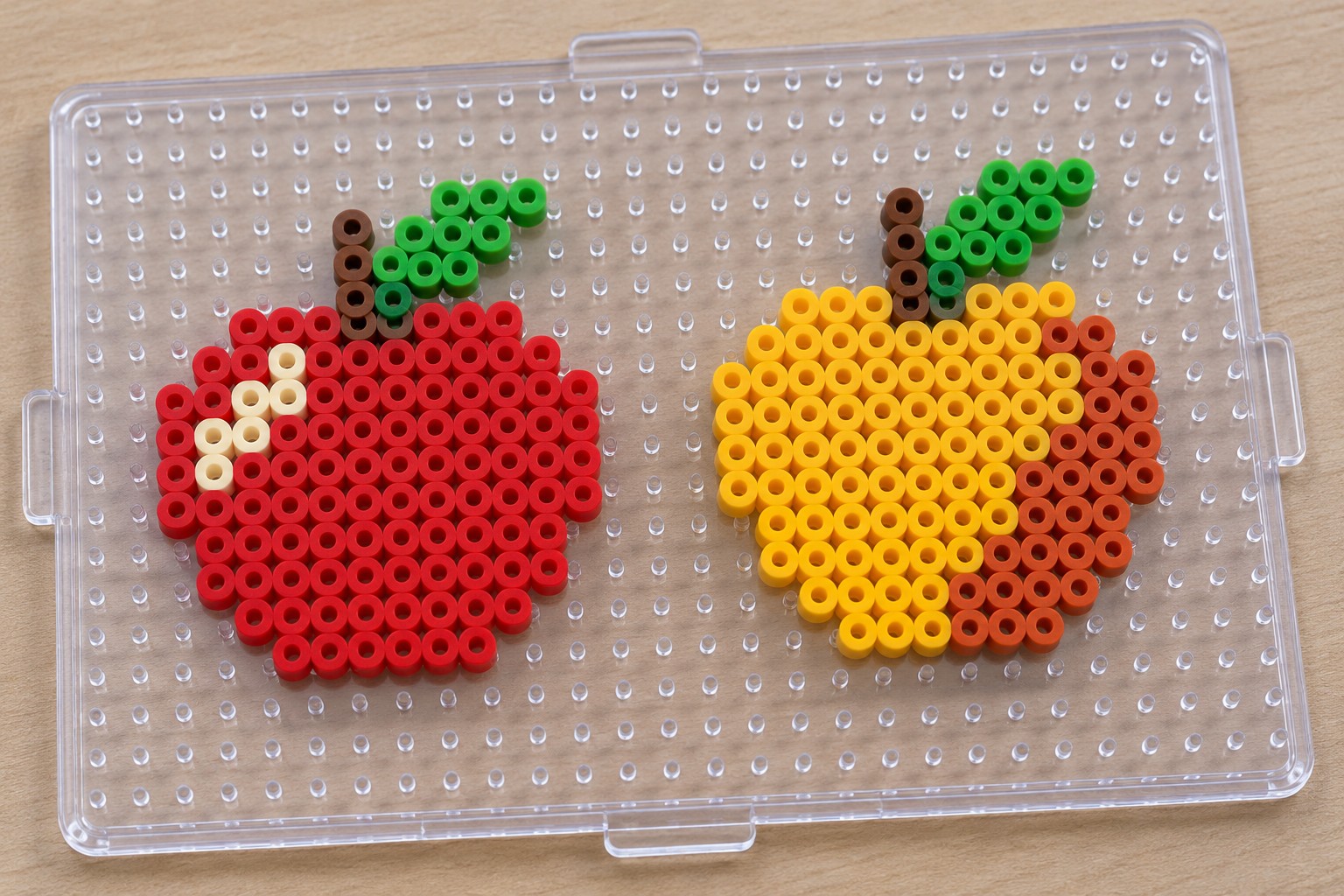
These flat Perler bead patterns pair a red apple with a yellow-orange pumpkin, using brown stems and green leaves to make each fruit recognizable. Cream-colored beads add a small highlight to the apple, while the pumpkin’s orange side gives its round, stepped silhouette extra definition. Both designs are individual beads arranged on a pegboard, not yet fused.
The shared palette makes the pair easy to coordinate with other autumn motifs, while changing the fruit colors or leaf shapes can create a few variations. Keeping the cream highlight and orange shading makes the patterns more detailed, or you can simplify them by using one main color for each fruit.
Brown Bear Perler Bead Pattern With a Cream Sweater
This flat Perler bead character uses rust-brown beads to form a rounded bear with small ears, dark paws, and a cream-colored sweater. Its broad muzzle, dark eyes, and nose make the face easy to read, while tan accents across the sweater add detail without breaking up the clear color blocks.
The contrasting sweater and fur give the pattern a useful base for fall color variations, such as adding a rust, mustard, or olive-green scarf or changing the sweater pattern. Keep the cream body and dark facial features for the same clear expression, or simplify the sweater accents if you want a less detailed arrangement.
Perler Bead Basket of Autumn Harvest
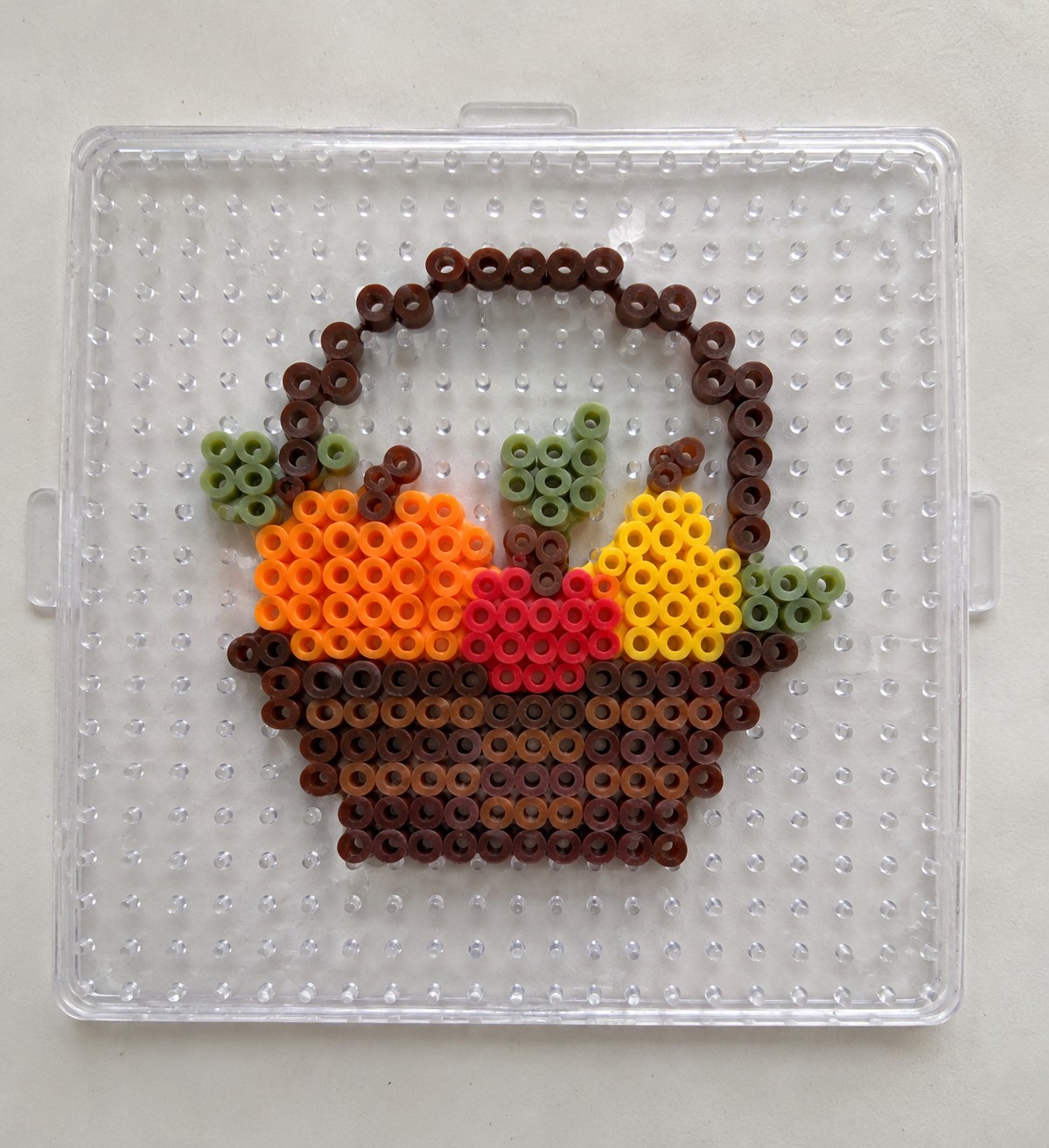
This flat Perler bead pattern arranges orange and yellow produce with green leaf clusters inside a rounded brown basket. Individual beads create a stepped silhouette, while the dark brown outline and horizontal basket rows keep the colorful harvest shapes distinct on the pegboard.
The clear color blocks make the basket a useful pattern to adapt: swap the orange and yellow sections for different fall fruits or add another leaf cluster to change the arrangement. For a coordinated set, make separate small produce motifs in the same autumn palette and keep the brown basket pattern as a display piece.
Frequently Asked Questions
Choose warm, classic autumn shades such as burnt orange, rust, red, mustard yellow, brown, cream, and forest green. A few black or dark-brown beads can add outlines and details. If you’re short on colors, prioritize orange, yellow, brown, and red, then substitute similar shades where needed.
Start with simple shapes that are easy to recognize on a pegboard, such as a small leaf, acorn, pumpkin, apple, or mushroom. These designs usually need just a few colors and are manageable on a small board. Once you’re comfortable placing beads and ironing them, try more detailed patterns like an owl, fox, or autumn wreath.
Yes. To make a design larger, add beads while keeping the pattern’s proportions, or use a larger pegboard to follow the pattern as shown. To make it smaller, simplify details and reduce the number of colors. Check that the finished shape still has enough connecting beads to stay intact.
Place the ironing paper over the beads and use a dry iron on a medium setting. Move the iron in small circles, applying even pressure, and check the beads often. Stop when they have fused to your preferred level. Let the design cool before removing it from the board, then carefully peel away the paper. Follow the bead manufacturer’s instructions, and have an adult supervise children during ironing.
Turn them into seasonal decorations by adding a magnet, keychain loop, ribbon, or string for hanging. Small designs work well as gift tags, bookmarks, or table decorations, while larger pieces can be displayed in a window or arranged into a fall garland. For multiple designs, stick to a coordinated palette of oranges, reds, yellows, and browns for a polished look.
